Tag: what remains of edith finch

  • An excerpt from my upcoming book about What Remains of Edith Finch

    An excerpt from my upcoming book about What Remains of Edith Finch

    I’m currently in the final stages of editing my upcoming book about What Remains of Edith Finch! The book is called Suddenly, I was a Shark: My Time with What Remains of Edith Finch. I’ve never been so excited about a writing project before.

    I’m a life-long gamer and a devoted thinker, and this book is the culmination of a life spent writing about video games both as essays & blog posts and as hundreds of visual essays, editorials, and comedy videos on YouTube. With Suddenly, I was a Shark: My Time with What Remains of Edith Finch, I feel like I’ve finally made a valid contribution to this world of video games that I love so much.

    Please enjoy this sneak peek from an early chapter in the upcoming book. And please subscribe using the button below to stay informed on the book’s progress, an upcoming cover reveal, and a publication date (I’m shooting for June 2023). Paid Subscribers will receive a .epub version of the book as part of the subscription (in addition to .epub versions of ALL of my current books and essays).


    “As a child, the house made me uncomfortable in a way I couldn’t put into words…” -Edith Finch

    Edith stands on the estate side of a padlocked gate. The fence’s top rail behind her has bent to the weight of her body where she had heaved herself over. Surmounting this shaky fence could not have been easy.

    I face down a winding asphalt path toward the home that Edith and her mother escaped from seven years ago. The asphalt is buckled and broken; the world below has refused to settle during those empty years. Tree roots have rippled the ground. Ivy reclaims the wooden barrier lining the path like it’s trying to rip down this safety measure, to make any intruder’s journey a dangerous one. But Edith would not have returned if danger worried her.

    Edith is the lone surviving member of the Finch family, following 11 deaths beginning with her great-great grandfather, Odin. She’s returned here to her childhood home, following her own mother’s recent passing, to learn the truth of these strange deaths, to learn if what her great grandmother Edie claimed is true: the Finch family is cursed.

    This asphalt path she’s on leads to many things. For the Giant Sparrow development team, this path at the start of their game What Remains of Edith Finch leads to a 2018 BAFTA Award for Best Game, a NAVGTR Award for Best Original Adventure Game, a SXSW Gaming Awards award for Excellence in Narrative, a 2017 The Game Awards award for Best narrative, and a slew of nominations. For gamers it leads to either the epitome of an underappreciated gaming genre or it leads to further evidence of an over-appreciated one. For me—an author of several books of fiction—it changes my entire understanding of the power of story. And it will change you, too, as it has so many players. Saturday Night Live alumnus and host of The Tonight Show with Jimmy Fallon, says of the game, “it’s one of my favorite things… it’s gonna change your life.”

    But for 17 year-old Edith Finch the path leads to her childhood home tucked away within the sublime forests along the coasts of America’s Pacific Northwest. This is a world of vagabonds and misfits. This is a world of hope and death. This is a world where trees and cliffs meet, each offering opposing options for escape. A tree points optimistically upward into open sky while a cliff offers escape downward into the sea. The Finch home itself, then, is a limbo trapped between exits.

    There are no shops out here. No schools. No neighbors. Only one restaurant, a Chinese takeout, delivers this far outside proper civilization. But the woods, though they are forever patient, are unquestionably alive.  “The woods around the house have always been uncomfortably silent,” Edith says as I walk the path from the padlocked gate to Edith’s empty childhood home. “As though they are about to say something but never do.”

    Breathtaking, you could call it; Edith’s world is one that threatens to take your breath just as it has taken the breath of Edith’s family.


    What Remains of Edith Finch is set in a house framed by trees that are themselves framed by the Pacific Northwest’s cruel geography. This region’s reputation for awe is in full force here, guiding me forward despite persistent unease.

    Creative Director, Ian Dallas, wanted What Remains of Edith Finch to give the player a feeling of the sublime, of being stricken by beauty and simultaneously fearful of it. The game’s setting certainly primes the story for the sublime. Its geography and citizenry clash and compliment to create a uniquely alluring world. Portland, Oregon author Katherine Dunn once identified the Pacific Northwest as a place of misfits, reasoning that those who want to escape their hometowns for a better life travel west then migrate north for its cheap cost of living. Speaking to Chuck Palahniuk, a fellow Portland author, she said “we just accumulate more and more strange people. All we are are the fugitives and refugees.”

    Parts of the Pacific Northwest still today maintain a reputation for a vagabond culture that proudly rejects homogeneity while proclaiming acceptance.[1]I want to be careful not to conflate all of the Pacific Northwest with just Portland, Oregon, as the city is uniquely weird (rivaled in notoriety perhaps only by Seattle, Washington, just 170 miles … Continue reading This is a land where mainstream narratives are met with suspicion. Pacific Northwest native Kurt Cobain, of the band Nirvana which popularized Seattle grunge music for the world in the early 1990s, famously rejected the rockstar flamboyance narrative of preceding generations. “There is nothing in the world I like more than pure underground music,” Cobain told Sassy in April of 1992. “Pure” and “underground” are anathema to the then-popular adornments of mainstream success: big hair, pyrotechnic stage shows, and machismo. That same year Nirvana’s song “Smells Like Teen Spirit” won an MTV Video Music Award, one of the highest honors given by the once dominant television channel and arbiter of popular music. The song title etched into the award placard misspells “Teen” as “Team.” This error surely didn’t change Cobain’s opinion of the mainstream.

    As an angsty teenager I loved what Nirvana embodied despite Cobain dying and the group having disbanded before I reached those teenage years. I felt trapped in my small town in Kansas, and I looked to the Pacific Northwest as a land of compatible souls. But even when I graduated high school and applied to universities, I never considered an actual move to the West. I felt comfortable keeping that world at arm’s length. I was shaped by the lyrics of a dead man, but I was unwilling to tempt the world that had shaped him. In that way, Edith is much braver than I am. The world she’s returning to is armed and eager to shape her, and she’s ready for it.

    From the padlocked gate, I look toward the path’s end. At the top of this hill in the center of the forest, cropped at the center of the player’s screen, a cathedral-like spire juts from the horizon. It’s rejected by the surrounding world. An expunged poison. Pus from a popped zit. This is my destination. This misshapen, confusing, and obviously unsafe structure—obvious even from this distance of several hundred feet—was Edith’s home just seven years ago.

    From this distance the construction could be the product of a weary believer driven by an impatient god to hastily construct an idol. Or it could equally be the purposeful work of a craftsman inspired by the fantastical logic of a Rube Goldberg machine. After numerous playthroughs, I’m still not sure which is more accurate.

    One thing is for sure: the impossible house is intoxicating. So, I do the only thing the game allows me to do at this point. I walk toward the house. Slowly. The world slumbers as I shift along the path before me. Slowing down, as it turns out, is a great way to change me, to turn the world itself into an epiphany.

    Footnotes

    Footnotes
    1 I want to be careful not to conflate all of the Pacific Northwest with just Portland, Oregon, as the city is uniquely weird (rivaled in notoriety perhaps only by Seattle, Washington, just 170 miles north, which is itself 100 miles of coastal and ferryboat travel south of Orcas Island, the proper setting of the game), but this focus is necessary in order to understand the Finches. Their home is a lone beacon of mystery secluded amid dense forests and bays in the very Northwest corner of the Northwest region. The home is a soup cracker of strange within a bowl of weird amidst a full table of adequately normal.
  • Exploding the Small Things for Fun

    Exploding the Small Things for Fun

    How small can you make a thing and still have that thing be interesting?

    I’ve been told throughout my life spent creating things (books, video games, YouTube videos, podcasts) that simplicity is a core ingredient of creative output. When a thing is simplified enough, when it’s abstracted to its core requirements, when the guardrails are robust and the lanes clearly defined, that’s when creativity tends to flourish.

    I embrace the challenge, and in fact, when a thing is simplified, that’s when I discover an interest enough to justify the very act of creating. Not until all magic has been stripped away am I able to see the potential for magic.

    Not until all magic has been stripped away am I able to see the potential for magic.

    This is how I learned to appreciate genre fiction, for example. I still don’t read much of it (there are other types of fiction I like more) but an author who must simultaneously honor audience expectations and subvert those expectations to surprise, delight, and (probably) retain interest, is a concept I respect.

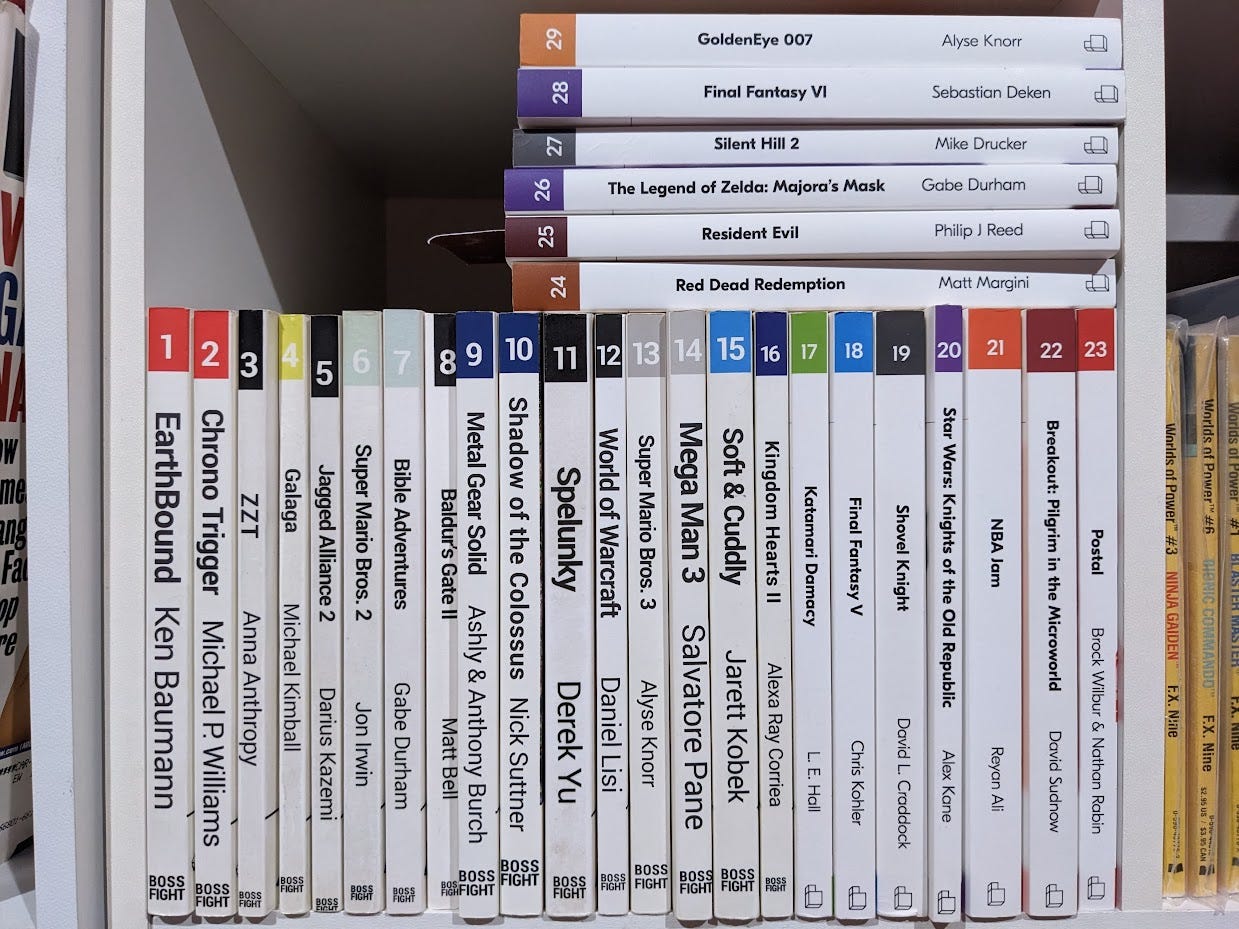
    Years ago, decades maybe, I heard about a new book imprint called Boss Fight Books. At the time they had yet to publish anything, but they promised a series of books, each one dedicated to a single video game. An entire book = one video game. The audacity intrigued me.[1]Though a bit of research suggests that the publication I heard about all those years ago, in college, so at least before 2006, could not have been Boss Fight Books. Oh well, I still champion BFB for, … Continue reading

    Years go by, I forgot about Boss Fight Books, until the press resurfaces amid the video game milieu that my gaming friends and I have subsisted upon as a shared space for all those years since. Word of this “video game press that publishes books about single video games” percolated amid our shared social threads. That seed planted years ago found sunlight.

    Twenty-nine books later, I’m still a fan of the press; never wavering. The novelty still excites me. An entire book = one video game. Wow.

    Wow.

    I read a lot of books about video games, but those that focus on single games (even game’s I’ve never played, even never heard of) dominate my time. Reference texts that promise to catalog entire generations of games don’t excite me at all. Interview compilations are fun enough but tend to lack a narrative structure. Histories of single companies are nice, but they don’t get specific enough. Instead, I want to roll a grain of sand between my fingers and forget about the beach for a few hundred pages.

    What beach?

    Perhaps “simplicity” is the wrong term. By reducing the scope of a thing, the guardrails shrink too, meaning the author must be extra clever to mine and smith an interesting story as that space around their subject narrows. “Simplicity” maybe implies a vacuum where creativity isn’t welcomed. Maybe, I’m thinking “fragments?” Or maybe a “constituent,” like how politicians frame the citizens of their jurisdictions as pieces that have authority over their whole. No, no, I like “fragments” better.

    I want to roll a grain of sand between my fingers and forget about the beach for a few hundred pages.

    I’ve been working on my own fragment story. About a year ago I started writing a book about a single video game. What Remains of Edith Finch is, by video game standards, a “simplistic,” stripped-down representation of what a video game can be, so much so that the game might have trouble even contributing to a definition of “video game.” What Remains of Edith Finch is a walking simulator, which, for brevity’s sake I’ll say is a video game that favors story and exploration over mechanics and combat. There’s neither a win nor a lose condition. So, not really a game.

    The challenge intrigued me. How will I write an entire book about such a simplistic game (with a playtime of about 2 hours, by the way), with very little history to lean on (it was released in 2017), and from a developer with only one other previously-released game? How can I see into the silica and oxygen of the grain of sand with enough passion and persuasion to dull the allure of the beach surrounding it?

    One solution: use a kidney stone instead of a grain of sand; I promise you’ll forget about the beach when you have one of these.

    My own personal interests, for sure, certainly pushed me to strip away the rest of the beach. Single phrases, presented in the game as diary entries, inspired full paragraphs. My own interest in game development encouraged me to peek beyond the game boundaries enough to satisfy a strange obligation I felt to include developer stories in the book.[2]I like reading developer stories, but, well, I’m shy and awkward so interviewing people is something I don’t look forward to…but, for my What Remains of Edith Finch book I did it anyway, a … Continue reading So, me being me (the only form I know how to take on) made me care about the core fragment of the thing.

    But what kept me invested in writing the book—and what I was finally able to identify as my main attraction to most Boss Fight Books—is that the more powerful a microscope I applied to the subject, the more I leveraged my own personal history and stories to explode out the subject. The more granular the subject, the less objective history can be applied to it, meaning a higher reliance on subjective history, which is the history type I prefer to read.

    Zooming in requires subjectivity to make the minutiae interesting. This was a big revelation for me. It allowed me to stop apologizing for my love of personal stories over objective history.[3]And for anyone who has played What Remains of Edith Finch, you can perhaps now understand why I was so drawn to the game’s themes of subjectivity.

    Interesting, huh?

    The first Boss Fight Book, about Earthbound, by Ken Baumann, leans heavily into the author’s own life. It’s a memoir by way of video games as a landmark. It’s easy to read this first book as an untested “what if” on the concept of video games as a referent point for self-reflection. And it’s not at all apologetic. I like that.

    Zooming in requires subjectivity to make the minutiae interesting.

    As the Boss Fight Books imprint grew its catalog, the books would distance themselves from personal stories and lean hard into documenting history. Personal stories still existed (Galaga by Michael Kimball is almost 100% personal history, and is told in a unique, fragmented style, which seems fitting given this article; Breakout: Pilgrim in the Microworld by David Sudnow is a reprinting of a book from 1983, which feels like it must have been some sort of osmosis inspiration for Boss Fight Books; Postal by Brock Wilbur & Nathan Rabin is part history and part gonzo journalism). But over the lifespan of Boss Fight Books those personal stories slowly subsided in favor of something more…sterile.

    I harbor no ill-will toward Boss Fight Books’ change in direction. I still eagerly absorb every word they publish.

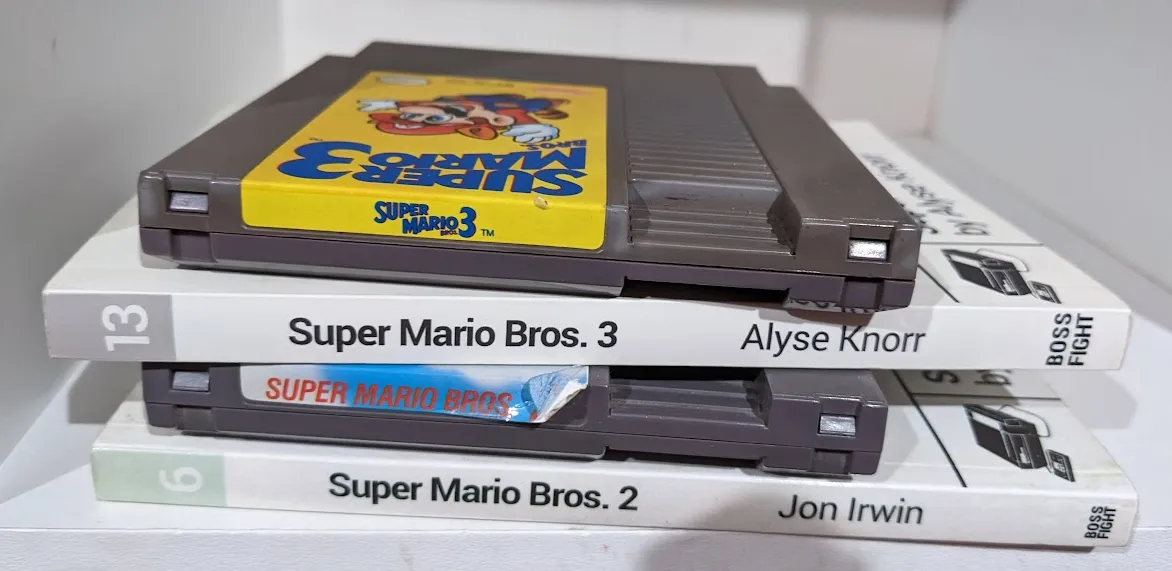
    Like cartridge width, like spine width.

    For my book about What Remains of Edith Finch I wanted to—and perhaps, had to, given the narrow scope of the subject game—see how much of myself might be exposed when reflected against the game. Video games are important to me. Very important. I cling to video game worlds as a compulsion, bypassing even the slightest consideration that video game worlds aren’t real. It’s not absurd for me to map my life in tune to the changing of console generations or to retrace my life along the evolution from pixelated characters to motion-captured adults outfitted in ping-pong balls playacting adjacent a foley stage where serious adults twist stalks of celery to capture the sound of a snapped ulna. Without video games, my life’s map would lack its most important waypoints. The fiction of video games informs my reality, even if only to keep me tethered to it.

    The fiction of video games informs my reality, even if only to keep me tethered to it.

    Writing this book about a tiny fragment of the video game universe has shown me, without a doubt, that video games are important, that video games are a reciprocal medium that changes us just as they ask us to change them, that games are, in fact, real.

    So, why when things get small do I get interested? Because close examination of the small things forces a close examination of myself. Call it ego. Call it self-discovery. Call it…yeah, ego is probably right.

    Share in the comments, what video game has made you contemplate your own life in an unexpected way?

    Footnotes

    Footnotes
    1 Though a bit of research suggests that the publication I heard about all those years ago, in college, so at least before 2006, could not have been Boss Fight Books. Oh well, I still champion BFB for, if not planting the seed, at least cultivating it.
    2 I like reading developer stories, but, well, I’m shy and awkward so interviewing people is something I don’t look forward to…but, for my What Remains of Edith Finch book I did it anyway, a little bit.
    3 And for anyone who has played What Remains of Edith Finch, you can perhaps now understand why I was so drawn to the game’s themes of subjectivity.
  • Unboxing the Annapurna Interactive Deluxe Limited Edition (8 PS4 games) from iam8bit

    Unboxing the Annapurna Interactive Deluxe Limited Edition (8 PS4 games) from iam8bit

    Subscribe on YouTube

    I’ve been looking forward to the Annapurna Interactive Deluxe Limited Edition collection of PS4 games for a long time. Finally, it’s in my hands. Join me in this rare Caleb Gaming unboxing video. What makes this collection so special? Why am I excited about this collection of games? Watch to find out.

    This collection from iam8bit includes physical disks of Donut County, Gorogoa, Kentucky Route Zero: TV Edition, Outer Wilds, Sayonara Wild Hearts, Telling Lies, Wattam, and What Remains of Edith Finch.

    This collection is the only way to get a physical disk version of the game Telling Lies. Until now, Telling Lies was only distributed as a digital game.

    Mentioned:

  • A Review of The Suicide of Rachel of Foster of (game review)

    A Review of The Suicide of Rachel of Foster of (game review)

    Subscribe on YouTube

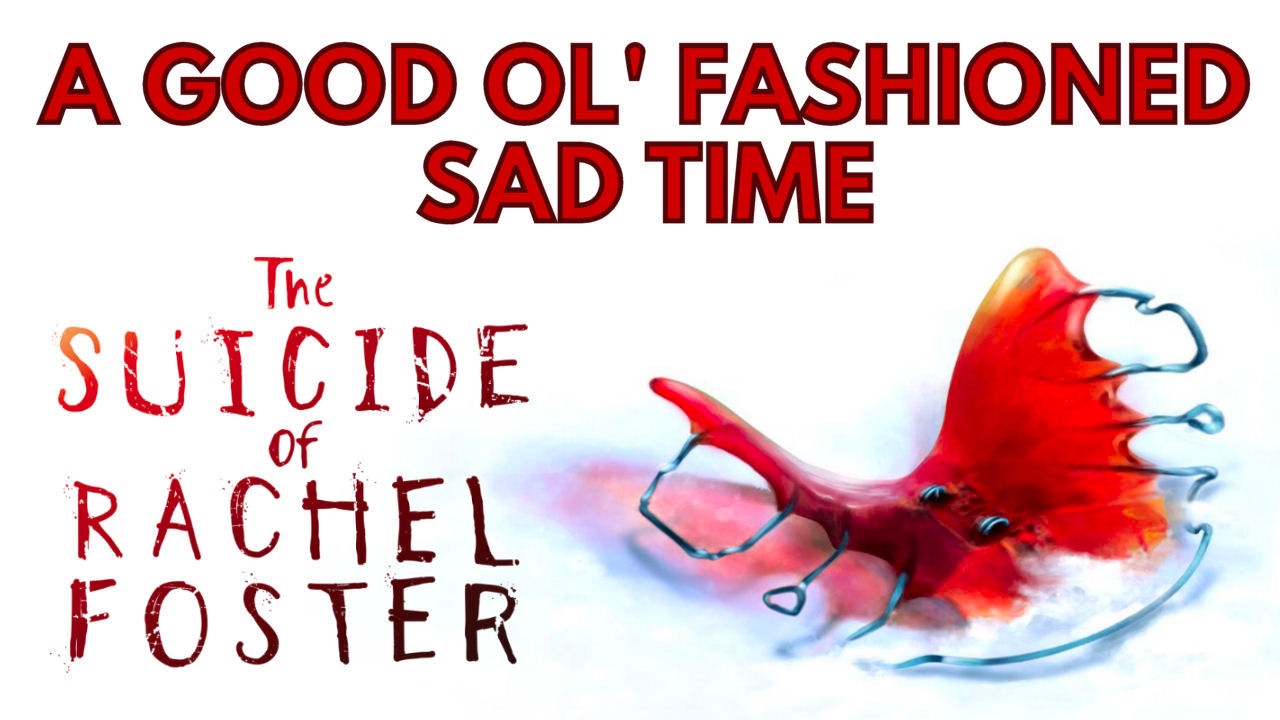
    I heard that The Suicide of Rachel Foster is a lot like What Remains of Edith Finch, so I knew I had to play it because I love seeing games fail to be greater than the greatest game of all time. I’m probably approaching this game unfairly, huh? (more…)

  • My Top 5 Video Games of All Time!

    My Top 5 Video Games of All Time!

    Subscribe on YouTube

    Finally, I’m ready to talk about my 5 favorite video games of all time! After 19 videos counting down my top 95 games, it’s time for my top five video games. I’m excited. Are you excited? You should be. (more…)

  • What Remains of Edith Finch is Pregnant.

    What Remains of Edith Finch is Pregnant.

    Pregnancy in media is godhood with responsibilities. Pregnancy binds people. Pregnancy arrests potential. Pregnancy promises potential. Pregnancy can both incite a life-changing journey and can stifle an in-progress journey. Pregnancy is magic. And pregnancy, much like a gun, is cheating.

    A gun is an unearned power shift. A story should survive by its characters, but a gun puts too much power into the hands of an undeserving character. When I read a story with a gun I’m primed to look for the narrative weaknesses that made the gun necessary. In the episode titled “Email Surveillance” of the sitcom The Office, Michael Scott ruins an improv class by pantomiming a gun at every possible opportunity. Not surprisingly, none of his classmates want to be in scenes with him.

    Use of a gun in a story must be handled with grace. It must be earned. Of course certain genres such as action movies and war dramas demand forgiveness. When everything is a gun, the gun is nothing. But outside those exceptions, a gun must be respected.

    The same is true with a pregnancy. Imagine two characters who hate each other. One pulls a gun on the other. Suddenly, the entire story is about the gun. Imagine these same two characters, but one reveals her pregnancy. Suddenly, the entire story is about the pregnancy. These two characters could be sitting atop a melting glacier, minutes from being swallowed by a shark and suddenly their own imminent death is less important than the potential of a future generation. Atop the shrinking block of ice these characters no longer fear their own death, they fear their inability to care for the unborn child. A last minute rescue spawns a shared smile, one that silently commits to the health of the child over the second chance they’ve been given to extend their own lives.

    Edith’s pregnancy, which results in her son Christopher, is earned. It’s subtle. It exists before the start of the game, and therefore is part of the player character rather than a simple addendum. Most importantly, Edith’s pregnancy represents an escape route from a family imprisoned by a curse. Christopher is the only surviving member of the Finch family and can commit to ending the family lineage.

  • What Remains of Edith Finch is Ambiguous.

    What Remains of Edith Finch is Ambiguous.

    Any interview with Creative Director Ian Dallas will include three things: 1) the interviewer’s pronouncement of her favorite character in What Remains of Edith Finch, 2) the interviewer’s demand for closure regarding that favorite character’s death, and 3) Dallas’s refusal to comply with the question.

    It’s quite amazing how consistently present these elements are. It turns out, ambiguity makes people uncomfortable. And Ian Dallas doesn’t like people[1]okay, this part probably isn’t true. See, What Remains of Edith Finch is a video game about openness and interpretation and building a mythos. A concrete What Remains of Edith Finch is not What Remains of Edith Finch. But this reality doesn’t stop fans of the game from begging Dallas for resolution.

    Dallas himself will claim that his reason for holding back on absolutes is because even he doesn’t know for sure how the characters die in the game. Generally, when I hear creators distance themselves from answers in this way, I assume laziness. Shouldn’t a creator be responsible for his creations? Sure, art, and therefore the artist, isn’t required to provide answers, but I do feel that when pressed the artist should be obligated to defend the art.

    But with What Remains of Edith Finch ambiguity—and therefore discomfort—is the very point [2]okay, so maybe Dallas does hate people. This game  is the rare case where a work’s purpose is to expose ambiguity and does so by trafficking in the ambiguous [3]how very meta. But why am I okay with a dodgy artist here but not okay in other settings, like when my response to a question at an author reading floats among variations of “it’s up to you”, padded out with several words ending in -ism that aren’t so much meant to answer the question but to shroud the answer as a reaction to pressure[4]Yes, I’ve endured many of these. Author readings are usually painful to sit through. Likely my own readings included.

    I think I approve of Dallas’s dodges because What Remains of Edith Finch is crafted toward the ambiguous rather than being ambiguous as a point of existence. The world and the characters are defined (unambiguous) so that the narrative ambiguity can resonate. By comparison, with the bloated, masturbatory works of our aforementioned author-ism friend, the audience’s inherent questions are “…question(s) without a path toward an answer” and are “…abstract, non-objective, and simply exploratory.”[5]Yep, I just quoted myself. That’s probably just as bad as being an author-ism

    I won’t deny that the line dividing interesting ambiguity and masturbatory ambiguity can be temptingly dotted at times. It’s easy, especially for amateur creators, to plead philosophical depth in the face of concrete questions Thankfully, we have professionals like Ian Dallas and Edgar Allan Poe to show us the way.

    I won’t get into the details of Poe’s short story writings here. Just know that his stories are often described as strange, hallucinatory, weird, and mysterious. Poe leverages ambiguity for a specific effect. In the article “Ambiguity as Aesthetic Strategy: Edgar Allan Poe’s Ambitions for the American Short Story” Wanlin Li says:

    …ambiguity actually works for Poe’s purpose, since it strengthens authorial control by way of forcing the reader to grapple more with parallel interpretive possibilities. In other words, in cases of ambiguity, Poe seeks the unity of effect not at the level of stable meaning, but at the level of making the reader aware of instability.[6]JNT: Journal of Narrative Theory 48.2 (Summer 2018): 165.

    Poe, just as Dallas would do, doesn’t actually want the audience to determine which of the parallel interpretive possibilities are “correct,” but rather he wants the audience to accept that parallel interpretive possibilities are possible.

    So when Dallas deflects questions about the true causes of his character’s deaths, he’s perhaps not dodging. He’s moving out of the way so you can see the rest of the possibilities.[7]Though, I do believe Dallas has a version of absolute resolution locked away in his brain. He just knows that to expose it would mean toppling the delicate intent of the game. He’s created … Continue reading

    Footnotes

    Footnotes
    1 okay, this part probably isn’t true
    2 okay, so maybe Dallas does hate people
    3 how very meta
    4 Yes, I’ve endured many of these. Author readings are usually painful to sit through. Likely my own readings included
    5 Yep, I just quoted myself. That’s probably just as bad as being an author-ism
    6 JNT: Journal of Narrative Theory 48.2 (Summer 2018): 165.
    7 Though, I do believe Dallas has a version of absolute resolution locked away in his brain. He just knows that to expose it would mean toppling the delicate intent of the game. He’s created something that drives people crazy, and he has the ability to put those people at ease, but if he does this, his creation dies. Not an enviable position. (see, even I’m not immune to demanding resolution)