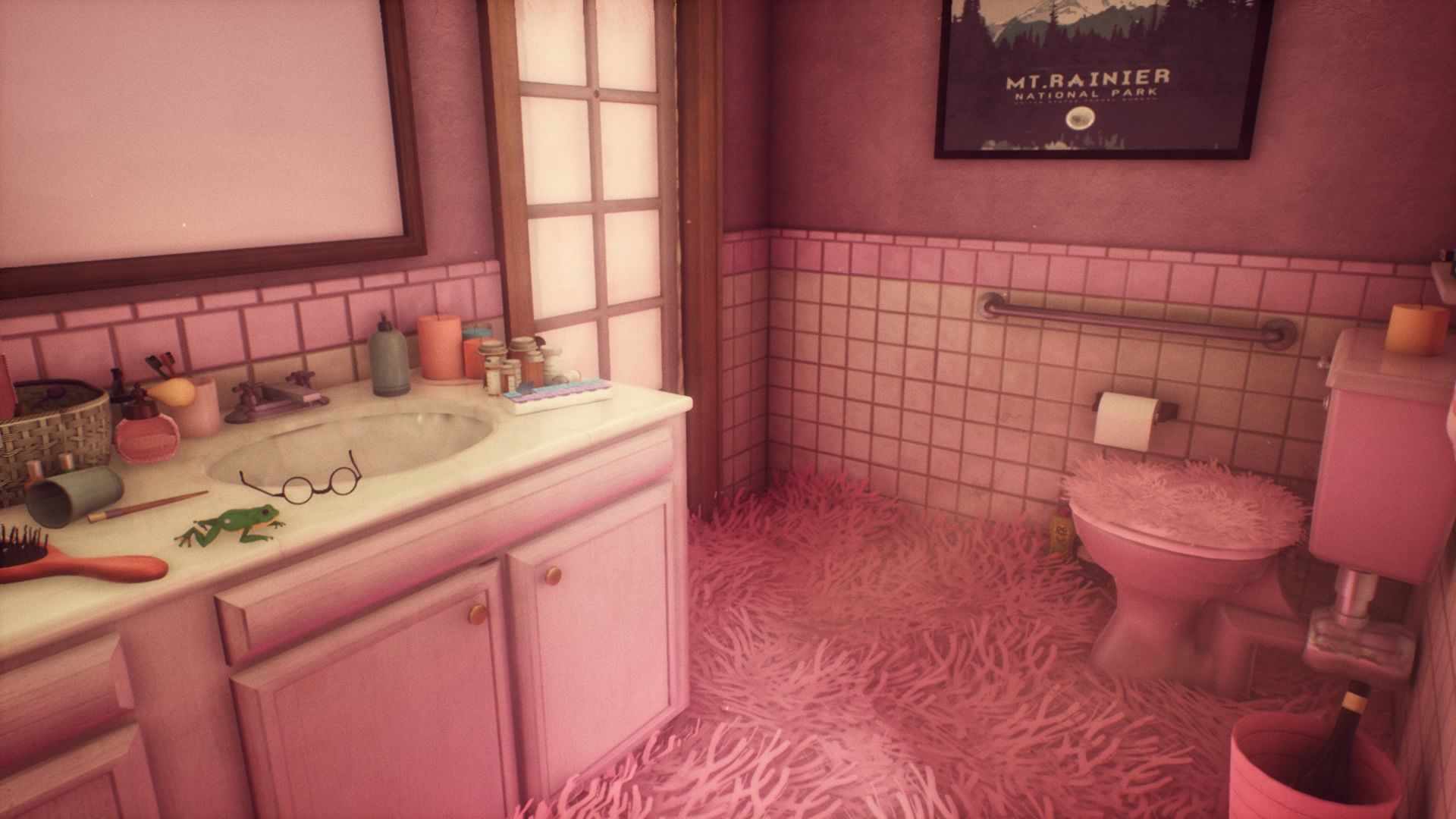
Tag: what remains of edith finch

  • What Remains of Edith Finch is Questions.

    What Remains of Edith Finch is Questions.

    It wasn’t until a few months after first playing What Remains of Edith Finch that I understood the source of my infatuation. I assumed my love related most strongly to the game’s narrative focus, and perhaps that’s still true, but then the question becomes “why is the narrative focus so alluring?” Because I’m a writer? Maybe. Because I’m a human and narrative is central to my sense of belonging? Maybe. But it’s a video game. Why is narrative so important? Why don’t I care instead about the game’s mechanics? Or the game’s sense of progression? Or the sense of accomplishment that a player is meant to feel when playing a video game?

    That few-months-post-play epiphany hit me hard. The source of my love lies with the game’s ability to ask interesting questions (see the seven questions above).

    Any form of narrative entertainment (examples: novel, story, movie) should aim to interest a reader by posing questions alongside the promise of answering them. A question without a path toward an answer is abstract, non-objective, and simply exploratory…in a word: dull. The questions don’t need to be answered by the product, but the audience must be properly motivated to search for an answer.

    True, some audiences will be more willing to search for an answer and will be less dependent on the author to provide direct guidance. This is the balance authors must maintain. Do I give too many answers and risk insulting the reader’s intelligence? Or do I hold back answers and risk being inaccessible? Do I write a Goosebumps book or do I write “Infinite Jest?”

    Video games, given their traditional reluctant embrace of narrative, haven’t often been forced to prioritize such interesting questions. Rather, the questions video games have been charged with posing are superficial questions of curiosity and puzzle solving more than narrative fulfillment. What happens when I push this button? How do I defeat that boss? Can I walk off this cliff? What happens when I move to the left when the game wants me to move to the right? It’s no wonder then that John Carmack once dismissed story in video games: “Story in a game is like a story in a porn movie. It’s expected to be there, but it’s not that important.”

    To be fair, games have come a long way since John Carmack’s famous dismissal, and he himself has even walked back a bit on his statement: “This old quote still pops up, but I caveat it today — there are undeniably lots of games where the story is the entire point, and they can be done well.  I do still hold that the most important games have been all about the play, not the story.”

    And is caveat is reasonable. It’s probably true that when we examine the history of video games, the evolutionary landmarks of importance most certainly reference mechanics more than narrative. Mario was originally called Jumpman, not Can Only Afford One Set of Overalls Because of Alimony Payments from a Messy Divorce Man.

    What I think has happened is that game developers have learned that strong narrative provides a strong motivation for players. Games do not need narrative. But they are often better off with it. As games get longer and demand more time from players, a developer can lean heavily on mechanics or aesthetics or simple curiosity to keep a player interested, or a developer can lean heavy on narrative to keep a player interested, or a developer can mix these elements to keep the player interested. No matter the concoction, the developer’s job is to keep a player interested.

    What’s important, I think, is that often players don’t explicitly verbalize the questions they have. I’ll step back into a novel example (heh) first, as novels are objectively narrative focused.

    The first line of Chapter 1 of Moby Dick is simply:


    “Call me Ishmael” [1]I know this isn’t the first line of the book. The book begins with two introductory sections that could easily be ignored, and I think most people do

    Three words and three times as many questions:

    1. Why should we call you that name? Did you change your name? If so, why did you change or name?
    2. Why is it so important that you announce your name immediately? Are you famous for something? Are you trying to be famous for something?
    3. Who is Ishmael talking to? The reader? Am I being set up for an oration of a grand adventure?

    These questions will seed a good narrative as long as the narrative delivers on the promise of answers. This balance of posing questions then teasing the reader with an answer then posing more questions, then more teases is what creates a narrative, and as long as this cycle is handled by a skilled writer, the reader will exhaust the entire novel and leave satisfied.

    A question is a byproduct of interest and so becomes the impetus to investment. Humans love solving problems. Therefore, a question posed is an invitation to adventure.

    So, back to What Remains of Edith Finch (finally, I know). From the very beginning of the game, I’m asking questions as a result of my interest. One of the first examples of this question > tease > question cycle is when you (as Edith) look to the ground to see a missing person’s poster. From the distance, you cannot read the words or make our the portrait, but you recognize the ubiquity of the poster design.

    Who is missing? Why are they missing? Why is the poster on the ground?

    So you step close enough to read the words.

    This person has been missing for years (answer to: “Why is the poster on the ground?” It’s old). Is this person related to me? Was he ever found?

    Then Edith’s spoken commentary notes that the person is her brother. So you venture further and quickly learn that a lot the Finch family is gone (dead). As the player, you are encouraged that you may learn the circumstances of Milton’s disappearance, so you continue.

    This cycle happens over and over throughout the game. And the biggest question of all, is there a Finch family curse, never fully gets answered, but the player is satisfied because this tension is exactly the point of the game.

    Damn, What Remains of Edith Finch is good.

    Footnotes

    Footnotes
    1 I know this isn’t the first line of the book. The book begins with two introductory sections that could easily be ignored, and I think most people do
  • What Remains of Edith Finch is Sublime.

    What Remains of Edith Finch is Sublime.

    With so much “top of the food chain” justification for humanity’s many environmental exploits it’s impressive that we experience feelings of insignificance [1]Damn right it’s impressive. Everything we do is impressive. We are at the top of the food chain after all. But we do.

    These momentary lapses in bravado are testament to the strange ways of the human brain. Our ability to recognize our insignificance is matched by our ability to rationalize our significance. That’s a legitimate Catch-22 for you.

    For some people the moment happens when staring into the night sky, contemplating the stars, and suddenly truly grasping, even if only fleetingly, that the starry glow we see comes from a star that’s long dead before we even have the chance to waste paper romanticizing the reflected light with terrible poetry.

    For some that moment happens at the birth of a first child[2]subsequent children need to try harder to impress me. Here’s this tiny being, totally dependent upon us, and unlike a dog or a cat, we go to jail if we let this thing die.

    For me that moment happened the first time I walked the line at an open casket funeral. I don’t remember the name of the deceased or whether or not I had any relation to him or her[3]It? outside the temporary proximity forced upon me by my mother’s parental leash[4]Not a real leash. A metaphorical one woven with a series of phrases like “Yes, you are going” and “do you want to be grounded from video games?”. I do vividly remember the stillness of the body. Even a human being holding his breath moves, almost imperceptibly, but like a telekinetic acknowledgment between like-beings, I know that human is alive. But not at this funeral. That thing in the casket was no longer a like-being.

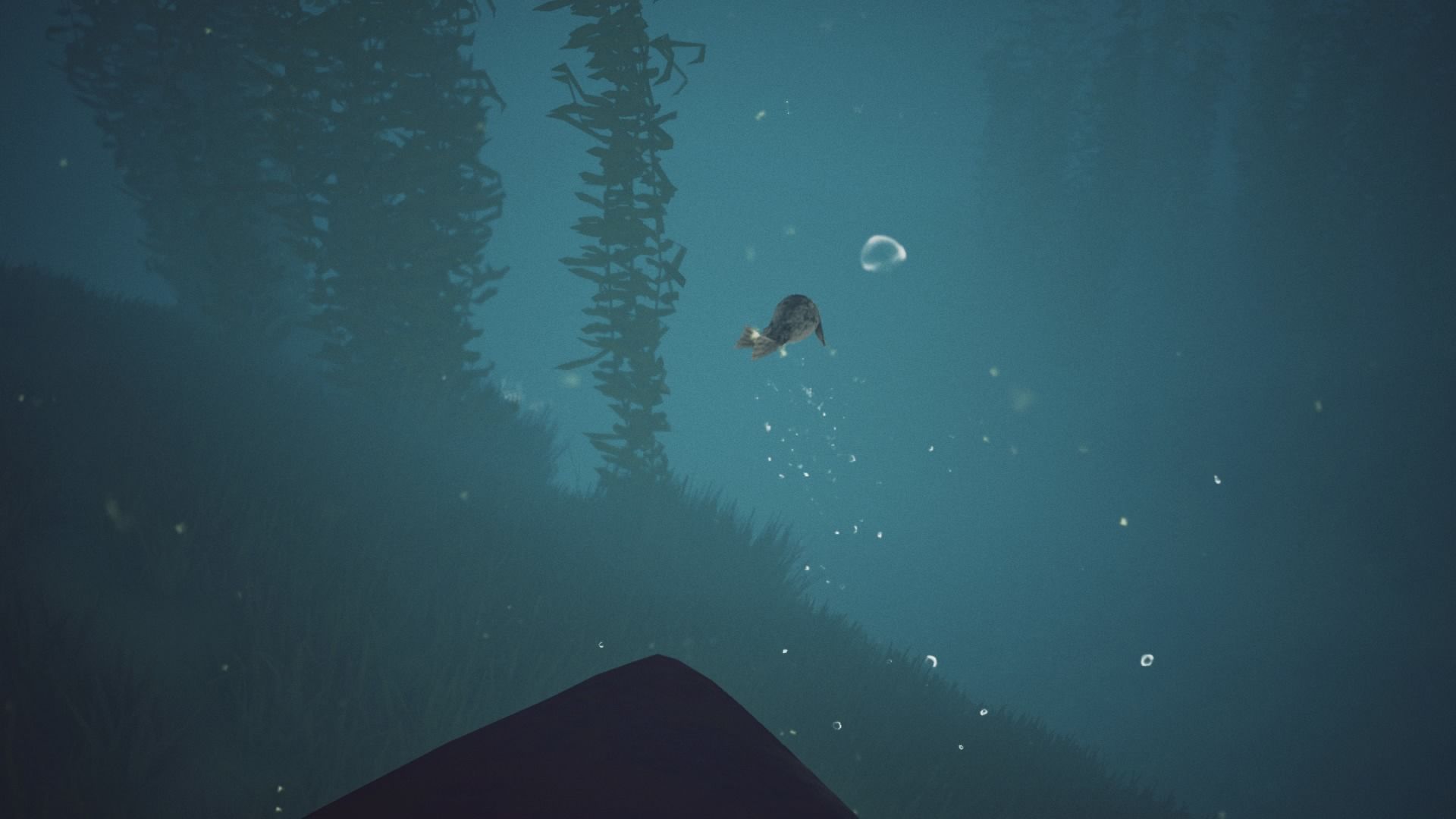
    For Ian Dallas, Creative Director of What Remains of Edith Finch, that moment of insignificance occurred while scuba diving. Dallas wanted his game to evoke a sense of the sublime. Speaking to gamesindustry.biz in a 2017 interview he says, “For me the clearest memory of that was Scuba diving as a kid, and seeing the bottom of the ocean slope away into a seemingly infinite darkness.”

    He calls this moment of insignificance “a sense of the sublime.” He was simultaneously in awe of nature and reduced by it.

    But me, I’m not opening my eyes in an ocean. Ignorance of the world underwater is the only thing that keeps me confident about my place in the food chain. I’ll keep my open coffin, thank you very much.

    Footnotes

    Footnotes
    1 Damn right it’s impressive. Everything we do is impressive. We are at the top of the food chain after all
    2 subsequent children need to try harder to impress me
    3 It?
    4 Not a real leash. A metaphorical one woven with a series of phrases like “Yes, you are going” and “do you want to be grounded from video games?”
  • What Remains of Edith Finch is a Game.

    What Remains of Edith Finch is a Game.

    My cat is gray.

    But she was born black, the only dark coat in a mound of grays. Like a hole.

    She was the runt. Though she was born competent, like the rest, early losses during feeding times set her back. A few missed meals early on meant she never developed the strength to fight for a nipple. The disparity between her and her siblings logically widened. The strong got stronger. The weak got weaker. Within 3 weeks her siblings were walking and playing. But she was only just opening her eyes.

    I don’t know how kittens think. But I wonder if, in a survival of the fittest way, an odd-looking baby doesn’t fit and therefore shouldn’t survive. The gray kittens who fought her and the mother who refused to help were simply doing what nature instructed. Maybe.

    But how mysterious survival can be. The black cat, now my cat, I named her Burrito, was the only kitten in the litter to survive a full month. Her mother was hit by a car. The strong kittens found their way to her roadside body, and having no knowledge of death they suckled the corpse like they had suckled the living. Before they could register the empty teats a second car killed the rest of them.

    The next day I noticed a few gray hairs on Burrito. Within a week her entire coat matched her dead siblings.

    My cat is gray.

    ___

    An objective fact that you didn’t care about has become a fact you do care about. That’s how good narrative works. That’s how What Remains of Edith Finch works.

    Early in the game you learn that Molly, the protagonist’s grandaunt, died at the age of ten.

    So what?

    She was eaten by a tentacle monster.

    Now you care.

    Maybe it takes a few lies to care about a fact. But if I tell myself those lies enough times, and I tell you those lies, and you spread them, then eventually the lies become lore. But the fact remains. Molly died. My cat is grey.

    But this power isn’t always used so innocuously. This power has been used to build religions, to oppress peoples, and to dodge prosecution. Storytelling is a power weapon.

    What Remains of Edith Finch is a game.

    So what?

    It’s a game about a family cursed to endure premature and strange deaths.

    Now you care.

  • What Remains of Edith Finch Might Just Penetrate Culture.

    What Remains of Edith Finch Might Just Penetrate Culture.

    What Remains of Edith Finch explores the power of narrative in a way I’ve never personally encountered. I’ve read plenty of Gabriel García Márquez, whose work explores the way narrative impacts the lives of people.

    I’ve read plenty of Jorge Luis Borges who explores narrative in a literal way by ruminating upon the power of books both as a form and in their function. Borges is the cheeky one of the two.

    I’ve read a few Mark Z. Danielewski books which tackle this exploration even more literally that Borges by manipulating the physical layout of the pages to invite the reader into the spatial world of the text.

    But What Remains of Edith Finch pushes all these tactics further. What Remains of Edith Finch shows us that narrative can define and manipulate simultaneously, that story isn’t a matter of fact but rather a matter of understanding. And while facts may help us understand, facts alone are weak. Their power comes from how they are presented.

    This is why we have lawyers, afterall. This is why we have news anchors. This is why we have documentaries. Facts alone are weak. Facts change nothing. Facts need narrative.

    This realization hit me hard recently when listening to an interview on NPR. The subject, Daniel J. Jones, who was the lead investigator for the Senate Intelligence Committee’s report on the CIA’s enhanced interrogation program, said the following in defense of a movie called “The Report” with dramatizes the report and its investigation of US government sanctioned torture:

    Mary Louise Kelly: What I’m hearing from you sounds like there’s still some unfinished business from where you sit.
    Daniel J. Jones: Well, of course it was gratifying to get a portion of this [report] released publicly in December of 2014. And we were front page of newspapers around the world for 24 to 48 hours. But given the news cycle and then it’s gone, and what you really need is narrative and storytelling to penetrate culture. And I hope that this film is a piece of that.

    “What you really need is narrative and storytelling to penetrate culture.”


    This view, used to justify the existence of this single film, instead justifies every “based on true events,” “based on a real story,” biopic style movie ever created.

    While What Remains of Edith Finch might not aim to penetrate culture, its precision is enough to infect and to get me thinking, which who knows, may one day fester enough to spread.

    Gross.

  • What Remains of Edith Finch is Art.

    What Remains of Edith Finch is Art.

    Let’s get the pretentiousness of this post started off right: Is What Remains of Edith Finch art? Now, let me ratchet up the insufferability by immediately answering the question with a non-committal, pseudo-turn into armchair psychology: Maybe.

    I’ve been an “art guy” all my life (see also: guy who says he likes art, but more often than liking it, he likes to talk about it in ways that involve the word “pseudo” while diminishing its highly skilled observers and critics as people who apply themselves as long as it doesn’t disrupt chair sitty time(( That was a really long joke. I apologize for leading you down a path that ultimately didn’t arrive anywhere worthwhile. ))). I was the guy who could kinda draw famous cartoon characters in grade school. In high school those creations turned toward the angsty and introspective—”no, that’s not Bugs Bunny. That’s a mechanical representation of, and therefore Capitalism commentary on, Bugs Bunny…as a girl.” In College I fell into writing, and with my years of socially informed cartoon art, the words came backed with intentional thought, and so throughout I maintained the art guy reputation.

    But for all this time of studying, defending, and creating art, nothing froze my synapses more than trying to define what I was doing. Had my title ever appended “professional”, I might have been more confident. Or at least as a “professional art guy” I could have avoided arguing a definition entirely by leaning into the money-making side. “I get paid to write scripts,” or “I get paid to curate museums,” sounds better than “I get paid to art.”

    But then someone, though I can’t remember who, revealed to me a definition that perfectly suffocates all of the pesky nuances:

    Art is anything that is framed and presented for contemplation.

    “Framed,” meaning, articulated for visibility. See also: staged (theatre), projected (movies), maybe bouqueted (flowers), maybe shellacked (collages). Maybe shellacked, again (dead body parts on a wall).

    “Presented,” meaning, put on display. Meaning, purposely given an audience. Meaning, audience is important.

    “For contemplation,” meaning, a responsible party (either the creator or the curator) intends for others to consider the thing, to think about it, to, well, contemplate it.

    No Frame or no audience or no intent = no art.

    Let’s challenge this.

    That commercially produced poster hanging on the wall in the restaurant? Well, given that it’s been produced with intent, that satisfies the “framed” requirement. Hanging it on the wall in a place meant for viewers satisfies the “presented” requirement. The restaurant owner may or may not have wanted viewers to contemplate it, but here we’ll assume this restaurant owner is your childless aunt who points out the poster to every single new customer and asks “isn’t that funny,” so yes, it’s art. Commercially produced art, but art nonetheless.

    What about when that poster gets ripped from the wall and tossed in the trash can? Is it still art? No. It’s no longer intended for an audience.

    If someone lifts that poster from the trash and staples it to a bathroom wall. Yep. Art.

    This simplicity is probably offensive, I understand. It’s scary to think of something so important to so many as something attainable by any crazy person on the street corner holding a megaphone and a bag of dog poop. But to those offended, I suggest you get over yourself. Don’t worry. Your precious art is still worthy of high-falutin snootery. Though we’ve broadened the defition of art to include your spastic nephew’s found gum wrapper diarama, we can still argue about the quality of the art. Yay for cultural gatekeeping!

    A great piece of art reveals the audience’s ignorance.

    A great piece of art shows you, the audience, things you didn’t know you didn’t know. Importantly, though, it asks and gives some guidance, but it never answers.

    Is What Remains of Edith Finch art? Yes. It’s framed (that’s essentially the Art Director’s job; therefore, the existence of an Art Director = framed). It’s presented (it’s made for a game console or PC). It’s meant for contemplation (you’re damn right it is).

    Is What Remains of Edith Finch good art? Yes. This game taught me more about the power of narrative than four years spent seeking an English Degree in college. Though that degree, and the experiences surrounding it, continue to be incredibly strong anchors for my approach to reading, writing, and thought, it wasn’t until playing What Remains of Edith Finch that I was encouraged to question what story is so important to human survival.

    Truly. Survival. I’m not exaggerating.

    Humans use story to justify their actions. Without justification other humans cannot anticipate action and therefore cannot form coherent societies and strong bonds within those societies. What Remains of Edith Finch narrows this concept all the way down to the family unit. This game explores how narrative can be used with good intent to form such bonds, but also how narrative can fracture trust by challenging facts.

    What Remains of Edith Finch is art. It’s good art.

  • Happy Birthday What Remains of Edith Finch! An interview with the game’s creator

    Happy Birthday What Remains of Edith Finch! An interview with the game’s creator

    Subscribe on YouTube
    Happy birthday What Remains of Edith Finch! One year ago today, April 25th 2017, you came screaming from the exhausted loins of Giant Sparrow, all covered in graphics mucus and game mechanics residue. It was beautiful. (more…)

  • A Conversation With Giant Sparrow’s Ian Dallas – Masters of Unlocking Podcast Episode 017

    A Conversation With Giant Sparrow’s Ian Dallas – Masters of Unlocking Podcast Episode 017


    [powerpress]
    Subscribe to Masters of Unlocking: A Video Game Podcast by clicking over to the official website

    We sit down for a conversation with Giant Sparrow’s Ian Dallas – creative director of the 2017 hit What Remains of Edith Finch and 2014’s The Unfinished Swan. This episode of Masters of Unlocking follows a bit of a different structure than our normal episodes – we kick things off with our interview with Ian and, afterwards, Caleb & Scott dive into an in-depth discussion of our thoughts about the interview and the game itself.

    WARNING – the interview and following discussion contain SPOILERS about the game. (more…)