Category: Caleb’s Game Devlog

Thoughts on Game Development and Game Design. Expect quick-thought blog posts, scripted videos, and even podcasts. If you want to learn my philosophy on video game development, this is a great place to start (and end).

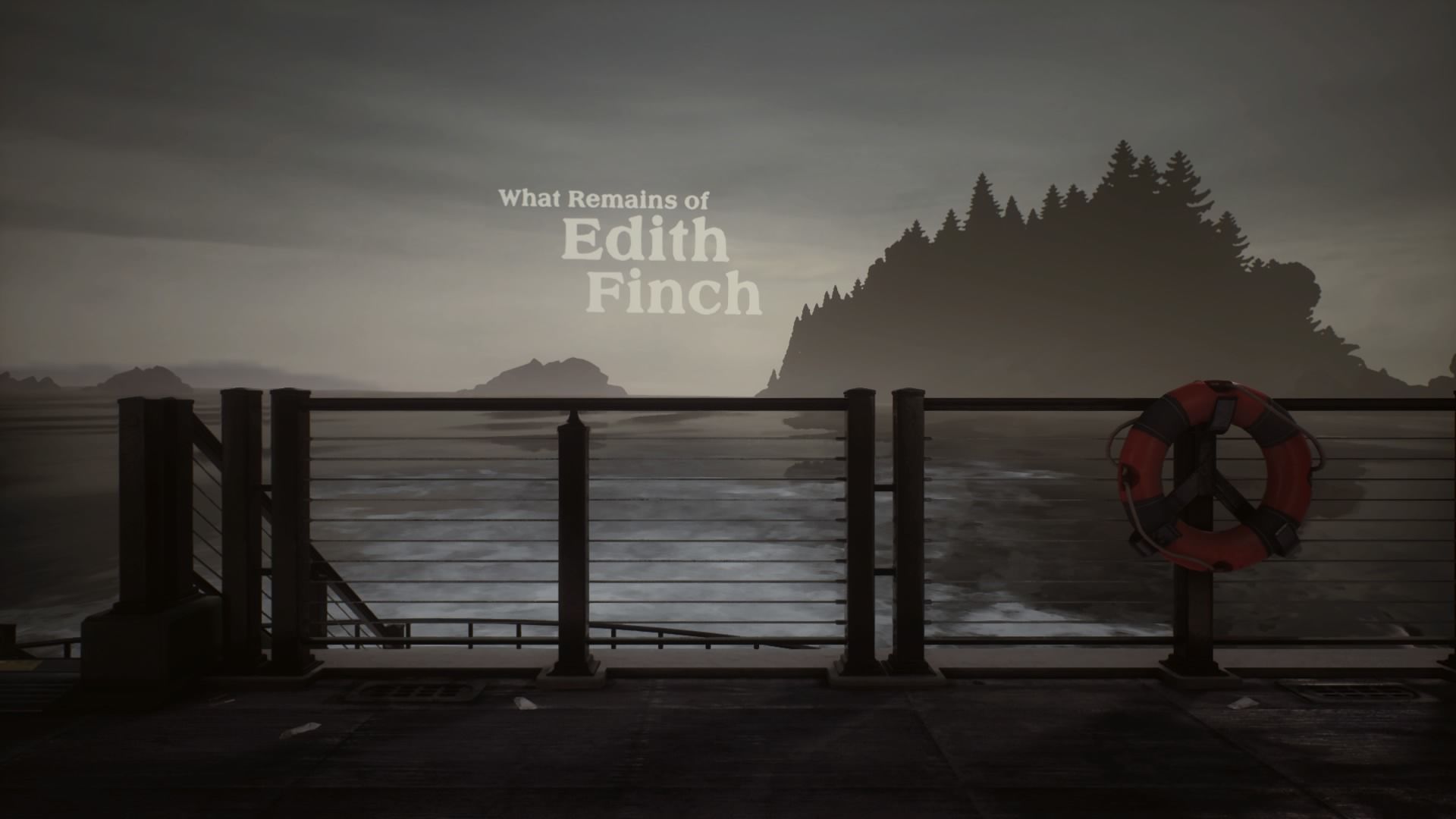
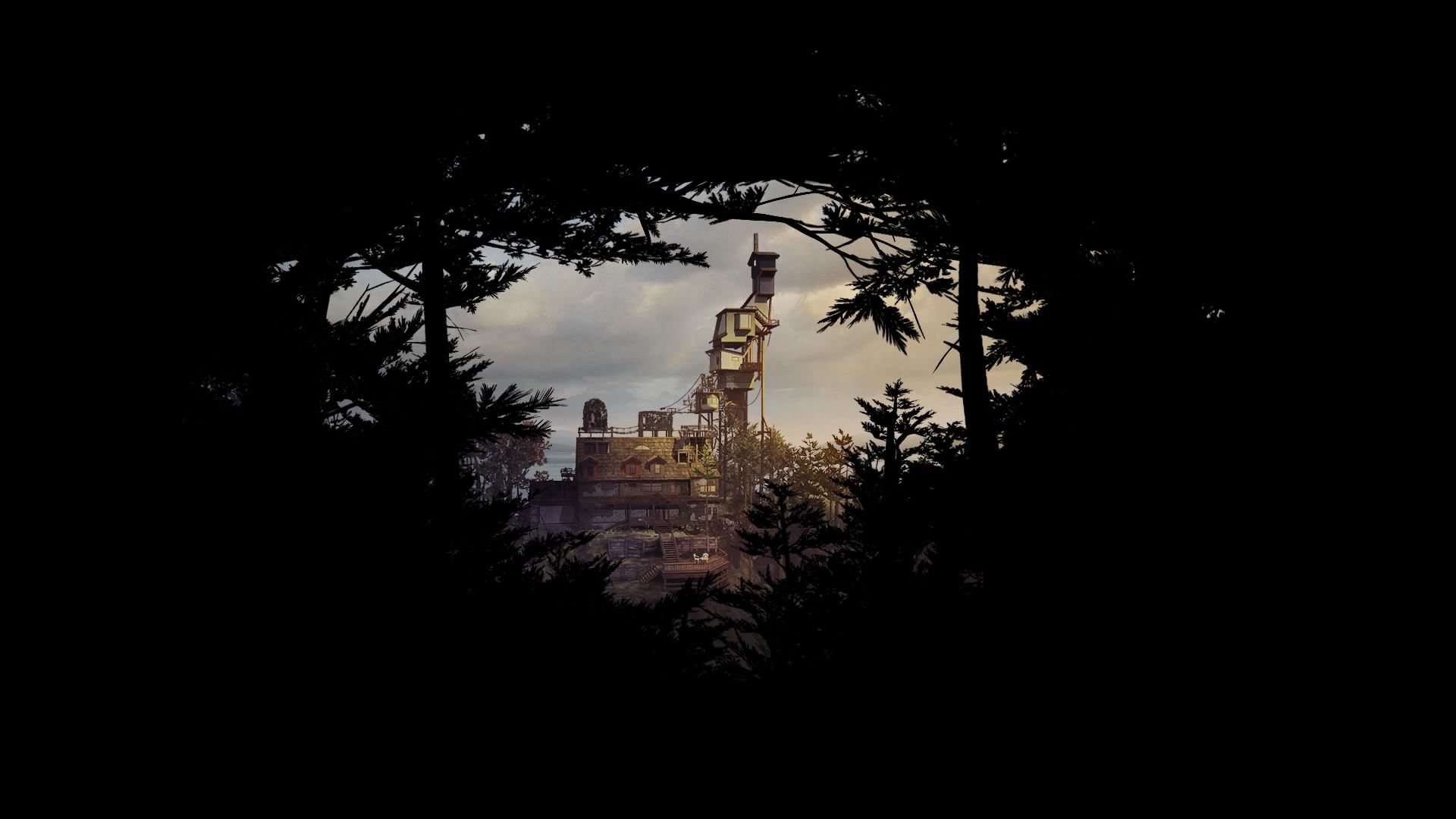
  • What Remains of Edith Finch is Sublime.

    What Remains of Edith Finch is Sublime.

    With so much “top of the food chain” justification for humanity’s many environmental exploits it’s impressive that we experience feelings of insignificance [1]Damn right it’s impressive. Everything we do is impressive. We are at the top of the food chain after all. But we do.

    These momentary lapses in bravado are testament to the strange ways of the human brain. Our ability to recognize our insignificance is matched by our ability to rationalize our significance. That’s a legitimate Catch-22 for you.

    For some people the moment happens when staring into the night sky, contemplating the stars, and suddenly truly grasping, even if only fleetingly, that the starry glow we see comes from a star that’s long dead before we even have the chance to waste paper romanticizing the reflected light with terrible poetry.

    For some that moment happens at the birth of a first child[2]subsequent children need to try harder to impress me. Here’s this tiny being, totally dependent upon us, and unlike a dog or a cat, we go to jail if we let this thing die.

    For me that moment happened the first time I walked the line at an open casket funeral. I don’t remember the name of the deceased or whether or not I had any relation to him or her[3]It? outside the temporary proximity forced upon me by my mother’s parental leash[4]Not a real leash. A metaphorical one woven with a series of phrases like “Yes, you are going” and “do you want to be grounded from video games?”. I do vividly remember the stillness of the body. Even a human being holding his breath moves, almost imperceptibly, but like a telekinetic acknowledgment between like-beings, I know that human is alive. But not at this funeral. That thing in the casket was no longer a like-being.

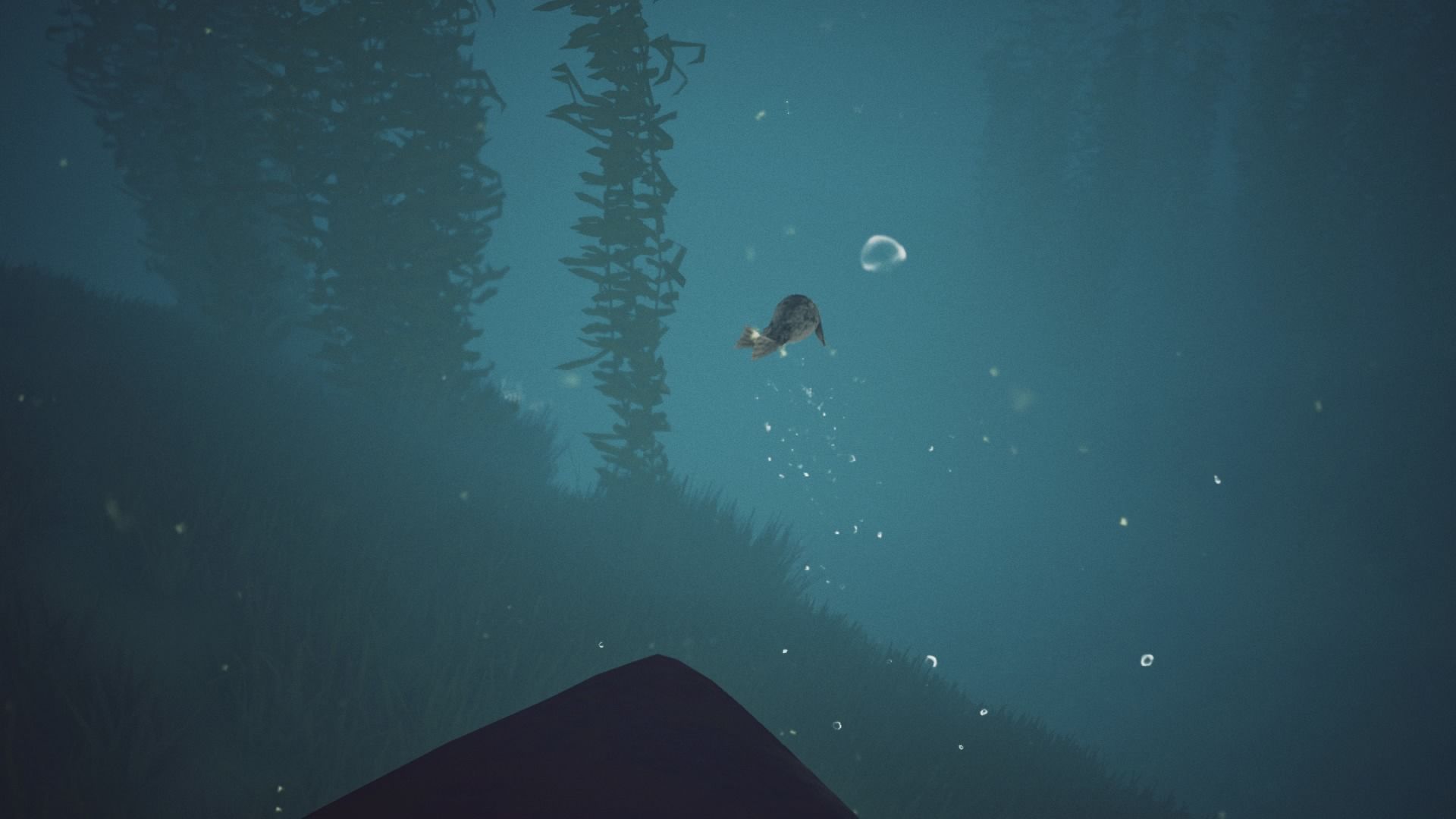
    For Ian Dallas, Creative Director of What Remains of Edith Finch, that moment of insignificance occurred while scuba diving. Dallas wanted his game to evoke a sense of the sublime. Speaking to gamesindustry.biz in a 2017 interview he says, “For me the clearest memory of that was Scuba diving as a kid, and seeing the bottom of the ocean slope away into a seemingly infinite darkness.”

    He calls this moment of insignificance “a sense of the sublime.” He was simultaneously in awe of nature and reduced by it.

    But me, I’m not opening my eyes in an ocean. Ignorance of the world underwater is the only thing that keeps me confident about my place in the food chain. I’ll keep my open coffin, thank you very much.

    Footnotes

    Footnotes
    1 Damn right it’s impressive. Everything we do is impressive. We are at the top of the food chain after all
    2 subsequent children need to try harder to impress me
    3 It?
    4 Not a real leash. A metaphorical one woven with a series of phrases like “Yes, you are going” and “do you want to be grounded from video games?”
  • What Remains of Edith Finch is a Game.

    What Remains of Edith Finch is a Game.

    My cat is gray.

    But she was born black, the only dark coat in a mound of grays. Like a hole.

    She was the runt. Though she was born competent, like the rest, early losses during feeding times set her back. A few missed meals early on meant she never developed the strength to fight for a nipple. The disparity between her and her siblings logically widened. The strong got stronger. The weak got weaker. Within 3 weeks her siblings were walking and playing. But she was only just opening her eyes.

    I don’t know how kittens think. But I wonder if, in a survival of the fittest way, an odd-looking baby doesn’t fit and therefore shouldn’t survive. The gray kittens who fought her and the mother who refused to help were simply doing what nature instructed. Maybe.

    But how mysterious survival can be. The black cat, now my cat, I named her Burrito, was the only kitten in the litter to survive a full month. Her mother was hit by a car. The strong kittens found their way to her roadside body, and having no knowledge of death they suckled the corpse like they had suckled the living. Before they could register the empty teats a second car killed the rest of them.

    The next day I noticed a few gray hairs on Burrito. Within a week her entire coat matched her dead siblings.

    My cat is gray.

    ___

    An objective fact that you didn’t care about has become a fact you do care about. That’s how good narrative works. That’s how What Remains of Edith Finch works.

    Early in the game you learn that Molly, the protagonist’s grandaunt, died at the age of ten.

    So what?

    She was eaten by a tentacle monster.

    Now you care.

    Maybe it takes a few lies to care about a fact. But if I tell myself those lies enough times, and I tell you those lies, and you spread them, then eventually the lies become lore. But the fact remains. Molly died. My cat is grey.

    But this power isn’t always used so innocuously. This power has been used to build religions, to oppress peoples, and to dodge prosecution. Storytelling is a power weapon.

    What Remains of Edith Finch is a game.

    So what?

    It’s a game about a family cursed to endure premature and strange deaths.

    Now you care.

  • What Remains of Edith Finch Might Just Penetrate Culture.

    What Remains of Edith Finch Might Just Penetrate Culture.

    What Remains of Edith Finch explores the power of narrative in a way I’ve never personally encountered. I’ve read plenty of Gabriel García Márquez, whose work explores the way narrative impacts the lives of people.

    I’ve read plenty of Jorge Luis Borges who explores narrative in a literal way by ruminating upon the power of books both as a form and in their function. Borges is the cheeky one of the two.

    I’ve read a few Mark Z. Danielewski books which tackle this exploration even more literally that Borges by manipulating the physical layout of the pages to invite the reader into the spatial world of the text.

    But What Remains of Edith Finch pushes all these tactics further. What Remains of Edith Finch shows us that narrative can define and manipulate simultaneously, that story isn’t a matter of fact but rather a matter of understanding. And while facts may help us understand, facts alone are weak. Their power comes from how they are presented.

    This is why we have lawyers, afterall. This is why we have news anchors. This is why we have documentaries. Facts alone are weak. Facts change nothing. Facts need narrative.

    This realization hit me hard recently when listening to an interview on NPR. The subject, Daniel J. Jones, who was the lead investigator for the Senate Intelligence Committee’s report on the CIA’s enhanced interrogation program, said the following in defense of a movie called “The Report” with dramatizes the report and its investigation of US government sanctioned torture:

    Mary Louise Kelly: What I’m hearing from you sounds like there’s still some unfinished business from where you sit.
    Daniel J. Jones: Well, of course it was gratifying to get a portion of this [report] released publicly in December of 2014. And we were front page of newspapers around the world for 24 to 48 hours. But given the news cycle and then it’s gone, and what you really need is narrative and storytelling to penetrate culture. And I hope that this film is a piece of that.

    “What you really need is narrative and storytelling to penetrate culture.”


    This view, used to justify the existence of this single film, instead justifies every “based on true events,” “based on a real story,” biopic style movie ever created.

    While What Remains of Edith Finch might not aim to penetrate culture, its precision is enough to infect and to get me thinking, which who knows, may one day fester enough to spread.

    Gross.

  • What Remains of Edith Finch is Art.

    What Remains of Edith Finch is Art.

    Let’s get the pretentiousness of this post started off right: Is What Remains of Edith Finch art? Now, let me ratchet up the insufferability by immediately answering the question with a non-committal, pseudo-turn into armchair psychology: Maybe.

    I’ve been an “art guy” all my life (see also: guy who says he likes art, but more often than liking it, he likes to talk about it in ways that involve the word “pseudo” while diminishing its highly skilled observers and critics as people who apply themselves as long as it doesn’t disrupt chair sitty time(( That was a really long joke. I apologize for leading you down a path that ultimately didn’t arrive anywhere worthwhile. ))). I was the guy who could kinda draw famous cartoon characters in grade school. In high school those creations turned toward the angsty and introspective—”no, that’s not Bugs Bunny. That’s a mechanical representation of, and therefore Capitalism commentary on, Bugs Bunny…as a girl.” In College I fell into writing, and with my years of socially informed cartoon art, the words came backed with intentional thought, and so throughout I maintained the art guy reputation.

    But for all this time of studying, defending, and creating art, nothing froze my synapses more than trying to define what I was doing. Had my title ever appended “professional”, I might have been more confident. Or at least as a “professional art guy” I could have avoided arguing a definition entirely by leaning into the money-making side. “I get paid to write scripts,” or “I get paid to curate museums,” sounds better than “I get paid to art.”

    But then someone, though I can’t remember who, revealed to me a definition that perfectly suffocates all of the pesky nuances:

    Art is anything that is framed and presented for contemplation.

    “Framed,” meaning, articulated for visibility. See also: staged (theatre), projected (movies), maybe bouqueted (flowers), maybe shellacked (collages). Maybe shellacked, again (dead body parts on a wall).

    “Presented,” meaning, put on display. Meaning, purposely given an audience. Meaning, audience is important.

    “For contemplation,” meaning, a responsible party (either the creator or the curator) intends for others to consider the thing, to think about it, to, well, contemplate it.

    No Frame or no audience or no intent = no art.

    Let’s challenge this.

    That commercially produced poster hanging on the wall in the restaurant? Well, given that it’s been produced with intent, that satisfies the “framed” requirement. Hanging it on the wall in a place meant for viewers satisfies the “presented” requirement. The restaurant owner may or may not have wanted viewers to contemplate it, but here we’ll assume this restaurant owner is your childless aunt who points out the poster to every single new customer and asks “isn’t that funny,” so yes, it’s art. Commercially produced art, but art nonetheless.

    What about when that poster gets ripped from the wall and tossed in the trash can? Is it still art? No. It’s no longer intended for an audience.

    If someone lifts that poster from the trash and staples it to a bathroom wall. Yep. Art.

    This simplicity is probably offensive, I understand. It’s scary to think of something so important to so many as something attainable by any crazy person on the street corner holding a megaphone and a bag of dog poop. But to those offended, I suggest you get over yourself. Don’t worry. Your precious art is still worthy of high-falutin snootery. Though we’ve broadened the defition of art to include your spastic nephew’s found gum wrapper diarama, we can still argue about the quality of the art. Yay for cultural gatekeeping!

    A great piece of art reveals the audience’s ignorance.

    A great piece of art shows you, the audience, things you didn’t know you didn’t know. Importantly, though, it asks and gives some guidance, but it never answers.

    Is What Remains of Edith Finch art? Yes. It’s framed (that’s essentially the Art Director’s job; therefore, the existence of an Art Director = framed). It’s presented (it’s made for a game console or PC). It’s meant for contemplation (you’re damn right it is).

    Is What Remains of Edith Finch good art? Yes. This game taught me more about the power of narrative than four years spent seeking an English Degree in college. Though that degree, and the experiences surrounding it, continue to be incredibly strong anchors for my approach to reading, writing, and thought, it wasn’t until playing What Remains of Edith Finch that I was encouraged to question what story is so important to human survival.

    Truly. Survival. I’m not exaggerating.

    Humans use story to justify their actions. Without justification other humans cannot anticipate action and therefore cannot form coherent societies and strong bonds within those societies. What Remains of Edith Finch narrows this concept all the way down to the family unit. This game explores how narrative can be used with good intent to form such bonds, but also how narrative can fracture trust by challenging facts.

    What Remains of Edith Finch is art. It’s good art.

  • I Made a Videogame!

    I Made a Videogame!

    Subscribe on YouTube
    I made a videogame! Here I talk about the game, and I offer a few thoughts about why I made the videogame.

    Play “Playing Nightmare Creators 4” now at https://calebjross.itch.io/playing-nightmare-creators-4

    Mentioned:

    My Itch.io page with all my games that I’ve created.

  • Why Do Videogame Fanboys/girls Want to Fight You?

    Why Do Videogame Fanboys/girls Want to Fight You?

    Subscribe on YouTube
    Today I’m asking, what is it that turns a person into a “fanboy” and why are these fanpeople so eager to make outrageous claims and fight you?

    Fanpersonism is an affinity for a brand or entertainment IP over another that is so strong it inspires aggressive defense of the thing despite its flaws.

    It’s the reason I pre-ordered Fallout 76, despite all signs indicating it would be terrible.

    It’s the reason that as I played it I tried convincing myself that I was having fun.

    It’s the reason I told myself, after I stopped playing it, that I would return when the “minor” bugs were fixed.

    It’s the reason I call those bugs “minor.”

    But why am I a Fallout fanboy? And why do I get angry when other people don’t appreciate the beauty of Fallout? And what does this have to do with sexism in video games? You didn’t expect that last question, did you? I zig and zag, people.

    Right away, I must say that this video might upset you. The very nature of investigating fanboyism or fangirlism means that I’ll be telling you that the things you love might not be that great. So, even though we may all be fanpeople, let’s agree that console gaming and PC gaming are both great, Apple and Android products are both great, XBox, Playstation, and Nintendo consoles are all great. And we are all human and therefore all susceptible to the various psychological mechanisms that make us act in strange ways. Don’t try to convince me that you are better than everyone else. You are not.

    To understand fanpersonism is to understand choice-supportive bias. This is the idea that once you’ve made a choice about something, you’ll naturally look favorably upon things that support your choice and will downplay or ignore things that don’t. Said another way, it’s trying to avoid buyer’s remorse.

    One experiment shows this well. Psychologists Robert Knox and James Inkster went to a horse track to ask the gamblers about their confidence levels in the horses they bet on. They asked some gamblers before they placed bets and others after. Knox and Inkster found that gamblers had much stronger convictions about their chosen horses after they’d placed the bets. Meaning: people don’t want to believe they’ve made a bad choice.

    So, why is it so hard to change direction, to change affinity, to admit Fallout 76 sucks?

    To acknowledge that you’ve made the wrong choice, specifically one so tied to your own sense of identity, requires an enormous lack of ego, a degree of egolessness that I find most humans simply don’t possess.

    But more than that, our choices, especially brands and entertainment IPs, and perhaps especially in the realm of geek culture, are closely tied to our very identity as a person. When I wear a Fallout t-shirt, my identity becomes intertwined with Fallout, and with Bethesda, and with being a gamer. I want people to see me as a Fallout fan, as a Bethesda fan, as a videogame fan. I have what consumer psychologists call “high self-brand connection.”

    Fanpersonism dovetails with the concept of deindividuation that I discussed in a previous video. Deindividuation is the process of taking on the motivations of a group as your own personal motivations diminish. Once deindividuized, you’ve committed to a group and reflect that group’s motivation. Then fanpersonism kicks in and it becomes hard to turn away or criticize the group that you’ve committed to.

    This brings us to the sexism I mentioned earlier.

    It’s no secret that women gamers have suffered over the years, for nothing more than simply being women who play games. One person in particular, Anita Sarkeesian, made a name for herself by bringing to light a lot of the hurtful depictions of women in videogames. This unfortunately resulted in a wave of anger from (I assume mostly) males that ranged from simply calling Sarkeesian a liar to death and bomb threats. Did simple sexism cause this? Most certainly. But sexism alone probably doesn’t account for all the anger.

    Sarkeesian criticized something–video games–that many people consider part of their identity. To acknowledge sexism in videogames is to acknowledge both our own ignorance of and our approval of the prevalence of sexism in videogames. For an egotistical species, that’s a big ask.

    This isn’t to diminish the hatred Sarkeesian unfairly endured. She’s right to call out hurtful depictions of women in videogames. I’m glad she does. I just think the power of “high self-brand connection” and choice-supportive bias, no matter the role they played in Sarkeesian’s plight, is incredibly interesting, and Sarkeesian’s plight does give us a powerful case on which to apply such a lens.

    We are the things we buy and the clothes we wear and the games we play. To attack those things, even only a portion of those things, is to attack us as individuals. And it hurts. But we’re a strong, adaptive species. And with this awareness I am ready to comfortably say “Fallout 76 is not good.”

    And once again, read “Getting Gamers: The Psychology of Video Games and Their Impact on the People who Play Them” by Jamie Madigan.

    Also, for a deeper, personal dive into the world of sexism in video games, specifically from the perspective of a game developer, I highly recommend the memoir “Crash Override: How Gamergate (Nearly) Destroyed My Life, and How We Can Win the Fight Against Online Hate” by Zoe Quinn.

    Mentioned and Further Reading:

  • Why Are Some Online Gamers So Mean?

    Why Are Some Online Gamers So Mean?

    Subscribe on YouTube
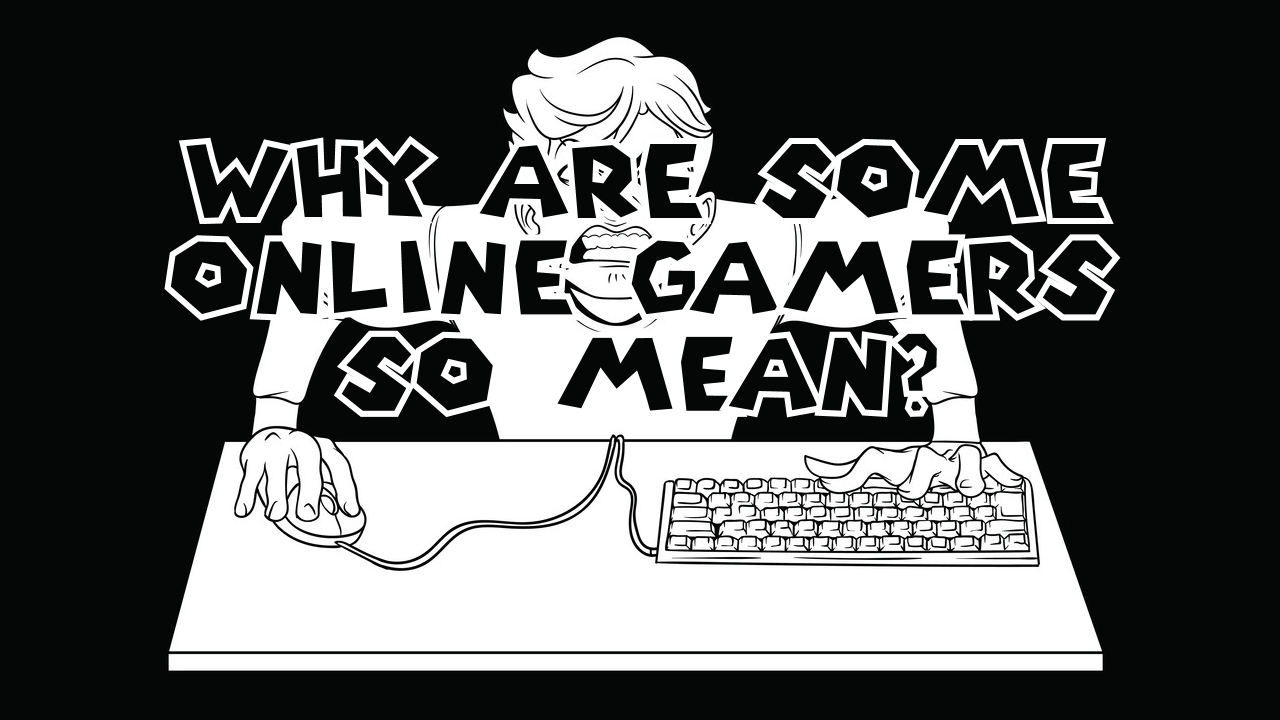
    I stay away from most online multiplayer games. My aversion is a symptom of my introversion. Introverts require less stimuli to be mentally satisfied, and because of this they prefer to control as much of an experience as possible. This explains why crowds are scary and why public speaking can be especially frightening for an introvert. The dynamic nature of people in an online multiplayer game diminishes some of the player agency that I want in a game, so I stay away from most online multiplayer games.

    But why are online multiplayer game players so dynamic? More specifically, why do some players turn into angry trolls the moment other players are introduced? Are those people sniveling beasts in real life?

    The word to focus on is deindividuation. Deindividuation is the process where a person’s identity fades as group dynamics take over and begin to influence the person’s behavior.

    Deindividuation is what causes a generally rational and non-confrontational person to become a terrible, rude, reference point for when parents and lawmakers tell us online multiplayer video games like League of Legends and Call of Duty are turning our good kids bad.

    This happens in two ways:

    1. Reduced social accountability, or the “you can’t see me” effect
    2. Reduced self-monitoring, or the “I can’t see me” effect

    Reduced social accountability in terms of online multiplayer games boils down to anonymity. As Jamie Madigan says in his book “Getting Gamers: The Psychology of Video Games and Their Impact on the People Who Play Them,”:

    “We feel reduced accountability from those around us because we’re in a group, because we’re anonymous, and because there are unlikely to be repercussions for our misdeeds.”

    Additionally contributing to reduced social accountability is the transience of our connections with other players. Meaning, we’re only interacting with our team members and our enemies temporarily.

    In 2010 Blizzard, the company behind World of Warcraft–a huge MMO; massive, if you will–tried curbing this effect by requiring users use their real names rather than made up screen names. The idea being that if users no longer had the ability to hide behind fake names, they would feel more accountable to their actions. Players were very unhappy and Blizzard changed course just three days later. In 2013 Google tried the same thing with YouTube commenters. That policy lasted a much longer, but still ultimately temporary, eight months.

    Reduced self-monitoring, the “I can’t see me” effect is, in my opinion, much more interesting than the “you can’t see me” effect. This is when a person adopts the motivations of a group as justification for her own actions. The “everyone else is doing it, so it must make sense,” mentality.

    Competitive games are perhaps the most obvious example here. When playing on a team against other teams, it becomes very easy to foster hatred for all teams that aren’t yours.

    Probably the most well-known study involving reduced self-monitoring is Philip Zimbardo’s Stanford Prison Experiment where college students played as guards and inmates in a mock prison set. The idea, in short, was to see how the each student would adapt to their roles. Very quickly the guards began to abuse the inmates and the inmates accepted the abuse. The experiment was abandoned within six days.

    So, how has knowledge of reduced social accountability and reduced self-monitoring affected how video games are designed? The Player Behavior Team at Riot Games, creators of the incredibly popular League of Legends game, implemented a series of changes to positively curb the effects of reduced social accountability and reduced self-monitoring.

    Some examples are:

    • Players were granted the option to mute obnoxious players on the other team.
    • Riot Games introduced “priming” messages on loading screens designed to prime positive behavior. For example, one message read “Teammates perform worse if you harass them after a mistake.”
    • Riot games also looked at team composition. They found that if at least one pair of friends were members of the same team, it had a positive impact on reports of toxic behavior.

    So it’s our own human psychological makeup that allows us to become monsters when we play online multiplayer games.

    But, humans are also capable of learning and reacting with intent. So next time you’re playing games online, be nice. And don’t take it personally when some rude player tells you to eat a weiner.

    (more…)