Tag: calebjross

  • Amazon Luna Input Latency and Streaming Quality Review

    Amazon Luna Input Latency and Streaming Quality Review

    Subscribe on YouTube

    The promise of cloud gaming excites me. In this video I offer my initial thoughts on Amazon Luna. I focus mostly on the quality of the streaming experience and how well Luna handles input lag.

    So this video isn’t going to be a full review of the Luna platform. I’ll have a video for that later where I’ll talk about the user interface, the controller, the features, the cost, the game selection, all that fun stuff. And, I’m also working on a direct comparison of Luna vs Stadia, the two cloud gaming platforms I have the most experience with. Go ahead and subscribe to this channel, and click the bell notification icon to ensure you don’t miss those videos.

    So, why am I dedicating an entire video just to input latency and stream quality? Why is input lag and streaming quality so important? The easy answer is because input lag and poor streaming quality quite literally break the game. Video games are unique in that they demand skilled user input to function in their world of game rules. If the input is broken, the game is broken. If the input is broken, the rules that govern the game world can no longer be abided by. If the game needs me to time my jump just right but also doesn’t allow me to time my jump just right, the game has lied to me. I don’t like liar games. Same goes for the stream quality. All that crap I just said about breaking the rules and such, that’s all the same when talking about skipped frames due to a poor internet connection.

    Watch to find out how well Amazon Luna does in terms of input latency and streaming quality.

    (more…)

  • Google Stadia Connect from 7/14: the good, the bad, and the less bad

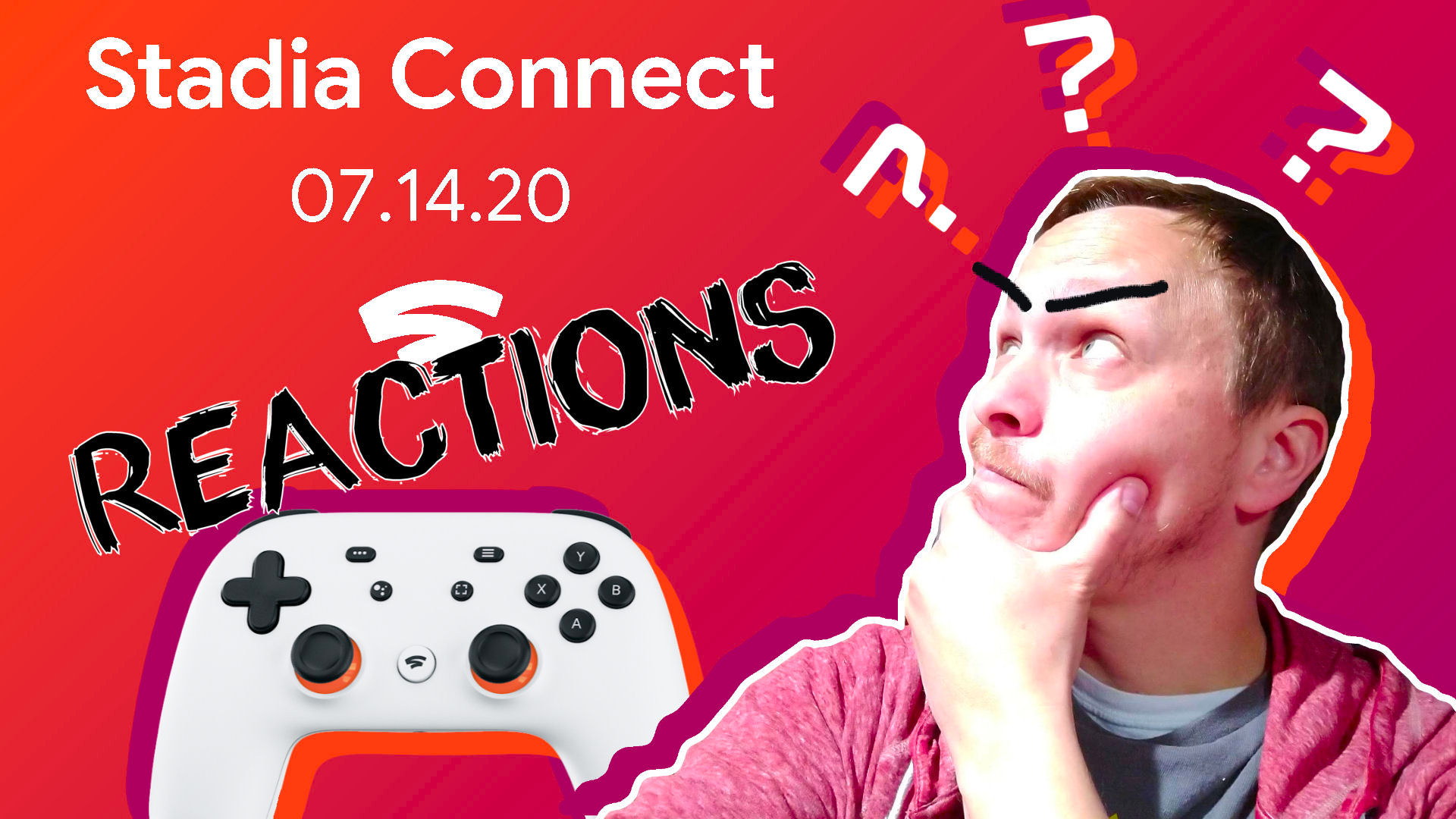
    Google Stadia Connect from 7/14: the good, the bad, and the less bad

    Subscribe on YouTube

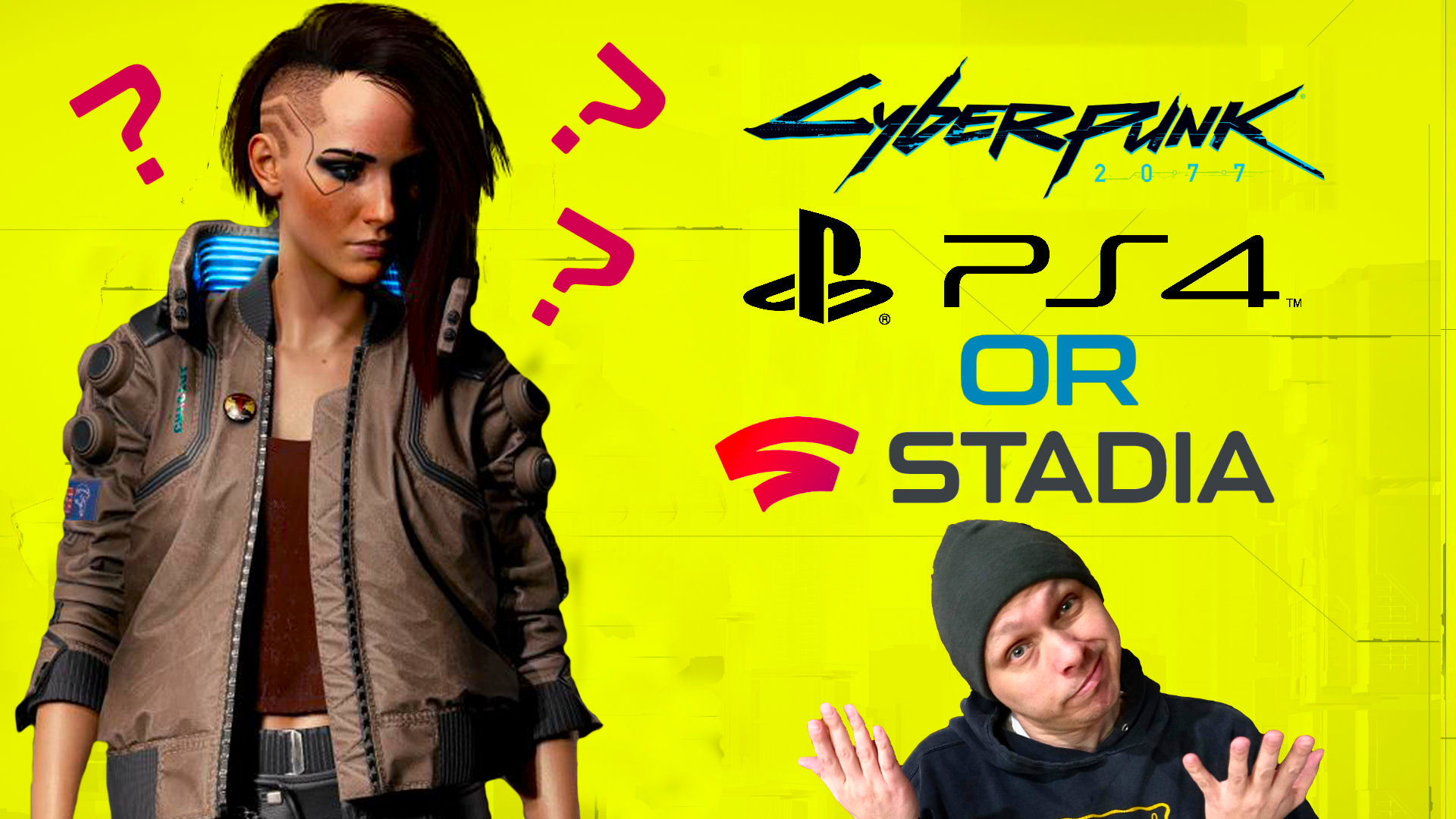
    So let’s get the bad news out of the way…well, some of the bad news, anyway. Stadia’s refusal to state November 19th as the Cyberpunk 2077 release date all but confirms for me that the game is not going to launch on the same day-and-date as other major platforms. You are safe for now, PS4 pre-order.

    Before we go any further, please consider subscribing to this channel for more video game content. I’ve done a lot of Stadia focused content lately, and it’s been really fun. The Stadia community has been incredibly welcoming. So, I’ll probably keep doing Stadia content in addition to my normal non-Stadia content.

    Yes, the July 14th Stadia Connect has come and gone, and overall, I’m a bit deflated. The number of games was underwhelming. The type of games was underwhelming. And I don’t believe Stadia did much to expand the user-base like I think they needed to. Well, except for one important feature, which I’ll get into shortly.

    You’ll want to stick around through the end of this video because at the end I’m going to mention some viewer comments left on my predictions video from July 7th to see what people got right and what people got wrong.

    The presentation started as I thought it might, by reintroducing Stadia to the public. A succinct commercial full of game titles that us Stadia fans already know about, but the rest of the gaming public might not. This section of the Connect ended with a detailed look at the Click to Play feature. Content creators can leverage the video description to place a link that will take viewers directly to the game on Stadia to begin playing the game instantly.

    Functionally speaking, this seems like little more than a standard outbound link. Practically speaking, this could help expand the user base. If content creators place these links at the top of descriptions while streaming, viewers will see these Stadia links constantly. Multiple touchpoints increases the chance for a user to take action. The obvious limiting factor here is that the number of non-Stadia gamers watching Stadia streams is probably quite low, at least right now. Though, perhaps exclusive games will help this. Gamers who want to see what Orcs Must Die 3 is all about, for example, will have to watch a Stadia stream.

    Speaking of exclusives, we saw a few here. Super Bomberman R Online from Konami is a timed exclusive, and it looks like it could be fun. I haven’t played a Bomberman game in decades. I’m not a multiplayer gamer, but this is one that could get me to test the waters a bit. And, it’s nice to see Konami making a video game again. But don’t expect many more. They’re pretty invested in the Pachinko machine industry now. Super Bomberman R Online will be released Fall 2020.

    We got a trailer for Serious Sam 4 from Croteam, which will be a timed exclusive on Stadia and PC. This is a beloved series that I’m glad to see back. Steam shows the release date as August 2020, but for some reason the Stadia Connect did not mention a release date at all. This seems very strange, but I’ll try not to look into it. I’ve already bummed myself out by looking too much into the lack of a Cyberpunk 2077 release date.

    Outcasters from Splash Damage is a Stadia exclusive which was introduced as an effort from Stadia Games and Entertainment. This introduction addresses the confusion I had expressed in my predictions video. I wasn’t sure if Stadia Games and Entertainment was a studio or if it was a division responsible for getting games from third parties onto Stadia. It turns out, it’s the latter.

    The general consensus in the Stadia community, based on comments I’ve read online, is that while we wanted to see an exclusive from one of Stadia’s own divisions or studios, this game doesn’t seem to be the one we wanted. I did expect a new first-party game to be a multiplayer battle type game, which it is, but I, and it seems others too, wanted something grander, something more AAA feeling. This game seems like a mid-tier team-battle game with a few new mechanics. But I don’t think it’s the kind of game that will bring new people into Stadia and it’s certainly not the showpiece that will get people talking and keep them talking up until its launch in the Fall.

    Finally, with respect to exclusives, Orcs Must Die 3 from Robot Entertainment is a timed Stadia exclusive and is the only game to get officially announced and stealth-dropped today, July 14th. This is a game I’ll probably watch more than play myself—again, I’m a single player gamer—but I know a lot of people are excited for it. This game also showcases Stadia’s unique ability to have hundreds of enemies in a wave at once, which is great.

    Stadia needs games like this that showcase what’s unique to the platform. Unfortunately, this stealth-drop wasn’t so stealthy as it was leaked weeks ago. Also, unfortunately, it’s the only game that was released free to Stadia Pro members today. I was not only hoping but actually expecting at least two games to be announced and available today for Stadia Pro members.

    11 additional games and game expansions were mentioned, which I’ll run through quickly right now in chronological order according to the stated release date.

    Available in early access right now is One Hand Clapping from Bad Dream Games. Platformers are one of my favorite genres, but this game doesn’t do much for me. It uses a unique singing mechanic and I’m not a fan of scaring my family by singing to myself here in my already creepy dungeon-like downstairs game room.

    PUBG Season 8 is coming on July 30th. Neat.

    Elder Scrolls Online: Stonethorn is coming August 24th. Also neat.

    Dead by Daylight from Behaviour Interactive is a good get for the Stadia platform. Currently, the Stadia store doesn’t have any asymmetrical multiplayer horror games. And on Stadia, the game will support Crowd Play and Crowd Choice. Crowd Play is a Stadia feature that allows stream viewers to queue up to play the game with the streamer. Crowd Choice provides stream viewers with collective agency over various facets of the game. Think of it like a voting mechanism that impacts the game in real time. I believe Twitch has a similar feature currently. Dead by Daylight comes to Stadia in September 2020.

    Also coming to Stadia in September is Hello Neighbor from TinyBuild Games. Hello Neighbor is a stealth horror game with very non-horror visuals which I think makes for a very interesting subversion of expectations. The design itself plays into the very unease that a stealth horror game relies on mechanically. I’m excited to try this one, and considering it will be free to Stadia Pro subscribers upon launch I won’t have any reason not to. The follow-up prequel Hello Neighbor: Hide and Seek hits Stadia in late 2020.

    Hitman and Hitman 2 will come to Stadia in September with Hitman 3 coming in January 2021. All three games are from IO Interactive. This is perhaps the only announcement in this entire Stadia Connect that got me excited. I’ve somehow not played any of the modern Hitman games despite being really intrigued by them. Also, Hitman will be free to Stadia Pro subscribers which is really smart. Build the audience for Hitman in preparation for the release of Hitman 3 in January.

    Perhaps the biggest surprise in this Stadia Direct was the announcement that Sekiro: Shadows Die Twice from FromSoftware will be coming to the platform. FromSoftware are the people behind the Dark Souls games and Bloodorne. The arrival of Sekiro is a good thing for a couple of reasons.

    Firstly, because the game won tons of awards last year including Game of the Year at The Game Awards, this game brings further legitimacy to the Stadia platform. Second, because FromSoftware games are so heavily dependent upon perfect timing combat scenarios, this could be another game to showcase the surprisingly low lag with Stadia. Doom Eternal showcased the speed and fidelity. PUBG showcased Stadia’s capacity for twitch shooters in a multiplayer arena. Sekiro will showcase how the platform has come close to eliminating lag.

    Lastly, with no release date mentioned in the Stadia Connect but with other sources mentioning December 2020, we have Outriders from People Can Fly. This game looks to be more my style than almost every other game included in the Stadia Connect. A post-apocalyptic, action shooter with a single player campaign and RPG elements? Yes please.

    And that’s all we got from the July 14th Stadia Connect.
  • Why I might get Cyberpunk 2077 on Google Stadia

    Why I might get Cyberpunk 2077 on Google Stadia

    Subscribe on YouTube

    I pre-ordered Cyberpunk 2077 immediately after the very first teaser for $48 using Best Buy’s Gamer Club Unlocked (RIP). The pre-order comes with a steel book, which I don’t care about, so I could sell that for a few dollars, bringing my total cost to maybe $40, which is presumably about $20 less than Cyberpunk 2077 will be on Stadia.

    But I’m actually considering cancelling my PS4 pre-order and buying on Stadia. Why? (more…)

  • The Turing Test is more Future of Humanity fun. But is it good?

    The Turing Test is more Future of Humanity fun. But is it good?

    Subscribe on YouTube

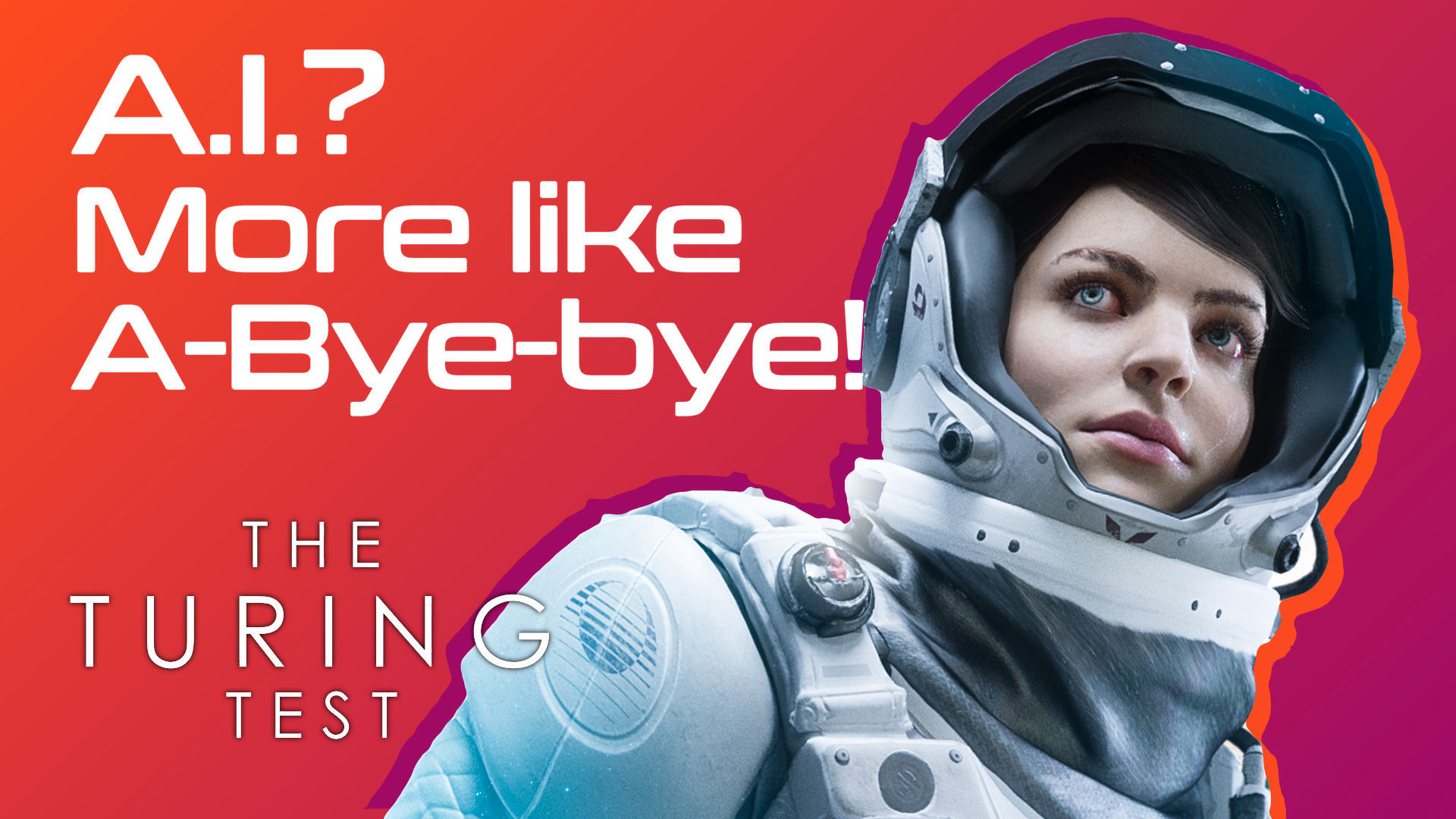
    The credits are rolling on a really fun first-person puzzle game with a science fiction motif in which advanced AI-turned-fully-sentient machines have caused problems and humans have to use their uniquely capable human brains to save themselves, ultimately encouraging the player to ask “what’s really the difference between people and robots?”

    Though the game traffics in themes, genres, and styles that plenty of other games have trafficked in before (Portal, Portal 2, Q.U.B.E, Q.U.B.E 2, The Talos Principle), I happily jumped into The Turing Test with the same amount of vigor and excitement I will continue to do so for every one of the inevitable forthcoming games that do this exact same thing. I like narrative games. Story in games is often the glue that holds the pieces together and keeps the single-player gamer invested. I like puzzle games. They are slow-paced and they make me feel really smart. But puzzle games with stories are very hard to do right. It’s hard for game designers to give a narrative reason for puzzles to exist in a world. Some games ignore all logic and just lean into the puzzles as part of the game’s charm. The Resident Evil series, for example, does this really well.

    Most games never try for logic and simply never try mixing these two things. Puzzle games are most often hyper-focused on the puzzles themselves. All else is pulled away. Think of a game like Tetris or even World of Goo, where the story is there but it’s limited to essentially text screens between the puzzles.

    Storytelling in a puzzle world is hard. That is, except when that world’s story is specifically about testing a human’s puzzle-solving abilities. And to make the conflict in the story work, the human must be pitted against an entity of intelligence great enough to fool the human: an Artificially, super intelligent, self-learning villain, for example.

    The villain with The Turing Test is an AI named T.O.M. T.O.M. controls a space station on Europa, one of Jupiter’s moons. You play as Ava, a scientist who has arrived at the space station to rescue the station’s crew who haven’t been heard from in a long time. T.O.M. coaches Ava throughout the space station as she solves puzzles to reach the missing people. T.O.M. also slowly tries to influence Ava’s perception of her mission, insisting that she’s not meant to rescue the crew. Rather, she’s meant to kill the crew to ensure they never return to Earth. See, the crew has become infected with an organism that grants eternal life. Bringing such an organism back to Earth would cause an extinction level event. If people can’t die, the world is doomed to overpopulation, endless cancer, and on and on.

    The tension here, the fuel that keeps the player interested, is when T.O.M.’s logical reasoning is pitted against Ava’s emotional reasoning. T.O.M. tells Ava that the death of her crew is logical, in that it will prevent countless other deaths. Ava, however, is a sappy meat-bag and wants to pull a Joel in order to save all her Ellies.

    But what about the puzzles? This is a puzzle game, right? The Turing Test offers typical switch puzzle mechanics—activating a switch opens a door—but as levels (or Sectors, as they are called here) advance, new mechanics are introduced. You get time activated switches, robot companions, the ability to control cameras, and even for short times, you get to control a turret gun.

    The final 3rd of the game is considerably easier than the first two thirds, which I appreciate. At some point in every puzzle game with a campaign I feel like I’ve proven myself able to overcome challenges. That moment generally happens around the 70-80% mark. But I usually still feel compelled to complete the game. The Turing Test understands this and instead focuses on story for the final third, with the puzzles being only easy to moderately challenging.

    In comparison to other games of this type, specifically those I mentioned at the start of this video, The Turing Test lands right in the middle, not as good as Portal and Portal 2, and the Talos Principle, but a bit better than Q.U.B.E and Q.U.B.E 2, but not by much. All of these games are fantastic if you have an urge to make an AI villain look weak and pathetic fool.

  • I finished a FULL game on Google Stadia. Am I a believer now?

    I finished a FULL game on Google Stadia. Am I a believer now?

    Subscribe on YouTube

    I just finished playing through a full 15 hour game on Google Stadia. Did the experience turn me into a Stadia believer?

    This is the longest single-game commitment I’ve made to Stadia. I learned a few things along the way about whether or not Stadia works and if it’s a good option for anyone.

    In this video I give my thoughts on the controller, the impact of a strong internet connection, the Stadia UI (user interface), and more.

  • Are Video Games Good at Comedy?

    Are Video Games Good at Comedy?

    Subscribe on YouTube

    Are video games good at comedy yet?

    More precisely, are video games good at comedy in their own right. Of course video games can make us laugh. Steam has an entire category dedicated to funny video games. But most video games that make us laugh do so in ways that other mediums can also. The writing in video games, or the situational articulation of characters and scenes, these things make us laugh when we watch TV, when we read a book, and so of course they’d offer the same with video games. Nobody is going to argue that the Trashopedia entries in Donut County aren’t worthy of their own mock Mitch Hedberg album. They are. I’ve never laughed so hard when playing a video game.

    But the humor with Donut County’s Trashopedia and Undertale’s incessant puns and Psychonaut’s slapstick gags is humor that’s possible across many different mediums. I want to know if video games have truly carved out their own methods of humor.

    First, let’s start by defining humor and therefore giving us a way we can objectively measure whether or not something is funny, or at least as much as we can given the subjectivity of humor. My favored theory of humor, the Benign Violation theory, itself allows for subjectivity. So, there’s no getting away from the fact that what makes me laugh might not make you laugh, but the Benign Violation theory at least helps us categorize things as funny or not, even if the result of that humor isn’t an outburst of laughter.

    So, the benign violation theory basically states that something is funny when

    1. it violates some norm or expectation
    2. does so without hurting anyone, and
    3. both the perception of the violation and of the non-threatening nature of the violation happen simultaneously

    When it comes to humor by way of writing, the text sets up the expectations and then violates it with a punchline. Or take this poop-shaped coffee mug, for example:

    The coffee mug is generally a banal part of your morning routine. The poop-shape violates this norm. And nobody has been killed. Even if you find this particular joke in bad taste, it’s still easy to understand why it’s funny.

    Video games are unique. We’re connected to a video game by an input device, one that maps our thoughts to the actions we see. As we press buttons the feedback changes our approach, our input changes, and the loop continues until we arrive at a win state. No other entertainment medium offers this level of malleability. No other medium wants us to stretch and shape the product to an end while the product stretches and shapes us to that same end. This reciprocal molding is what makes video games uniquely immersive. And this contract between game and player relies heavily on a firm understanding of the ruleset. Most games literally tutorialize to the player. Books don’t tell you how to read. Movies don’t tell you how to watch. Video games tell you how to play. And this simple fact, I think, is why video games have trouble being humorous in their own right.

    When I press up on the d-pad, I expect the player character to move up. When I press the R2 button, I expect the gun to fire. If that doesn’t happen, and I get shot instead, I don’t laugh about it. Why? The act certainly violates the expectation. But, in the context of the game, it does hurt someone. Me. My progress as the player, the reason I’m playing the game, has ended. Success depends on the game itself following the rules it’s requiring me, as the player, to follow.

    So how do you benignly violate expectations with a video game?

    The most straightforward example I can think of is during the intro tutorial of Portal 2. A robot chauffeur named Wheatley greets you as you wake from a long stasis. Testing for resulting brain damage, Wheatley gives you a simple command. You just need to speak. The game primes you for relief. If you honor the instructions, you’ll discover that your player character is not brain damaged, as was expected, and in fact can follow instructions perfectly, therefore subverting those expectations. However, this happens…

    The punchline is a clever subversion of expectations, even when those expectations already seem to be subverted. This degree of layering and subverting expectations is difficult in any medium, but really shines in this video game example.

    This subversion of the expected control scheme is, as I see it, the primary way video games currently use their unique offerings for comedy. A common flavor of this approach are games that make lack of control a primary feature. Gangbeasts, Octodad, and Human Fall Flat are all examples of this. Limbs are controlled independently, and forward momentum carries the character far beyond what game players have come to expect with most games. These games provide humor by defying the player to play them well. It’s not surprising then that these games are generally pretty forgiving with their lose conditions. If I am punished for the lack of control, then the violation is no longer benign.

    Similar to the ragdoll approach of those games, the recent trend of simulator games manage to use a game’s intrinsic qualities for humor. Goat simulator, for example, promises to allow the player to simulate the life of a goat, which is mundane, and is humorous simply by nature of that juxtaposition. I expect a game to give me interesting experiences. Chewing cud in a petting zoo is not interesting. Therefore, benign violation. However, like Portal, Goat Simulator then subverts that expectation by encouraging the player to do things that are decidedly not goat-like.

    Surgeon Simulator takes the opposite approach by suggesting that the game will let you experience something that requires immense skill. Then it subverts that expectation by limiting the player’s control to absurd levels. That a surgeon cannot control his own fingers is the humor.

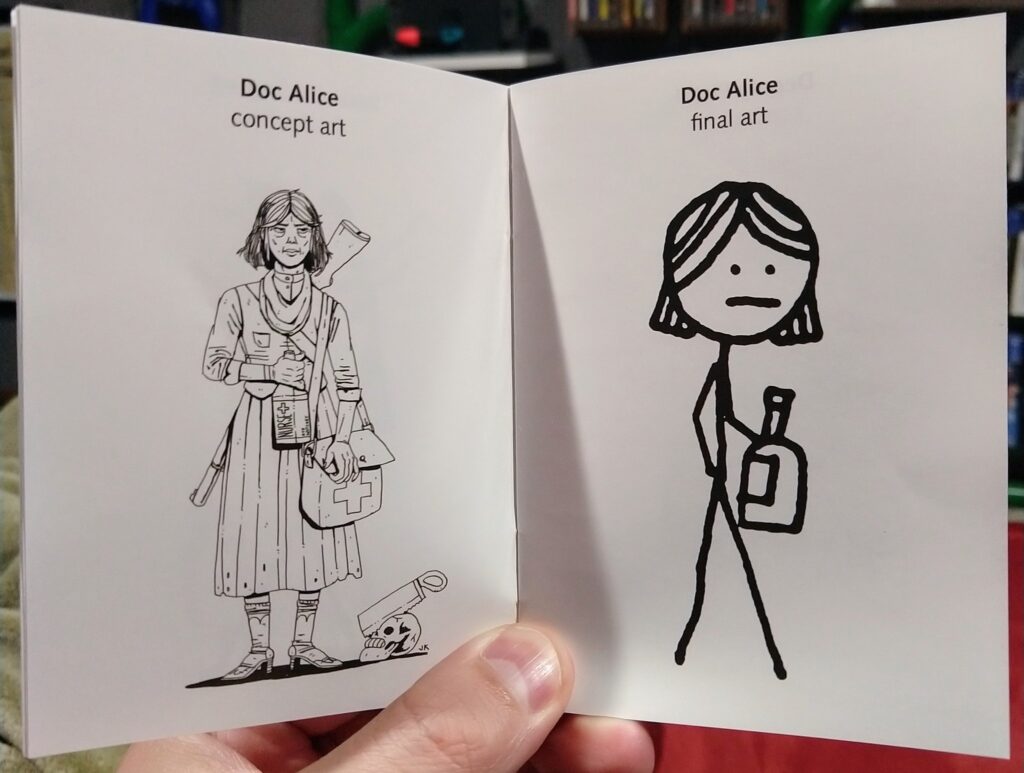
    West of Loathing is an interesting example of video games doing comedy. While most of its comedy is applicable to other genres, one very unique way the game subverts expectations is with its art book. Video games sometimes come packaged with booklets full of concept art for the game with the expectations being that the reader will be guided in a visual chronology from sketch to concept to final rendering. But West of Loathing is a game with a stick figure motif, so the art book instead reduces the fidelity of the art over time rather than increasing it.

    The art book for West of Loathing is hilarious

    When will video games consistently use their own intrinsic properties for comedy? Will it ever happen often enough that awards are given at big award shows for video games that do comedy right? Will class be taught at universities about comedy in video games?

  • How to Play Video Games and Eat Food (and Laugh) at the Same Time

    How to Play Video Games and Eat Food (and Laugh) at the Same Time

    Subscribe on YouTube

    Eating food while playing video games is a problem that’s existed since the very dawn of video games. Way back in the 1900s, a man named William Higginbotham built the first video game machine called Tennis for Two and it required more than one hand to operate. That creation of tennis for two’s two handed control pad seeded an industry trend that continues it’s destructive path still today.

    But not all is lost. Here I present to you a few ways you can play video games while eating.