Category: Stranger Will

  • What is the value of a Goodreads.com book Giveaway? 93% of entrants had never heard of me. 88% plan on reading my books.

    What is the value of a Goodreads.com book Giveaway? 93% of entrants had never heard of me. 88% plan on reading my books.

    Does giving away your books lead to more readers, and in turn, more fans?

    I’ve long read of the marketing effectiveness of giving away books using the Giveaways option at Goodreads.com. And though I’ve conducted one giveaway in the past (for Stranger Will) I’ve not yet been able to confidently attribute any gains in readership or sales due to that giveaway. With this attribution gap in mind, I set out to conduct a giveaway for  As a Machine and Parts, that would allow me to more precisely measure the value of a Goodreads.com user. My conclusion: a Goodreads.com user stands a great chance of becoming a reader.

    The setup

    I listed a 2 copy giveaway for As a Machine and Parts to take place between 2/3/2012 and 2/15/2012. During this time the giveaway received a total of 398 entries. After the giveaway was closed for entries, I followed up with all but 46 entrants (because I either knew them personally, which could skew the results, or the user was not accepting personal messages) with a survey of 8 simple yes/no questions that touch on topics such as prior recognition, intent to read/buy my books, intent to connect on social networks, and the desire to connect with me, as an author, in real life. The actual questions asked in the survey include:

    • Had you heard of author Caleb J. Ross before this Goodreads.com giveaway?
    • Had you heard of the book As a Machine and Parts before this Goodreads.com giveaway?
    • Do you intend to purchase As a Machine and Parts in the future?
    • Do you intend to read As a Machine and Parts in the future?
    • Do you intend to read any other books by author Caleb J. Ross?
    • Do you plan to connect with author Caleb J. Ross on social networks such as Twitter, Facebook, and Google+?
    • If Caleb J. Ross were to visit your city/town for a reading, would you consider attending?
    • Would you like to subscribe to the Caleb J. Ross newsletter?

    The results of my Goodreads.com giveaway
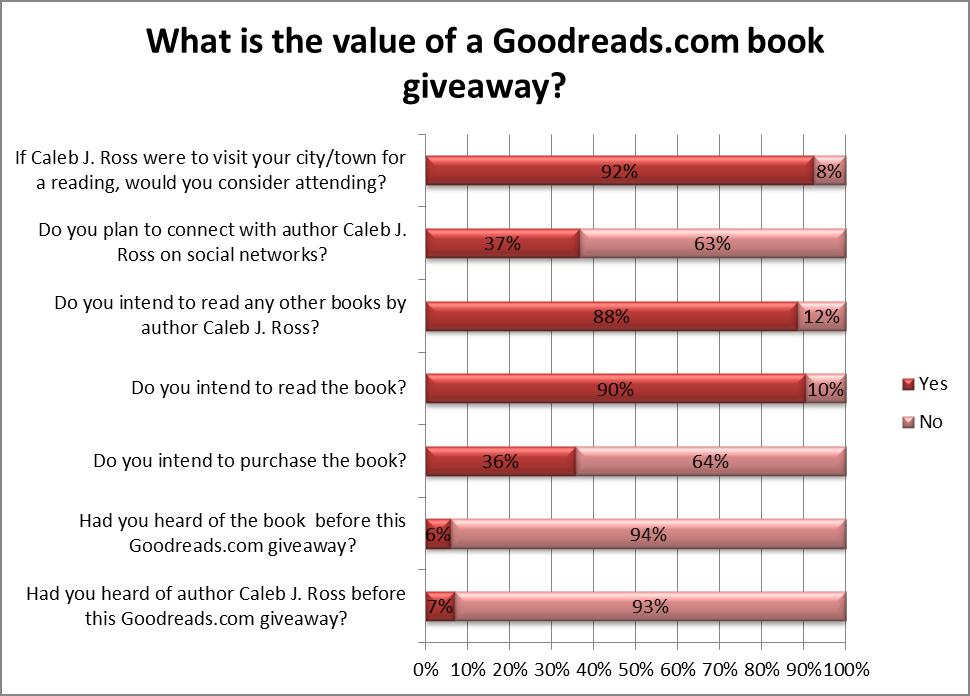
    • 93% of non-winning entrants had never heard of me before this contest. Translation: I’m speaking to an audience who might not otherwise have heard me.
    • 94% of non-winning entrants had never heard of As a Machine and Parts before the contest.
    • 36% of non-winning entrants said they planned on purchasing the book, even though they didn’t win. This is a strange percentage when compared to the 90% of people who intend to read the book. I suppose most readers will look to their library for this book?
    • 88% of non-winning entrants intend to read other books by me. This is an incredibly huge number, especially when compared to the 94% of entrants who had never even heard of me.
    • 37% of non-winning respondents plan to connect with me on social networks
    • 92% of non-winning respondents would come to a reading event if I were to visit their town.
    • 51% of non-winning respondents signed up for my Email is Dead email newsletter. Though I’m convinced that an email newsletter can offer what RSS feeds and social statuses don’t offer more effectively, I do believe that newsletters play a role in summarizing valuable content (which was affirmed with an earlier Facebook poll conducted on this very topic).
    • 38% of non-winning respondents added As a Machine and Parts to one of their Goodreads.com bookshelves
    • 25% of non-winning respondents downloaded Charactered Pieces
    • 25% of non-winning respondents downloaded Murmurs: Gathered Stories Vol. One downloaded

    Additional Goodreads.com giveaway results not included in the chart above

    • 51% of non-winning respondents signed up for my Email is Dead email newsletter. Though I’m convinced that an email newsletter can offer what RSS feeds and social statuses don’t offer more effectively, I do believe that newsletters play a role in summarizing valuable content (which was affirmed with an earlier Facebook poll conducted on this very topic).
    • 38% of non-winning respondents added As a Machine and Parts to one of their Goodreads.com bookshelves

    How many people actually downloaded the free ebooks?

    These percentages are interesting because it means that 75% of people who filled out the survey did not download either of the free ebooks. Either people love filling out surveys or they’ve simply forgotten to download the books.

    • 4% of non-winning respondents added Charactered Pieces (one of the free ebooks given away to survey respondents) to one of their Goodreads.com bookshelves
    • 1% of non-winning respondents added Murmurs: Gathered Stories Vol. One (one of the free ebooks given away to survey respondents) to one of their Goodreads.com bookshelves

    These percentages, when compared to the download percentages above, are interesting as they may elude to a few possibilities: 1) Goodreads.com users may be averse to adding ebooks to reading lists, 2) Goodreads.com users may not always add a book to their lists as soon as they receive the book; perhaps they wait until they actually begin reading it, 3) something else entirely. This seems too big of a discrepancy to ignore, so if anyone has any thoughts, please let me know.

    Why do I think my survey was effective? OR Here Come the Caveats.

    The response-rate for the survey was an amazing 29%. The industry open-rate for Art/Artist newsletters is 17.54% [1]According to Mailchimp. This isn’t exactly a parallel comparison, as open-rate is not the same as response-rate, but it’s a close enough comparison to provide some valuable insight. The response rate is also likely inflated because of the following factors:

    • The entrants were already “in the sales funnel” in that they had already reached out with an interest in my book. In other words, I’m not blindly sending the survey to readers. I’m instead sending the survey to interested readers.
    • I allowed only yes/no answers, leaving out “uncertain” responses. In hindsight, I probably should have provided an “uncertain” response (and perhaps a comments section for each answer).
    • It’s possible that users may have only considered certain actions because the survey included them (connecting on social networks, for example). Would the respondents have connected with me on social networks had they not been introduced to the idea by way of the survey itself? Possibly not.
    • I promised free ebook downloads to all respondents. Obviously, free books must have a lot to do with the high response rate.
    • My communication was very sales averse. I approached giveaway entrants with respect. Truthfully, I am a naturally respectful guy, so I just spoke the way I would normally speak.
    • The survey was incredibly simple. 12 questions with 9 of them being yes/no questions.

    What are your thoughts? Have you conducted a similar survey? What did your results indicate?

    Footnotes

    Footnotes
    1 According to Mailchimp
  • Book Metadata. Let the Algorithm Sell Your Books For You. A Primer.

    Book Metadata. Let the Algorithm Sell Your Books For You. A Primer.

    There’s a rule when it comes to search engine optimization: Content is King. Basically, this means that above everything else—all the link building, code tweaking, and social networking—the most important factor of any well-optimized web presence is the content itself. What good is your website without compelling content? And without compelling content, how can you expect other websites to link back to yours? I would go so far as to suggest the rule should be Content is God, but then we lose out on the lovely alliteration.

    But the Content is King rule governs everything, not just your website or social profiles. Your books themselves actually contain Kingable Content that can be tweaked and optimized for marketing benefits. I’m not suggesting that you to manipulate your book’s words for the sake of search engines; that would be [keyword]ing+<h1>stupid</h1>. Rather, I’m here to clue you in to an area of underutilized content that supports your book even after publication. Metadata.

    What is Metadata?

    Metadata, whether it’s book metadata or webpage metadata, is basically the same thing: behind-the-scenes data (subject, genre, theme, etc.) that describes the front-and-center content (the book itself). The categories assigned to help shelve books within the Dewey Decimal system, that’s a form of metadata. Those Product Details on every Amazon.com book page. That’s metadata. When you do a search on a computer for an author or topic, the search results are partially powered by metadata. Those Amazon.com If You Liked ____, You May Also Like ____ recommendations…metadata factors in to those.

    Why Care About Metadata?

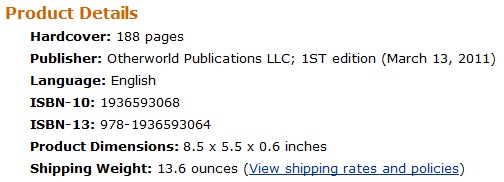
    The more information available to search engines and book sites about your book, the more information those search engines and book sties have to use in providing relevant results and recommendations to readers. And while descriptions such as publisher, shipping weight, and product dimensions (pictured above) may be useful for some purposes, they don’t speak to the general concerns of most readers, such as theme, genre, subject, etc. That’s where enhanced metadata comes in.

    Not many people realize just how deep the metadata rabbit hole goes. Which is why, for lack of a better term, I’m using “enhanced metadata” to refer to all those unseen rabbit hole nooks and crannies. Enchanced metadata allows you, the author or the reader, to supply book sites with in-depth information about a book. Such information may include, but is not limited to:

    • fiction or nonfiction categorization
    • genre
    • subjects
    • pace
    • tone
    • writing style
    • perspective of the narration
    • tense (past, present, future)
    • are there strong male or strong female characters
    • errata
    • movie connections
    • books that influenced this book
    • books influenced by this book
    • books that cite this book
    • books cited by this book
    • characters
    • first sentence
    • how many characters does the book follow
    • literary devices used

    Where Can Metadata be Manipulated?

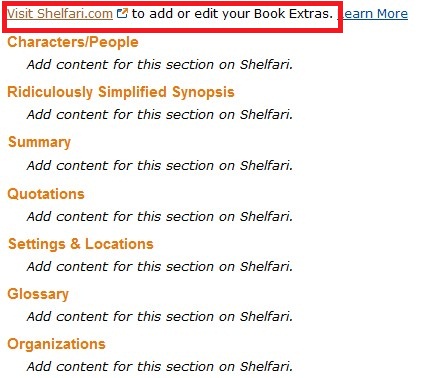
    Shelfari (refers to enhanced metadata as Book Extras)

    Shelfari is a social networking and book cataloging site which powers much of the enhanced metadata provided to Amazon.com. Existing Book Extras data can be seen either by accessing a particular book’s page at Shelfari.com or by accessing the book’s page via your Author Central account at Amazon.com.

    More about Shelfari Book Extras

    Goodreads (refers to enhanced metadata as Book Metadata)

    Goodreads, like Shelfari, is a social networking and book cataloging site. Goodreads feels to me like a much more engaging platform than Shelfari, with far more opportunities for networking with readers.

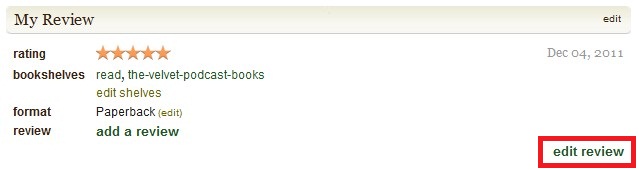
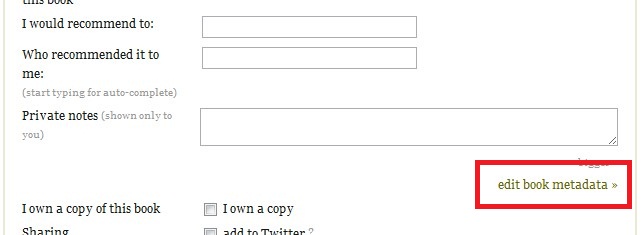
    To access the Book Metadata at Goodreads, first click on the “edit review” link of any book you’ve read. On the next page, toward the bottom, you’ll click on the “edit book metadata” link.  If you have not read a book, Goodreads requires that you become a “librarian” to edit the Book Metadata.

    Goodreads also allows some users to become Librarians, meaning they are able to edit not only book metadata, but also all information about a book including authors, descriptions, publishers, page numbers, and on and on. I highly recommend applying for librarian status. Not only am I an organization nerd, I love being able to more fully control the data with the books I’ve written.

    LibraryThing (refers to enhanced metadata as Common Knowledge)

    LibraryThing is yet another book networking site, and in my opinion is the least user-friendly. But readers use it, so as an author it’s important for me to be there.

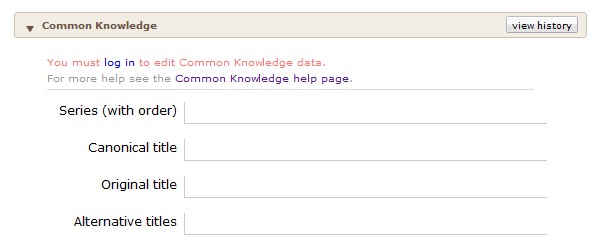
    To access the Common Knowledge section, simply open up an existing book page and scroll down to about the middle of the page.

    More information about the LibraryThing Common Knowledge metadata can be found here.

    Additional information on metadata (as well as general SEO information for authors) can be found in this amazing PBS.org article, “A Self-Publisher’s Guide to Metadata for Books.”

    top photo credit: http://www.flickr.com/photos/leprecon/

  • What is Domestic Grotesque Fiction and Why Do I Write It?

    What is Domestic Grotesque Fiction and Why Do I Write It?

    I’ve called myself a writer of grotesque family fiction, but what does that term really mean? I give a brief definition of grotesque domestic fiction, or grotesque family fiction, by way of example, in an earlier blog post:

    Take a family situation—usually some sort of broken family dynamic—mix in something grotesque—possibly morbid but not necessarily—and you’ve probably got domestic grotesque.

    But I don’t know if that fully captures it. Up front, I have to say that I’ve always been the type to back away from definitions that try too hard to avoid definition. You know the type; those writers who say, “No, I don’t write horror fiction, I write transgressive commentaries on modernist life where social norms are exposed as metaphorical fangs in the collective neck…” But in the world of marketing, it is important to simultaneously embrace and reject established genres. You know, ride coattails while sewing your own. So, I write literary fiction but I actually write domestic grotesque fiction.

    With that in mind, I coined the term “domestic grotesque” fiction, which Solarcide called a genre all my own (though, probably because I’ve been promoting the term as my own). In that Solarcide interview, I use a scene from Stranger Will to exemplify the term:

    I find something inherently interesting with taking the trope of father/son catch and twisting it just enough to be jarring (re: dead raccoon) but still remain entirely relatable. These subtle twists are where I get the descriptor for my work, domestic grotesque.

    So why do I write domestic grotesque fiction? Part aesthetics and part concept penetration. Domestic grotesque fiction isn’t only fun to write, it also allows me to very effectively zero in on an idea by pairing dissimilar concepts. Stranger Will = pregnancy and cleaning up dead bodies. I Didn’t Mean to be Kevin = lost parenthood and body parts. “Click-Clack” = newborn baby (implying potential) and mental retardation (no potential). It’s fun.


    Subscribe to be immediately notified when new posts go live:

    [subscribe2 hide=”unsubscribe”]

    Photo credit: http://www.flickr.com/photos/paulgrand/451080165/

  • Why I Write What I Write When I Write it: The Cymbal Analogy

    Picture a drum cymbal, delicately balanced upon a point, say, a pencil tip. This represents my general mental stability. Without any external force, the cymbal remains unmoving. This is me in a vacuum, a sensory deprivation chamber of sorts, without anything to shift my head in any way.

    But of course, I don’t live in a vacuum.

    Instead, I live in a world constantly shifting and changing, and with those shifts, my head shifts. Writing is a way to help maintain equilibrium. Not in a padded room sort of way. Simply, in the way that other people may watch TV or exercise or read a book to maintain that equilibrium.

    But when I write something, despite the intentions to establish a stasis, the writing itself throws the cymbal off balance. Every word, every realized concept and idea, moves the cymbal. The more I write, the more the cymbal teeters further and further from stasis. This is the simple, unavoidable nature of creation. When other people read and comment on my writing, the cymbal moves more. Sometimes, if someone disagrees with what I’ve written (morally, aesthetically, whatever) the cymbal may continue to teeter. But when someone agrees with what I’ve written, finds a shared comfort in it (though, don’t confuse confront with blind dedication; intellectually stimulating topics, even those one may disagree with, can bring comfort) the cymbal may fall back toward equilibrium.

    But remember, the cymbal exists in three dimensions. So, even agreement may bring with it some disagreement, thus shifting the cymbal off balance on another axis entirely.

    You’re starting to see that establishing perfect equilibrium is impossible, right?

    So, when I decide to start a new project, I consider the weight of previous writings, and the wake they may have caused, in hopes for narrowing in on a project that might encourage balance.

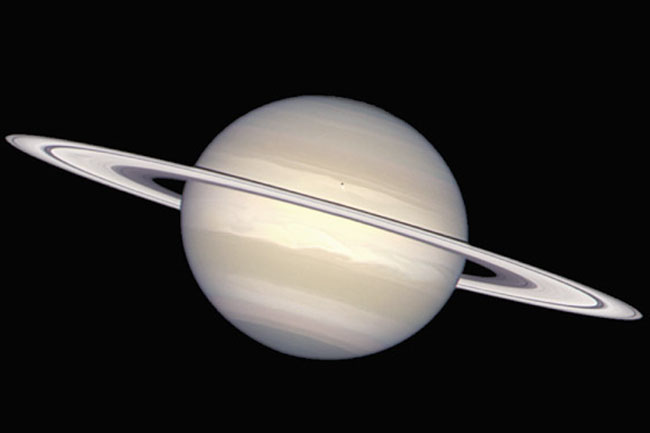
    Example: I wrote Stranger Will, a novel about a man who does not want his child to be born. Cue nihilism. Cue concern from friends. Cue some agreement from readers. My cymbal, at this point, would resemble the tilted rings of Saturn, with the low end being weighed down by the general commentary about the book. All of the changes that happened to me, all of the emotions I felt, the attacks I fought against, everything that this book contributed to since its creation brought down the low end. So, I then wrote I Didn’t Mean to be Kevin, thinking that to write from an alternate, and almost opposite, viewpoint—that of a child wanting a parent—the equilibrium may return. Of course, this book, by the very act of its creation and publication, will put new thoughts into the world, which will alter the level of the cymbal in ways I can’t anticipate.

    And on and on and on.

    [subscribe2]
  • As a Machine and Parts is the official January 2012 Book Club pick at LitReactor

    For those of you not in the know, LitReactor is a writer-focus site spawned by the minds behind ChuckPalahniuk.net, the official Chuck Palahniuk site. The site has received some high-praise not only from the writers who’ve come together to make up the blood of the community, but even Huffington Post has come out to offer a few kind words. Having my new novella, As a Machine and Parts, as the January Book Club pick for LitReactor feels a bit like a legacy of sorts, as my novel Stranger Will was the ChuckPalahniuk.net pick back in May 2011.

    So, head over to Amazon.com or directly to the Aqueous Books (the publisher) to purchase a copy and get ready for some elitist discussion on the finer points of snobbery.

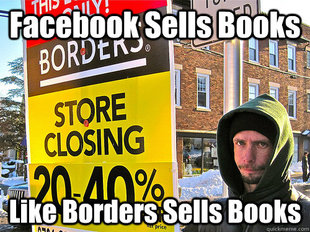
  • I lost $ 75.48 on a Facebook ad campaign, and you can too! -OR- Can Facebook ads sell books? Quick answer: no. Long answer: noooooooooooooooo.

    I lost $ 75.48 on a Facebook ad campaign, and you can too! -OR- Can Facebook ads sell books? Quick answer: no. Long answer: noooooooooooooooo.

    (part of my ongoing Search Engine Optimization for Authors series[1]I understand that paid search ads aren’t traditionally umbrellaed under search engine optimization. However, because tracking and optimization is involved, I’m including it in the series)

    Part of being a great author-marketer is knowing how to filter promotion time wastes from time worthwhiles. Some options are simple to filter. “Should I do a Goodreads.com giveaway to attract potential readers?” Yes (all it costs is the price of a few copies of a book to receive interest from hundreds of readers). “Should I rent a billboard for a month?” No (billboards offer either 1) travel-oriented products/services or 2) products with a high profit margin). Some options aren’t so simple. And in the case of the Facebook ad, prominence adds to the should I or shouldn’t I debate. Well, I’m here to help. (more…)

    Footnotes

    Footnotes
    1 I understand that paid search ads aren’t traditionally umbrellaed under search engine optimization. However, because tracking and optimization is involved, I’m including it in the series
  • A selection of my strangest gifts ever given

    I write domestic grotesque fiction, which is a term I think I made up, but is quite suiting to the themes and content of my stories and books. The most famous short story that I think would fit into the domestic grotesque genre is “Good Country People” by Flannery O’Conner (visualized quite creepily in this short film from the 1960s and quite cheesily in this student clip). Take a family situation—usually some sort of broken family dynamic—mix in something grotesque—possibly morbid but not necessarily—and you’ve probably got domestic grotesque.

    As you can imagine, Christmas is a fun time for my family.

    I’ve given quite a few quirky gifts. Though none could be tagged as grotesque, they are representative of the type of mind that would write a domestic grotesque story, I think. Tis the season and all that, so I figured I would share a few that I’ve so graciously given over the years.

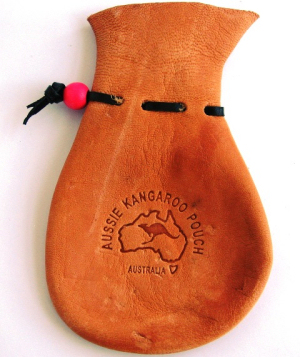
    Kangaroo Scrotum change purse

    Lucky Recipient: uncle

    Yep, it’s a real kangaroo scrotum. I bought one for myself years ago and still use it to this day. Quite durable, those marsupial nut sacks.

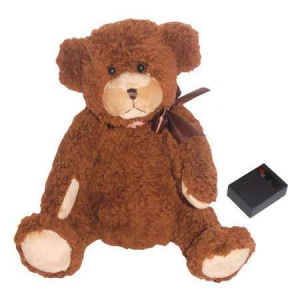
    Remote Triggered Farting Bear

    Lucky recipient: sister

    Elegantly simple. Place bear near unsuspecting grandmother. Press remote button. Watch rest of family pretend to ignore what they assume is just a more audible version of what grandma does all the time.

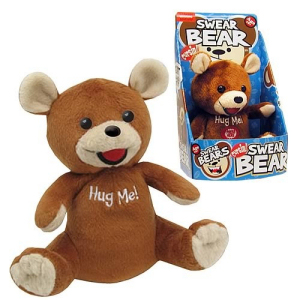
    Huggable Swearing Bear

    Lucky recipient: sister

    Elegantly simple. Place bear near unsuspecting grandmother. Tell grandmother to hug bear. Watch rest of family pretend not to be embarrassed as we hear an audible version of what grandma is thinking all the time.

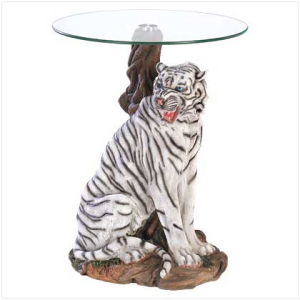
    Zebra/Tiger Table

    Lucky recipient: mother.

    My mother refused to tell me what she wanted for Christmas, so I taught her a lesson by giving her a bunch of stupid crap. This table is probably the stupidest. Lesson learned, mom. I actually gave a zebra table (sans the tiger), but I couldn’t find a picture of it anywhere online. Though I think I like this one better. 2011 gift idea!


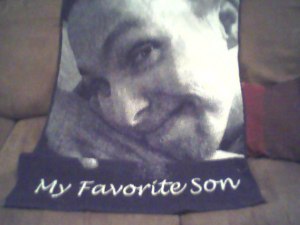
    Bath towel with my giant face on it

    Lucky recipient: mother

    I specifically made sure to call this gift a bath towel, rather than a beach towel or dish towel, so as to enhance the creepy factor. That face is actual size…if my face suffered from Elephantiasis. that face is actually about the size of a couch cushion. Bonus funny: I’m my mother’s only son.


    Way-too-old child footprints

    Luck recipient: mother

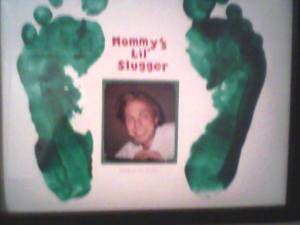
    You remember those cute infant-to-toddler foot print pictures that children often make for their parents. This is kinda like that except instead of ohhh-ing and awwww-ing there was much ewwww-ing and therapist calling. I actually think this was a Mother’s Day gift. Either way, ha!

    Might I recommend you do the same? Creep out your family by gifting one of the items above. Or, better yet, mix in some bookage and give a copy of one of my books. Click below to go to heaven.