Expect it here, at Perfect Edge Books


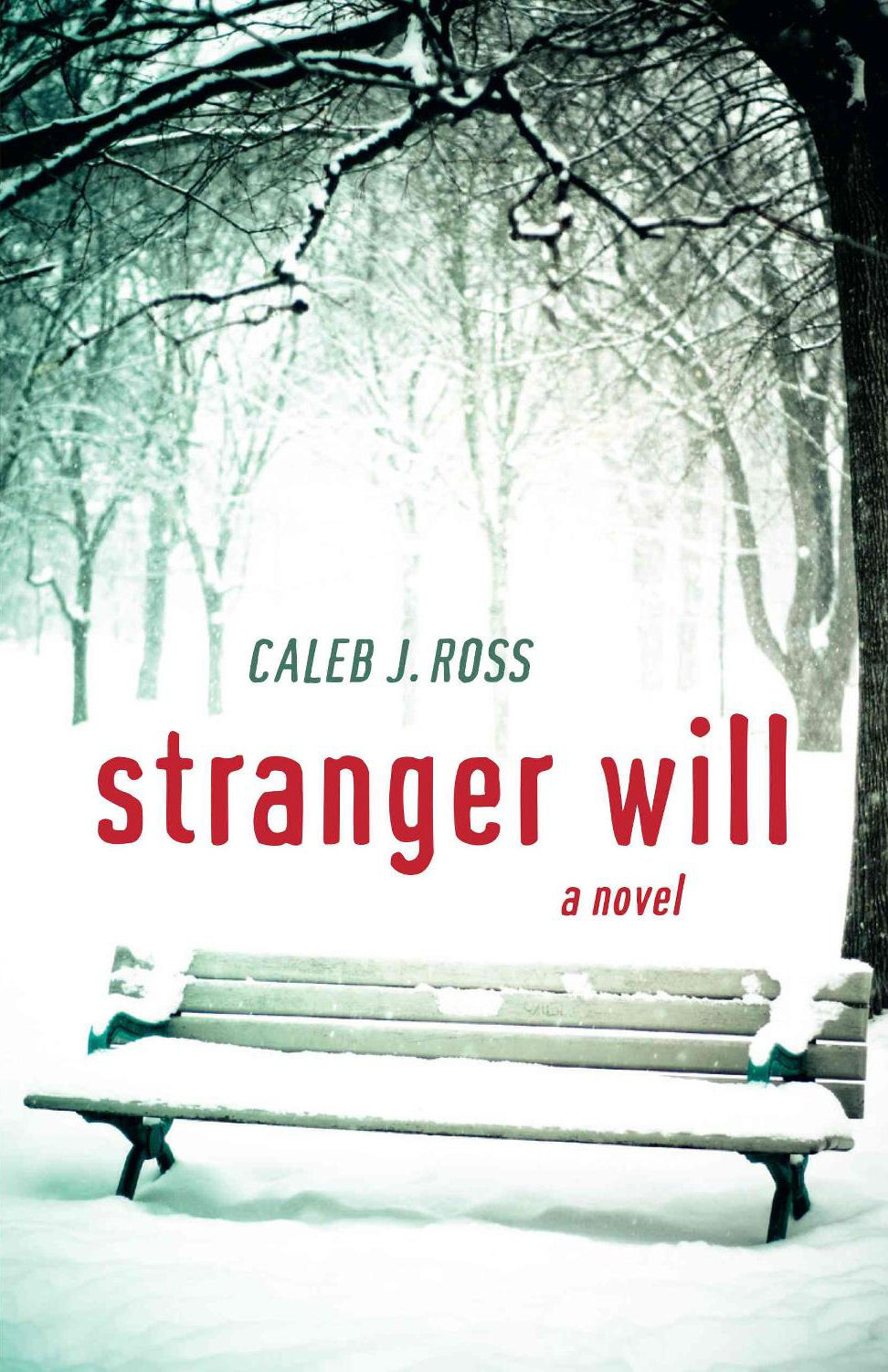
Many people have been asking me if Stranger Will is to be reprinted following the news of it’s current/previous publisher closing down. The short answer is yes, Stranger Will is to see a new life. The longer answer–to the assumed question of “when?”–is that I’m not 100% sure. I do know who the publisher will be, and I do have a pretty good idea of when it will be published, but I’m a bit of a superstitious geek when it comes to revealing good news. Suffice it to say that the novel should come back even better and bigger than every before, toting extra materials not seen in any of the previous printings.
The people in my head often ask me, “Caleb, how are you seemingly in so many places online at once?” The simple truth is: magic. But not everyone is born with this gift (or curse, depending on which side of the superhero spectrum I’m internally agonizing over at the time). Over the years I’ve built up a failsafe system, though, so should Cash-4-Kryptonite stores suddenly saturate my suburb, I’ve got measures in place.
Here’s my method.
I’m an organization nut. I need structure to survive. Online, when new social media networks materialize daily, organization can be tough. It is important to establish a “content spring,” a source from which most of your content will originate. The goal being to focus content creation efforts in a single place to avoid feeling overwhelmed by so many points of entry. In a perfect world, with perfect organization, you would be able to syndicate your content throughout your social networks with a single push of the “publish post” button.
The most logical content spring is the good ol’ fashion blog. Blogging platforms have evolved considerably over the past few years, with most blog sites having enormous inbuilt configurability. For The World’s First Author Blog I use the WordPress platform, which is perhaps the most configurable of all blogging software. Expect most of this post to skew appropriately.
Step three will detail a few of the tools I use to get my content from the spring to..I don’t know, the ocean maybe, but before that, in keeping with my penchant for organizational nerdery, it’s important to map out exactly where you would like your different types of content to ultimately appear. Emphasis intentional: the idea of micro-syndication relies of focusing your content for specific audiences, even niche audiences within your own readership.
“But Caleb, I want ALL of the content to go EVERYWHERE.” Well, hypothetical dissenter, while total media saturation may seem like a good goal, resources, time, and an ethical aversion to spamming friends and strangers should keep you from acting on this impulse.
The goal of micro-syndication is to ensure that the right content gets to the right people. When you write a fantastic blog post about micro-syndication, your family and bar buddies on Facebook might not care. And all those Twitter bots that you think hang onto your every tweet, they don’t care either. But your readers and your marketing and social media friends might care a lot.
I’ll use myself as an example. I have a personal Facebook page, a professional author Facebook page, various Twitter accounts (primarily my @calebjross account), a LinkedIn profile, and a few other profiles and websites. When I write a blog post, I don’t necessarily want to bombard every contact. What to do?
UPDATE: I now use AlphaLinks for all of my text and image-based content syndication. AlphaLinks allows distribution to many platforms at once, including full blogging platforms like WordPress.com, Blogger, Typepad, and Tumblr. For video distribution I use OneLoad, which allows distribution to many video platforms at once, including Youtube, Vimeo, DailyMotion, MySpace, and Metacafe.
Know which tools are available and how they can help. Here are a few I use daily.

For highly customizable distribution to Facebook, Twitter, and LinkedIn (and fingers crossed more platforms in the future), nothing beats Twitterfeed. By using RSS feeds (which come built-in with most blogging platforms) Twitterfeed allows the user to direct specific feeds to specific social sites. What makes this system great is that by using category and/or tag data from your blogging platform, you can fine-tune the distribution path of your content.
For example, I have my main homepage feed:
www.calebjross.com/feed (“feed” may be a variety of RSS extensions. The WordPress default is “feed”)
Which I send to my author Facebook page as well as my Twitter account (both accounts I use almost exclusively for reader/writer information).
However, sometimes I create content on my homepage blog that isn’t very writerly, content that perhaps is better meant for those friends, family, and bots. In that case, I simply categorize the post as “un-writerly,” which creates this feed:
www.calebjross.com/category/un-writerly/feed
Twitterfeed has been set up to publish only posts from this feed to my personal Facebook page. Neat.

YouTube Playlists combined with Shortstack and the YouTube SEO Playlist plugin
With videos, my content spring is YouTube (I could host videos on my own site, but why the hell would I do that?) Now, take the concept of categories and tags described above and apply to video playlists. As I upload videos to the Caleb J. Ross YouTube channel, I assign them to playlists organized primarily for the purpose of syndication.
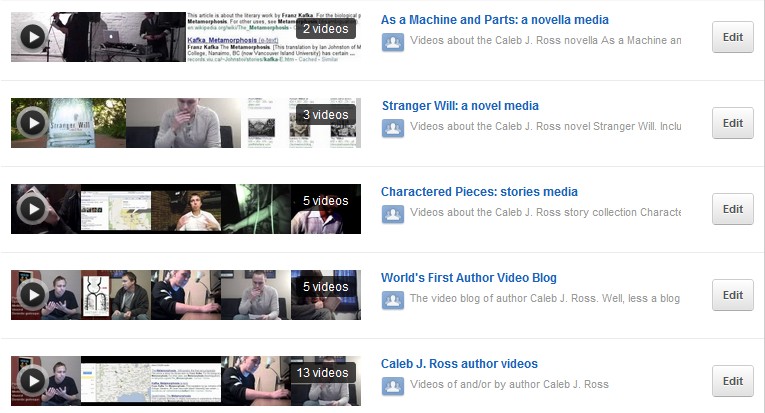
The next step is simply finding tools to aggregate the videos. This is where the Shortstack app and the YouTube SEO Playlist Wordpress plugin come into play. Using the YouTube SEO Playlist plugin I am able to have videos from specific playlists automatically populate on my website. Head over to any of my book pages (Charactered Pieces: stories, for example) or my Author Video Blog page. Notice that only Charactered Pieces: stories related videos appear on the book page and only episodes in my author video blog series appear on the Author Video Blog page? That syndication is entirely automatic.

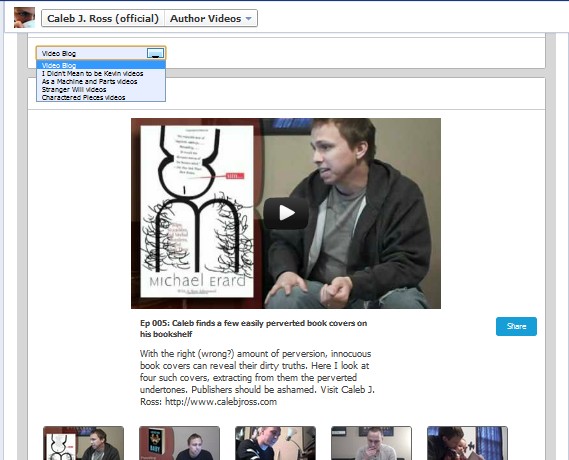
This very same concept has been applied to my author Facebook page, using the Shortstack app. Notice the dropdown menu used for selecting playlists. Awesome.
Another syndication solution to consider is Ping.fm. This service allows a single social network message to populate to 30+ different networks. It sounds pretty great until you realize that most of the networks are small, lesser-known properties (myYearbook, StreetMavens, Yammer, and others). I haven’t used Ping.fm yet (this post will be the first I attempt to distribute using the service). If anyone out there has used the service, I’d love to know your thoughts. And in keeping with the ease of syndication theme here, the WPing.FM plugin is available to further streamline distribution by connecting WordPress with Ping.fm.

Tumblr and the Tumblrize WordPress plugin
Tumblr is an enormously popular blogging platform, thanks in part to its effective merging of twitter-like following capabilities, Facebook-like social group curation, and traditional long form blogging capabilities. Because the network is so huge, it’s important for an author to be there. Luckily, the Tumblrize plugin is here to auto-populate posts from a primary blog to a Tumblr blog. And I know, all you SEOs out there, that I run the risk of duplicate content. For now, I’m testing that risk.
|
|
|
Micro-syndication is important, but what about ensuring that the content you create is easily accessible to the right visitors on your site itself? I call this…wait for it…on-site syndication (I provide naming things consulting services at a fair rate). Traditionally, on-site organization has simply been part of a greater conversation called site navigation. But I think it deserves specific attention.
One of the most effective examples of on-site syndication/curation is my use of category pages to organize particularly important blog post categories, effectively creating a type of micro-site with each category. Check out my SEO for Authors category (screenshot below), Book Marketing Tests & Studies category, or the World’s First Author Podcast category for examples.

Laurance Kitts, creator of the brand new Slit Your Wrists Magazine, has opened up about his perversion, thanks to the courage I’ve displayed with my latest video blog post in which I force perverted imagery on book covers. Thank you Mr. Kitts. You are so brave.
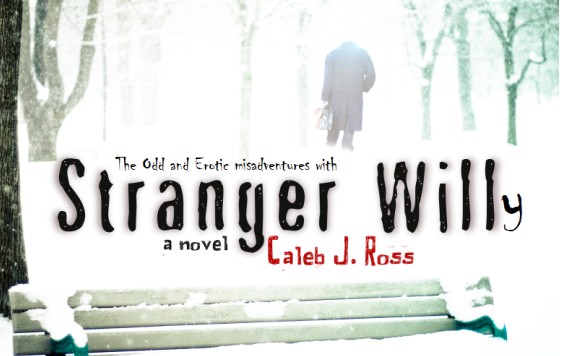
Here’s Stranger Will through the eyes of Laurance Kitts. My favorite part is the penises with the Teenage Mutant Ninja Turtles masks.


When anthology editor S.S Michaels approached me last year about contributing a story to the Ice Picks: Most Chilling Stories from the Ice Plaza anthology, I hesitated for a moment. I never thought of what I write as horror. Grotesque? Sure. Morbid? Sometimes. Horror? No. But the more I thought about it, the more I accepted that a stretched definition of horror (never mind that I didn’t even consider a narrow definition at all) could very well encompass my work.
Other people have thought of my work as horror, so I broke down and thought of the solicitation as a challenge. I came up with “Different People Entirely,” a story of a breaking family that embarks on a vacation to the Ice Hotel in Scandinavia. How does the family fare? Read for yourself.
The anthology contains stories from the following authors:

A beautiful few words from reader Frank Edler:
“These are fairly short bursts of that unique domestic fiction that Ross not only has a penchant for writing but also executes to a level that could earn him the moniker of ‘Father of Domestic Fiction’. If another writer tells stories quite like this, I do know know of him or her…Once again I walk away from another of Caleb J. Ross’ work with an uneasy feeling. ..The author is brilliant at looking at a tender moment and peeling away the layers to reveal the disturbing grotesque. We connect with it because under all our facades lies a bit of that same ugliness to some degree or another.
I must now venture forth into his longer works, STRANGER WILL and I DIDN’T MEAN TO BE KEVIN….I can not wait to have my emotions unsettled a little bit more.”
Read the full review here.

The always wonderful Kristin Fouquet offers some kind words about As a Machine and Parts over at La Salon Annex:
Reminiscent of Metamorphosis and Flowers for Algernon, Caleb J. Ross takes us inside the mind of a man who is transforming. This man, Mitchell, experiences a slide from human to machine. This transformation coincides with the deterioration of his relationship with a much older lover, Marsha…Although I place As a Machine and Parts on the shelf alongside Charactered Pieces and Stranger Will, I will continue thinking about this book for some time.
But perhaps my favorite line, just because I’m glad this particular referent story hit home with another writer:
As writers, we must always wonder what is derivative and how many words we can truly call our own.
Read the full review. Then, buy As a Machine and Parts. And while you are at it, round out that Amazon free shipping deal and grab Fouquet’s incredible, Twenty Stories and Rampart & Toulouse.