Author: Caleb J. Ross

  • Colored Chalk: Issue Six – Waking Up Strange

    Colored Chalk: Issue Six – Waking Up Strange

    banner_cc6

    Shit! As a word-smith I would normally attempt to describe my elation with greater pungency. But…shit! Co-editor, Richard Thomas, has taken this new issue of Colored Chalk, theme: Waking Up Strange, and exceeded all expectations. So…shit!
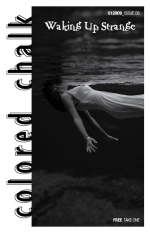
    coloredchalk_issue6coverNot only has he designed a stunning issue, but he has also managed to corral stories by some of the best writers around. I won’t ask his secret, for fear of being an accomplice to something. Look at this list:
    Joe Meno (whose collection “Demons in the Spring” is a finalist for the fifth annual Story Prize for outstanding short fiction), Joey Goebel (author of the fantastic “Torture the Artist” as well as last year’s “Commonwealth”), Rayo Casablanca, author of the forthcoming “Very Mercenary,” follow-up to last year’s “6 Sick Hipsters”), Alex Cassun, William T. Allen, Axel Taiari, Christopher Dwyer, Craig Wallwork, Nik Korpon, Joe Dornich, Jeff Macfee, Richard Martin, Edward J. Rathke, Chris Deal, Simon West-Bulford, and sadly, Caleb J. Ross.

    As always, the issue can be viewed online and can also be printed and stapled for local or distant distribution, depending on your shipping budget.

    Issue Six theme: Waking Up Strange:

    IS IT A FELONY OR JUST A BAD DECISION?

    There are a lot of different scenarios. Most of them involve a drink of some kind, and often an illicit substance or two. Or three. Quite possibly it could be a good idea gone bad. Horribly wrong. Then again, maybe it was that affair you’ve been waiting years to have, the right combination of music and eye contact. Hopefully it doesn’t involve losing a major organ.

    It is disorientation, a familiar moment in a strange new setting. Groggy and tired, your vision is laced with gauze, your head packed thick with cotton.

    Run, run as fast as you can, get out of here now. It isn’t safe. For the love of God RUN.

    Wait. Stay. Her eyes are pleading, her mask, believable.

    The writers in this issue of Colored Chalk all address this theme in one fashion or another. And whether they are literally waking, living their life as if in a dream, or rubbing their tired orbs in disbelief at what they see, all have one thing in common. The writing is strong, and the moment is alive on the page for you to embrace.

    My story, “The E!Morphosis,” might require a bit of direction, so, an author’s statement:

    Much less serious than most of my stuff. This “story” has a cautionary tale veneer, filled out by satirical stuffing. Kafka’s “The Metamorphosis” serves as the inspiration. The rest is just humor. Sad humor, as it usually is.

    A helpful glossary. Come back to it once you read the story:
    E! – Television channel dedicated to news of the entertainment industry. Celebrity gossip and top ten lists abound. (31.2 Million subscribers – source: fundinguniverse.com)

    Samantha Gregory – Not a real person. Though how many references are? How many referents, for that matter?

    Us Weekly – A tabloid gossip magazine. Often purchased by The Hills fans. (1.03 million subscribers as of June 2008 – source: ABC Publisher’s Statements June 2004–December 2008)

    The Hills – A MTV scripted reality TV show in which producers attempt to portray rich people dealing with everyday rich problems. These problems include vacation dilemmas, and how best to juggle work, school, and partying. (4.8 million viewers for the Season 3 premier – source: etonline.com; 2.7 million viewers watch The NewsHour with Jim Lehrer on PBS – source: weta.org)

    Axe – Aerosol body spray intended to unite date rapists with date rapees. Scents include Enygmata, Phoenix, and X-Treme High Five. ($71 million in annual sales – source: allbusiness.com)

    Axe-wraith – Alternate moniker for the above-mentioned date rapist

    Cosmo – Abbreviation for Cosmopolitan. A cocktail made popular by a television show called Sex in the City.

    Who looks better in the $5,000 dress? – A reference to a fashion column popular in tabloid magazines such as Us Weekly in which two celebrities caught wearing similar outfits are judged harshly in order to determine the next social pariah. Similar in concept to Shirley Jackson’s “The Lottery,” but with more devastating consequences.

    PerezHilton.com – A website dedicated to celebrity worship and crucifixion. (3.2 million page views per day; MSNBC.com gets 65 thousand page views per day – source: statbrain.com)

    Ashton Kutcher – Ashton Kutcher, movie star and creator of a hidden camera show called Punk’d in which celebrities are the subject of practical jokes.

    To all you writers out there check out the Colored Chalk homepage for guidelines and information on the issue 7 theme: Maguffins for Hire.

  • The Book-hating Penis

    The Book-hating Penis

    banner_pvb

    Chris Goldberg’s recent article at the Huffington Post states that men, in general, simply do not read. “But is it our fault?” he asks. “Or have publishers just given up trying to publish and market books that we want to read?” A sadly self-fulfilling prophecy? It’s true that we need writers, and publishers with the balls to market them, but in this case I think change must start with the audience.

    It wasn’t until college that I finished reading my first full book. As a child, I would watch my mother devour entire Danielle Steele novels weekly, appalled by the twisted logic that would bring a person to waste their time like that (with reading, not necessarily with the chosen author). I had video games to play.

    Then, in college, I found Octavio Paz’s “The Blue Bouquet.” Later Chuck Palahniuk. Then Craig Clevenger. Then Brian Evenson. And on. In a land of Adult Swim cartoons and beer bongs, both of which I loved (and still do, to an extent) I discovered that there was room for books. The trick: finding something I liked.

    It’s not about good TV being better than books. It’s about good TV being easier to find.

    Reading doesn’t have to mean endless Victorian novels, canon classics, flowery prose, and romance. Reading can be visceral, bloody, if you like, violent, angry. In a word, reading can be Male.

    Goldberg says that “…it’s gotten to the point where a lot of the more business-savvy literary agents won’t even bother to represent a young male novelist anymore.” This probably doesn’t mean much to the casual reader, but it should. If we don’t show that a market exists, then the publishers won’t believe that it does. Goldberg goes on to question the career potential of some of our best-selling Male authors had they been forced to debut today:

    “Would Hunter S. Thompson or Kurt Vonnegut or Brett Easton Ellis or Jay McInerney or Alex Garland or Chuck Palahniuk even get book deals if their debut novels were written today? How can we make reading novels — and writing them — cool again for guys under thirty?”

    These books, these authors, are out there (knock on my door, for fuck’s sake). They just aren’t given the contracts and the shelf space. So, as we approach this new year, I have a resolution for you: make it your duty to introduce a guy to a good book. It beats spreading crabs, and it doesn’t itch as long.

    Some things to keep in mind:

    • This is not about promoting a book that you like. This is about opening a guy up to a book that he might like. Not you; him. Like a blowjob for his birthday.
    • Be careful. Given the manly nature of dudes, it is important that you approach with reasonable nonchalance. For example. “wanna get a beer and read a book?” Notice the ninja-like verbal dexterity demonstrated by presenting the word “book” AFTER “beer.”
    • Guys HATE being told what to do. Even more, they hate revealing weakness. To agree to someone else’s idea makes him feel inferior. Treat reading as an option; something to do on the off chance that he gets tired of snorting motor oil and building robots out of used car parts.
    • Finally, and seriously, know what your Male friend likes and do some research on a book in line with those interests. Not a non-fiction, toilet book about sports records. A novel. Give him characters and a bit of blood.

    Any other ideas? Share a comment.

  • Authors are prostitutes

    Authors are prostitutes

    banner_boat

    The path to book sales shouldn’t be paved with white smiles and checkerboard slacks. When dealing with a product that has neither life-sustaining value nor infomercial superfluence, sales might best be treated as a byproduct of a well-manicured relationship. One between author and audience, as well as among the audience members themselves. Book groups exist. George Foreman Grill groups do not.

    Which is why world of mouth is a valuable route to book sales. People talking and sharing opinions, with no explicit intention of selling a product = a perfect, mutually respectful form of consumerism.

    Word of mouth has adopted a kindred form online, though isn’t really “of mouth” in this mutated guise. Fan lists such as Amazon’s Listmania! help connect like-minded readers, which would logically seem to drive sales (though no hard sales data exists that I could find; although online customer reviews seem to have a “casual” effect on book sales). Forums like The Velvet and The Cult, built around specific authors and genres, promote grassroots and guerrilla “word of screen” sales as a residual effect of the social media platform.

    An evolved generation of authors and publishers has learned to leverage these relationships not just as part of a sales campaign but as a component of their overall philosophy. Another Sky Press focuses on building a fanbase before building sales* . Amanda Palmer and Neil Gaiman’s passionate post-sale reaction to their pre-sale mishap would impress even the most convinced fan-centric seller. Then there is Tim Hall and his handmade slipcase series.

    I can almost picture Tim Hall, sitting on his living room floor, watching TV, using the downtime to assemble these slipcases. Essentially, inviting the future reader into his living room, taking the reader/author relationship to near awkward-morning-after levels (in the best of ways). These aren’t mass products. These are one-of-a-kind tokens of genuine appreciation.

    Sure, their materials are likely would-be scraps with no intrinsic value, and it’s obvious the gesture is ultimately meant to sell books, but the true power lies in the implied relationship they create. I’ll be reading Hall’s books with a more subdued pessimism than I might otherwise with a completely unknown (to me) author. And when Hall releases his next book–and should I not like these initial offerings–I’ll be more willing to give him another chance.

    The take away here is that reader/author relationships are just that, relationships. Leave obsessive sales up to those who produce utilitarian staples and fluff gadgets. When it comes to selling experiences, as books are, a relationship should be part of the package.

    *ASP claims not to track sales in a way that validates this theory, but their conviction is contagious
  • Red Formaldehyde, the most delicious kind

    Red Formaldehyde, the most delicious kind

    banner_redfez

    Another fine yarn from ye olde Caleb J Ross takes valuable web space away from more needy charities. This one, an excerpt from my unpublished novel, Stranger Will, is called Formaldehyde and appears at the never disappointing Red Fez.

    Formaldehyde is a bastardized version of the opening chapter of Stranger Will, very much pulled apart and reassembled into something with its own horrible intentions. This is all to say that if you don’t like this story, then you may still love Stranger Will. However, if you do love this story then I take back what I said above; this story is exactly like the rest of the novel.

  • The Dust and the Brush Meet

    The Dust and the Brush Meet

    banner_gdThe new issue of UK’s Gold Dust Magazine is available for sale. Also as a free .PDF download. Acquire by any means necessary.

    gd14Featuring fiction by Alan Kelly, Jim Meirose, Robert Edward Sullivan, Robert Dando, the always impressive Christopher J. Dwyer, the always disappointing Caleb J Ross, THE Richard Thomas, V Ulea, Sam Szanto, and the get-your-autographs-now-because-he-will-be-dead-(and-famous)-someday Nik Korpon. Also, crammed inside is an interview with China Miéville.

    I’m so damn happy to share page space with names like these.

    And now for the self-petting portion of the post. Author’s notes:

    I’ve long been interested in the artist’s (in this case, writer’s) lack of control once a piece has its frame and audience (in this case, its binding and reader). The audience truly has more control over a work of art, writing, whatever, than the creator. A jury of our peers, sort of thing. Authorial intent is important for the sanity of the artist, but intent often doesn’t matter to the audience, sadly.

    What is more important, the concept or the finished product? Don’t know. “Vertigo Unbalanced” explores this idea with an artist protagonist who is obsessed with correcting his painting (to represent his viewpoint as changed since the painting’s creation) even after it hangs on a gallery wall. The original draft had an explosion. I’d tell you why I took it out, but who cares?

  • Colored Chalk: Issue Five – Sins of the Father

    Colored Chalk: Issue Five – Sins of the Father

    banner_fathersonIssue Five of the Colored Chalk zine looms. Kidding. It’s here.

    coloredchalk_issue5coverI don’t want to blow too many minds here, but this issue has some fantastic writing by some fantastic writers (and one shitty writer named Caleb Ross).

    Do we have Peter Schwartz? Yep. Richard Thomas? Certainly. Alex Martin? Definitely. Michael Morey? Let me check…yes. Stephen Graham Jones? Come again? Stephen Graham Jones! Absolutely! Colin McKay Miller? Si. Edward J Rathke? Right. Jason Heim? Affirmative. Charles King? Beautifully. Nik Korpon? In all his glory.

    Don’t forget, Colored Chalk can be viewed online, but it can also be printed and stapled for local distribution. Perfect for coffee shops and nursing homes.

    Issue Five theme: Sins of the Father:

    The sins of the father shall be visited upon the son a thousand times. Of all the false echoes and random bits and pieces of broken verse and mangled axioms that were sunk into my head long ago by an Episcopal Sunday school teacher, this one was far and away the most ominous. I’m confident that some version of the line found its way into a Clint Eastwood movie or two, and was muttered grimly by Clint immediately after hawking out a black stream of tobacco juice, and just prior to putting a bullet between somebody’s eyes. The sins of the father… good God. I have lain awake a few nights thinking about that one. My own father is a good and just man but he does have a dark side, not so dark as some but darker than others. I was never privy to all his misdeeds, but from the stories he told, his had been a wild and reckless youth. Maybe some payback was coming my way and I didn’t even know it…

    So begins an essay by author Will Christopher Baer (Phineas Poe Trilogy). Baer is an intense writer, so it comes as no surprise that his thoughts on fatherhood would be so raw and visceral.

    This month, Colored Chalk examines fatherhood through the lens of sin: alcohol, drugs, murder, anger, violence, indifference, and love.

    To all you writers out there check out the Colored Chalk homepage for guidelines and information on the issue 6 theme: Waking up Strange.

    EDIT: I just received word that a DIY enthusiast dropped a few copies of issue five at Annie Blooms Books in Multnomah Village, (Portland) Oregon. If you spread the word, let me know. I’ll post a link.

  • Author 401(k): sell your signed books for 401K

    Author 401(k): sell your signed books for 401K

    banner_signed

    An Abebooks bookseller is trying to get a quarter of a million dollars for a collection of signed Barack Obama books. To put this into perspective, a signed copy of Martin Luther King, Jr.’s first book goes for 20K. L. Ron Hubbard’s Scientology: The Fundamentals of Thought goes for $8.07 (but to be fair, this converts to 1 Bajillion Quagnars).

    This begs a few questions: 1) what’s the point of a signed book, 2) what makes a signed book more desirable than an unsigned book, and 3) what’s so great about this particular signature?

    I am a signed book nerd, and even I don’t know the answer to the first question. So, instead of waxing eloquent I’ll instead jump to question two. The short answer: an implied communion with the author.

    Personally inscribed copy of Denis Johnson's Jesus' Son. I'll let you sniff it for a quarter.
    Personally inscribed copy of Jesus Son by Denis Johnson. I'll let you sniff it for a quarter.

    While the internet has changed this relationship considerably, there is still a sense of proximity with a signed book that an unsigned book just doesn’t provide. It is sort of the hipster’s creed: “I have an investment in our community that runs deeper than yours, and this signed cd/book/indie film/celebrity organ proves it.” So really, it comes down to bragging rights among an already incestuous community of like-minded nerds. Once part of such a cloistered group, it takes a bit more digging to unearth the leverage necessary to become king of the nerds. With books, that leverage is often the signature. Or better yet, the signed first edition, first printing of a short run university press collection of essays that most people didn’t know about until it was printed posthumously within a series of collected works. “So as you can see, I deserve that nerd crown you poser,” says the vitamin D deprived book hipster, or bookster since I’m hip enough to make up words like that.

    Don’t confuse my last question (what’s so great about this particular signature?) as a condemnation of the man’s importance. I am just questioning how his signature could possibly be worth $250,000 to anyone. Let me step back and make the obvious argument that booksters such as myself struggle to avoid: the words within the covers are the same damn words, signed title page or not.