Back in November I wrote a blog post about standardizing your name for search engines. One of the most common responses I received from this post was from authors with unique pen names who cited their unique names as a reason to exempt them from the post’s advice. Basically, their ideas went that a writer with an uncommon name—we’ll use Maximus Pandroistien for this example—should not be worried about being outranked by other websites in a search results page because the likelihood of a similar name existing is nil. While this logic is true, it is narrow-minded. And please, pass along my condolences to Mr. Maxie Pandy and his presumably horrible childhood.
But here’s the important bit: potential readers who already know your name are not your target demographic. After all, they already know about you. You want to reach those who may be interested in your style of work but have no idea you exist. This is the difference between branding and directional marketing (branding = getting your name out there; directional marketing = being available when/where customers are looking).
Your Domain Name
Your initial focus should be your domain name. If you are able to buy your own name (branding) definitely do. Though search engines will try to downplay the power of keywords in a domain name (see this video of Google Matt Cutts dancing around the issue) research consistently speaks to their importance. In fact, in the aforementioned name standardization post, I speak to own troubles with acquiring my own name as a domain.
So, what if your name isn’t available as a domain name? Then, you are free to focus on directional marketing names, ones that speak to your writing in terms of content, aim, or marketing desire. For example, I currently own the domain names TheSocialMediaAuthor.com and NoirLiterature.com, which contain keywords that speak to the content I create. (note: these two domain names aren’t the best examples, as they currently redirect to CalebJRoss.com; in order for keywords in domains to matter to search engines, the domains generally have to represent unique sites. Search engines are smart enough to know when people are trying to game the system by buying and redirecting keyword-stuffed domains).
Your Site Content
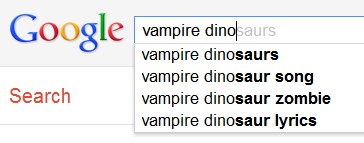
Now that you’ve taken care of your domain name, the next consideration should be the actual content of your site. When writing content, whether that is pages or blog posts (or meta content, which is a different post entirely), keep your desired keyword targets in mind. If you write about vampire dinosaurs on mars, use phrases that speak to that content as often as possible. Of course, keep readability in mind; don’t stuff your content full of keywords solely for the sake of the search engines.
The basic idea is to help your website rank for search terms that could lead to more readers. When someone types in “book about vampire dinosaurs” or “I want to read about dinosaurs and vampires” or “are vampire dinosaurs real?” then you want your website (and by extension, your book) to appear in the results.
When blogging, write about themes in your book, the characters, the plot, and any other interesting element that could be expanded upon in an entertaining way for your blog readers. Pair these ideas with the overall tone you are trying to establish with your content to create something unique that speaks to your personality. For example, if you are a fiction writer, but you also love movies, write about movies that share elements with your books. If you pride yourself on knowing about cutting edge technological advances, writing about how new technology helps you as a writer of vampire dinosaur fiction.
Of course, all this speaks solely to on-site content. I haven’t even touched off-site elements yet (social networks, inbound links to your site, and offline media). I’ll save those for a future post.
Subscribe to be immediately notified when new posts go live:
[subscribe2 hide=”unsubscribe”]
 How many times did readers download your sample chapters? How many times did readers view your new book trailer? How many times did your website visitors click a button to buy one of your books? How many times did someone click a link to read one of your stories posted at another website? All of these items can be tracked using Event Tracking in Google Analytics.
 (Announcing a new post category: