Tag: other writers

  • A Taste of Philosophies to Come. Further Thoughts on Writing and Publishing.

    A Taste of Philosophies to Come. Further Thoughts on Writing and Publishing.

    Earlier this afternoon Pablo D’Stair, as he is apt to do, asked some questions that made me evaluate my writing in way that I haven’t before. Not deeper, necessarily. Just different.

    I won’t copy the questions and answers verbatim here—as I believe Pablo has something planned for the full discussion—but I don’t think he’ll mind if I mull over a few of the topics for a bit.

    Literary and Genre

    Do you think of what you do as “genre” writing and if so or if not, do you see a difference (and what is it) between writing termed genre and writing termed literary?

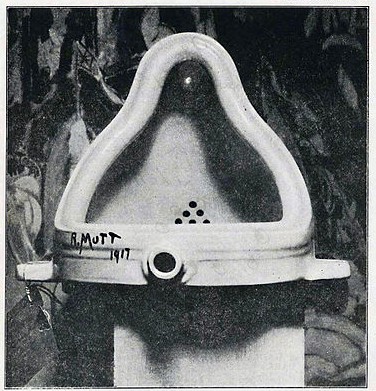
    In common use “genre” equates fiction created to entertain while “literary” refers to fiction created to enlighten. Here’s where the dispute originates, in that the differences are with intent rather than the end product. When something cannot be judged 100% objectively, there’s going to be disagreement. Hell, that’s why conceptual art, you know, Duchamp’s R. Mutt urinal and such, is so polarizing. Some people would call The Fountain trash. Others would call it art. The fact is, it’s both. Genre and literary are not mutually exclusive.

    Genre refers to tangible measures like content, setting, plot, etc. Literary refers to the way in which those tangibles are executed.  For example, a novel that people of the first distinction might call literary, Freedom by Jonathan Franzen, is most definitely literary. But, like everything, it has a genre as well: domestic fiction or environmental fiction (or any number of other categories). Following that logic, two books could share genre, but not necessarily both be literary. Stephen King’s It is horror and so is Mark Z. Danielwski’s House of Leaves, but only the latter could be called literary.

    Expression and Intention

    Are you a writer who seeks to express yourself, personally and primarily or a writer who seeks to kind of “set down something for other people” pulled from a personal place or not?

    I’m never one to simply express myself. Rather, I use writing to mull over my own philosophies, to textualize them so that I may have a physical referent for any future questions regarding those philosophies, an artifact of sorts to say, “This is what I believe about this subject.” Also, I love to hearing the way great word-combinations sound, especially when used to describe grotesque situations. So, it’s a mix of giving permanence to my own philosophies and seeing beautiful words. Oddly enough, though, I don’t care for poetry, which would logically seem to satisfy both of those goals.

    Legacy Publication and Self-Publication

    Considering the landscape of “writing” and “publishing” these days, and considering the micro-press level, do you see any specific reason for “publishers” to exist?

    The way I see it, there are three components of success—what most people would define as success—when it comes to being an author: readership, sales, and prolificacy. I think the lure of the publisher is the potential to grow all three areas with perceived ease. But what a new generation of writers is beginning to understand is that the writers themselves can, with equal ease (though not to imply that either way is truly easy) accomplish the readership and prolificacy aims without the aid of a publisher. Sales, too, but that one is still difficult, at least to the level that it takes to be a full-time author. I think it’s up to the publisher to adapt. A publisher needs to understand that authors can gain readership and can write plenty. A publisher needs to then reallocate resources away from these two areas and bring more attention to sales. Meaning, promotion, PR, events, etc.

    Ultimately, the tendency for an author to favor legacy publishers over self-publishing implies a certain degree of ego. Readers, for the most part, don’t care how a book gets published. In fact, most readers probably don’t know the publishers of even their favorite books. Among writers, for one to claim one of the Big Six legacy publishers as their own means that the writer had navigated a difficult series of desks and wallets to have the book published. The end physical product is the same as a self-published author, but the implied journey is much different. And I think the perception is valid. It’s about winning something more than readers.

    Getting a book published with a legacy publisher is more difficult than self-publishing or publishing with a small independent publisher. It’s that simple. But again, as far as the general reader is concerned, the publisher is irrelevant. Though, I would love to live in time when readers were passionate about publishers the way, say, music lovers tend to be about independent record labels.

    Did Crime Come to You or Did You Go to Crime?

    You write what could be considered crime fiction, noir fiction.  Do you approach it with crime fiction tropes in mind are you drawn to an extremely general idea?

    Drawn to a general idea, for sure. In fact, only recently did I sit down to consciously write a crime story (for a forthcoming collection of novellas). I think the allure of crime for me—whether as a defined genre, or as a mashup of thematically similar tropes—is its inherent proximity to morality, which in turn speaks to the importance of characters. For me, writing is all about exploring my own philosophies through the lens of grotesque characters and situations. Crime lets me do that without compromise.

    I’m not against trying to “force” myself into a genre, though. I like the artificial construct of hard genre. I like a challenge. Hell, that’s what my writing philosophy is built around; challenging myself to confront personal philosophies.

    Risks and Risk Aversion

    Do you feel that the authors you admire take risks, and if so what do you mean by “risks”? In my experience, crime/noir (and horror) writers tend to spend a lot of time going on about “getting in touch with their dark side” or “going to places where they are uncomfortable” but I never really get the feeling they do that.

    I don’t buy the risks thing. Or, said better, I don’t care if a writer is taking risks—whether consciously or sub-. To me, a risk is when a writer does something that could potentially cripple something they’ve, until the moment of the risk, spent their writing lives building. So, for Stephen King to write a bodice ripper would be risky. For Pynchon to do a reality TV show would be risky. Neither of these would impress me. I love that Stephen King writes horror (though, for the record, I’m not a fan). I love that Pynchon is a recluse. These traits are important to the general perception of these authors and their work. A risk would be compromising those things.

    I think authors themselves don’t generally see themselves as risk-takers. They write what interests them. However, talking about being a risk taker adds to the sexiness of being an author that readers want (in the way that any public persona tends to dramatize their role for the sake of success). Those writers who say they are “getting in touch with their dark side” or “going to places where they are uncomfortable” aren’t describing truth; they are describing fiction. And isn’t fiction what they do best? Or, perhaps, they are simply using grandiose terminology for the act of mulling over personal philosophies, as a familiar author once said (me, above).

  • Kind words from Ken Wohlrob, author of The Love Book: “Ross writes the macabre better than most”

    Ken Wohlrob, author of The Love Book and Songs of Vagabonds, Misfits, and Sinners made this early morning a bit more bearable by offering a very humbling, very nice review of Stranger Will over at his official site.

    Here’s a few snippets:

    “It’s been a while since I have read a solid, eerie tale of actual human depravity — let’s face it, most writers are too zombie and vampire obsessed these days — but Stranger Will hits the mark perfectly.

    The plot, is taught, well-crafted, and 2/3 of the way in hits you with the right-hook to the head where you suddenly realize everything that came before was just a warm-up for the real action. And Ross, never winks, never let’s down his guard — very important for this kind of tale. He could have tried to temper the darkness with humor, but that would’ve undercut the atmosphere. As written, there is no letup for the reader.

    Ross has outdone himself on this one…Ross writes the macabre better than most.”

    Many thanks to Ken for these kind words. While you are over at his site being equally dumbstruck by the full content of his kind words, be sure to check out his books. I haven’t read his new one yet, but if these Goodreads reviews are any indication, the read will be well worth your time.

  • Stranger Will tour stop #65: Richard Thomas’ blog, we argue the merits (or non-) of an MFA

    Today marks a special stop on my blog tour. Richard Thomas and I have it out a new installment of his dueling columns series which essentially pits two writers against one another to voice their individuals takes on a hot-button issue of the day. Our issue: to MFA or not to MFA. I’ve posted both of our write-ups below, which can also be seen at Richard Thomas’ site.

    Click here to read the guest post. Also, don’t forget that if you comment on all guest blog posts, you will get free stuff.

    FOR MFA PROGRAMS – Richard

    As Caleb mentioned in his column, if you want to teach at the university level, then you must get an MFA. And at many fine universities, you may need a PhD these days as well. In addition to that, most schools want you to have at least one published novel or short story collection (the bigger and better the press, the greater the recognition) as well as many stories published in the best journals and magazines in the country, and some teaching experience as well. But we’re not talking about that today, we’re talking about everything else that comes with your MFA experience and why you should spend the time, money, and effort to get an MFA. Here’s what I think about it all.

    Forced Reading and Analysis

    I know it seems like a horrible thing to say, but if you have deadlines, and if you’re spending money on something, you will most likely pay attention and work hard at it. If you have to turn in a short story, an annotation (based on a novel or collection that you had to read first, of course) by the end of each month, you are going to do it. I certainly do write stories on my own, and without deadlines, but I can honestly say that having a word count, a book (or two) to read each month, it kept me producing. My low-res MFA program down at Murray State University in Murray, Kentucky (where I’m just finishing up my studies) really pushed me—to write, to read and to analyze. I doubt I would have done this on my own. Maybe I would have, but the forced requirements left me no room to play around. And since I did pay for my MFA, no grants, scholarships or other aid, I took it seriously.

    Working Outside of Your Comfort Zone

    I can honestly say that there are many authors that I definitely would not have read if it wasn’t for my MFA program. While we did have the ability to pick our books to read over the course of each semester (7-11 titles), some of what my professors asked me to read were not up for discussion: the Norton Anthology of Short FictionThe New Yorker, and the Best American Short Stories anthology series. I read a wide range of authors that really helped me to see what the literary landscape is like today, as well as in the past hundred years or so. For our fiction genre lectures as well, we read Poe, Murakami, McCarthy, and many other authors that I either didn’t know very well, had read some of their work, or were totally new to me. Since my undergraduate studies at Bradley University were in Advertising/Communication, I was lacking in my literary studies. Between the work I found on my own (Holly Goddard Jones, Mary Gaitskill, Flannery O’Connor, Ron Rash), the work that was assigned, and the authors that I already loved, and decided to re-read or dig into deeper, the scope of my reading and analysis was much wider than I would have assigned to myself on the outside, in the real world. That’s something to consider.

    Mentors, Professors and Peers

    I studied under Lynn Pruett my first semester and she really helped me to hone in on the authors I already enjoyed and to write the first half of my second neo-noir novel (Disintegration) which I’m shopping now. But it was studying under Dale Ray Phillips(nominated for a Pulitzer Prize) that I really pushed myself. Or maybe I should say—was pushed. DRP got me away from the crutches and tricks that I used in my genre writing, where I often leaned heavily on sex and violence and the occasional twist ending, exploring fantasy, horror, crime, neo-noir, you name it. He wanted straight literary stories where nobody died at the end. What was his big line to me? Leave the slow reveal to the strippers. It was hard—really hard. I had to focus on the story, and the classic structure of a story, find my narrative hook, explore the conflicts in the lives of my characters, and bring it to a satisfying end. Above and beyond these two professors, I talked to many talented authors, teachers, and guest authors, who really enlightened me on so many subjects, as well as a gifted group of fellow fiction writers, poets, and essayists.

    Guest Authors

    I was talking to some author friends at a recent residency I was awarded (Writers in the Heartland) and I mentioned to the poet that I was constantly surprised by how much I enjoyed the guest poets at MSU. The same goes for a lot of the non-fiction authors. I was always surprised at how talented all of the guests were, from fiction writer Richard Bausch making me cry with his emotional truths, and essayist Heather Sellers making me laugh with her stories of facial blindness, to poets Linda Bierds and Alice Friman showing me the power of poetry, and journalist Nick Reding exploring the haunting world of crystal meth and addiction. The readings blew me away and the craft lectures were always enlightening and educational.

    Conclusion

    Do you need an MFA to write? No, you do not. You are certainly, if you are driven enough, capable of reading extensively, publishing widely, and studying on your own. But if you want to work with published authors in an environment with your peers, and get that extra push you may need to read, write and publish, then an MFA is a great place to study and create. I really enjoyed my time at MSU, and this program is still a relatively unknown and emerging program. If you can get into a top program, and get some financial aid, and especially if you are still unencumbered by a wife or husband and a household full of children, then I can’t think of a better way to massage your voice and grow as an author.

    AGAINST MFA PROGRAMS – Caleb

    First, a bit of context. Richard has an undergrad degree in Advertising and Communications with a minor in Psychology. He is currently pursuing an MFA. I have an undergrad degree in English Lit with a minor in creative writing. I am not currently pursuing an MFA. Why is this important? To show that I am coming at this question of education with a different educational history than Richard. Furthermore, as far as I am aware, Richard’s goal is to teach creative writing at a college level. An MFA is a requirement to do so. I do not want to teach. So I must argue this as though he and I are both looking at the MFA as a way to develop one’s creative writing abilities, not as a way to ensure a career in academia. If you want to be a professor, you can stop reading now; there really is no pro vs con debate.

    So, with all of those qualifiers out of the way, let’s get into the meat of the duel.

    Cost analysis

    At its core, an MFA program is an extension of the traditional 4-year undergrad program, and in being so carries financial and structure burdens similar to that of an undergrad program. What we are looking at then is cost. Basically, the cost of an MFA includes two things: connections and time. You’ll meet many famous writers and you’ll be forced to write. Both of these things are necessary for a serious writer. But, neither of these things is the sole intellectual property of the MFA program. For any serious writer, MFA or no, connections and productivity are things that will come as a result of dedication. Using my experience as an example (a sample size of one, I know, dangerous), within the first two years of post-undergrad life (2005-2007), I completed three novel-length manuscripts (two of which are to be published in 2011), became an editor at Outsider Writers Collective (where I’ve interacted with some of the best independent writers around), contributed book reviews to a variety of online zines, participated in Write Club (which surpassed my undergrad workshops in many ways, but not all ways), and met Richard Thomas (which ultimately led to my book being published by Otherworld Publications). Roxanne Gay, in a blog post at HTML Giant about this very topic of MFA, sums up my opinion nicely: “I do believe one should never pay for graduate school but that a graduate education is awesome.”

    I feel any higher education in the liberal arts should focus as much on the how tos as thewhys. From what I know of MFAs, there is a large why focus, specifically in regards to pedagogy, which is great. A good writer can write. A great writer can think. But again, if you have the passion to be a great writer, you’ll seek out the whys on your own. Does this mean an MFA is essentially a writing desk with a $30,000 gun to your head? Yeah.

    Craft analysis

    I don’t believe that the MFA program offers anything in terms of learning how to tell a story that an adequate undergrad program can’t offer. Continuing with my personal experience as an example, it may be that my undergrad experience was so great that I gained what I would consider the equivalent of an MFA (in terms of education, not in terms of papered credentials). My professor, Amy Sage Webb, continues to be one of my strongest supporters, and without her I may very well have moved right into an MFA program after undergrad. Though ironically enough Amy pushed me almost daily to pursue graduate school; perhaps in a strange Socratic way. What I learned as an undergrad, when weighing the pros/cons of grad school, is what Lincoln Michel, Master of Fine Arts and co-editor of Gigantic Magazine says in his reaction piece to Elif Batumans antiMFA review “bookreview: “Studying and critiquing an art form isnt the same as practicing it.” MFA programs train students to study and critique writing. The craft itself can be learned elsewhere. Sure, there’s a thesis/novel to be written during a two-year program, but any writer worth his own cramped knuckles will produce a manuscript in two years.

    I have to end by admitting that this opinion isn’t one I intend to keep, unchanged, for the rest of my life. I may want to teach one day. In fact, I’d be surprised if I didn’t attempt to teach someday. At that time, I’ll be in line for my MFA. But professorial aspirations aside, MFA’s just aren’t worth the time and financial investment.

    Takeaways:

    • An MFA may guide a student more directly than self-navigation through the vast land of education, but at a great financial cost
    • An MFA is necessary for teaching at a college. I think this is the case all around, but correct me if I am wrong.
    • Given the right undergrad program, one can learn just as much in terms of how tos and whys without pursuing an MFA.
    • If you want to be a great writer you will be a great writer; no MFA necessary
    • The internet makes it almost impossible not to network with established writers; no MFA program necessary.

  • Spinetingler Magazine reviews Click-Clack from Warmed and Bound: “This vignette is a song masquerading as short story. It achieves this with a brilliance as flawless as any modern masterpiece of music.”

    Spinetingler Magazine reviews Click-Clack from Warmed and Bound: “This vignette is a song masquerading as short story. It achieves this with a brilliance as flawless as any modern masterpiece of music.”

    “Click-Clack” is a favorite of my stories. It has a rhythm and a focus that I am particularly proud of. So, it makes me all warm and bound to read Matthew C. Funk‘s review of the story at Spinetinger Magazine. Spinetingler, for whatever beautiful reason, has decided to review a handful of stories from the recent Warmed and Bound anthology, in which my story, along with 37 others, appear for your reading pleasure.

    Rather than blather on, I’ll just post a few of Mr. Funk’s words:

    Click-Clack by Caleb J. Ross is attuned to these mortal rhythms, and makes them sing seamlessly in a narrative that is as much a ballad as it is lyrical prose. This vignette is a song masquerading as short story. It achieves this with a brilliance as flawless as any modern masterpiece of music.

    Ross crafts wondrously illustrated personalities. Jack and Ernie are vivid as both symbols in a fable and people in a beautiful and brutal struggle.

    This deep understanding of the dynamic between father and son is just one aspect of Click-Clack’s beauty. Ross also infuses the work with flourishes of consonance, rhyming words in a subtle way that make the power of rhythm a real force for the reader…His rhythms run through it like tides. They rise and fade in the writing like the passing of trains.

    Click-Clack hits all the right notes. It is a pin-point, sad-hearted portrait of the track of birth and death that fathers and sons must follow. It took on speed, swept me up and kept echoing after it passed…Do not miss this train.

    Read the full review at Spintingler Magazine. While there, take in the rest of the words, both kind and not so kind, about Warmed and Bound.

  • Ben Tanzer and Brandon Tietz get This Podcasted, and I’m there by association

    Ben Tanzer and Brandon Tietz get This Podcasted, and I’m there by association

    de Tietz:

    “Caleb J.Ross writes like “if Jonathan Franzen did way too many barbiturates and got into a downward spiral.”

    As always, Ben Tanzer moderates a fantastic episode of This Podcast Will Change Your Life. This episode brings with it Brandon Tietz, author of Out of Touch. He talks about his next book, Vanity, his work at The Cult, his contribution to Warmed and Bound, and much, much more.

    Subscribe to This Podcast Will Change Your Life. Never miss an episode. Okay.

  • [Guest Post] An excerpt from Pablo D’Stair’s upcoming novel VHS…lucky you!

    [Guest Post] An excerpt from Pablo D’Stair’s upcoming novel VHS…lucky you!

    The following is an excerpt from VHS, a literary novel by Pablo D’Stair being released in various e-formats, absolutely free-of-charge (and in limited edition print-editions-by-part through giveaways). Information on the project, including links to what is currently available, can be found at www.vhsbook.wordpress.com.

    “Drain”

    There was a distinct moaning coming from the sink drain in the bathroom of my basement—it didn’t start as distinct, in fact I hardly even heard it at first, had just ducked in to the bathroom to wash my hands because they’d felt sticky, and it took a few times thinking I’d heard something indistinct to focus and then it wasn’t until I had my ear over the basin it got clear, the moan.

    I stared at the opening, put two fingers in it, looked in the cabinet space under the sink, mostly because I wondered if the sink had a pipe went straight down or what—pipe curved and vanished back in the house somewhere.

    The moaning went on, I sat listening, trying to puzzle could it be this could it be this could it be that.

    I said “Hello?” with my lips right to the drain opening. “Hello,” I said again, elongating the sound.

    The moan wasn’t regular enough I could imagine it was anything but a voice, it changed tone and depth and pitch.  A moan.

    “Do you need help?” I said, loud, because it sounded kind of pleaful, like there was something no good at the bottom of this all.

    Went and called Vladimir on the cordless phone—would have called Lexi but I seemed to remember she’d mentioned something about going around to yard sales with her sister for some kicks, that day—it took six rings and I really worried I was going to have to leave a message about the whole thing, but he finally picked up.  I brought him up to speed on the situation and told him I would hold the phone over the drain when he asked if he could hear.

    “I didn’t hear anything.”

    “Are you sure?  It’s a moan, I can hear it even right now.”

    No, no, he couldn’t hear it, so I held the phone there a little longer, closed the bathroom door in case somehow the sound was going funny due to some subtle thing in the background.

    “I don’t hear anything, man.”

    “Come on, you’re kidding, right?”

    “I think you might be kidding, why would your sink be moaning?”

    “Well, can you come over, maybe you can hear it better if you’re here.”

    “I can’t right now, I’ve got a lot of different things I was just about to do, I barely even decided to answer your call and now I wish I hadn’t because this is a waste of time.”

    “Vladimir, are you seriously telling me you don’t hear this moaning?”

    “I am.  That’s just what I’m telling you.  And for no other reason than because I honestly don’t hear it.”

    “Listen.”

    I held the phone over the drain and counted down all the way from sixty, then from ten again just because the moaning got a little bit louder toward the end of my first countdown.

    “How about then?”

    “Maybe it’s just something because of your phone, Des, okay? It could be this moaning is very much happening but is not, you know, coming over the telephone lines for some reason—that happens, you can’t always hear everything that’s going on over the telephone, right? Can we just agree that I believe you about the moaning and then I have to go?”

    “But what about it?”

    “I don’t know. Even if I was there, listening to the moaning, I probably wouldn’t care after a minute.  Call the police or something.”

    “I don’t know if it’s done anything wrong.”

    “Ha ha ha, yes, I just mean to get the thing officially corroborated, who knows, maybe it’ll turn out there’s some way to wrangle prize money out of it.”

    “Hold on, listen one more time.”

    “Desmond.”

    “It’s louder, now, just listen, it’s freaking me out.”

    And he started saying Desmond, again, but I moved the phone back over the drain, then from a bit of a distance I started to moan, then I slowly moved in, making odd moans that didn’t even really sound like the moans from the drain, moved in a smidgen at a time toward the back of the phone, moans echoing and lengthening off the porcelain of the basin.

    Abruptly, I brought the phone to my ear, excitedly said “Do you hear it now?”

    “I’m telling you, I don’t hear anything.  I do not hear anything and now you’re starting to worry me.”

    “You didn’t just now hear that?”

    “No, Desmond.  Go for a walk, okay, you shouldn’t hang out in basements, your own or anyone else’s.”

    “You didn’t hear, just now? This last time you didn’t hear all that moaning?”

    “No.”

    “You didn’t?”

    “I didn’t, no.”

    He didn’t seem to be lying and now the moaning had taken on more of a feminine lilt, it was more like someone sleeping very soundly, less like someone squirming and fatigued from lack of nourishment.

    “I don’t believe you.”

    “Alright, well, then you don’t believe me.”

  • Stranger Will tour stop #50: Cannoli Pie Magazine; I am the August editor

    Stranger Will tour stop #50: Cannoli Pie Magazine; I am the August editor

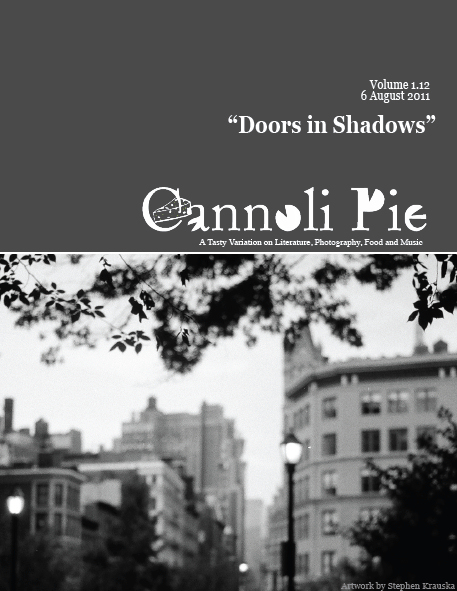
    Cannoli Pie editor Stephen Krauska (@cannolipie or @unRonic or UnRonic) asked me to be a guest editor at Cannoli Pie for the August issue. Amazing man; I ask for a tour stop on his blog and he offers an entire guest house for a month. I’m honored.

    I reached out to a few writers I know whom I believe represent various aspects of an aesthetic I’ve been slowly coming to understand over the last few years as being desirable both as a reader and a writer. It’s a good feeling, to finally being to understand one’s comfortable context.

    This month Cannoli Pie presents work from Nik Korpon, Craig Wallwork Pablo D’Stair, Brandon Tietz, and Richard Thomas, as well as a short Letter from the Editor, starring me! Click the cover below to read.