Tag: other writers

  • "Hoist That Rag" still "Hoist That Rag"

    "Hoist That Rag" still "Hoist That Rag"

    Tom Waits, Tulsa OK, 6.25.08

    I’ve been working on a novel for the past couple years inspired by the Tom Waits song, “Hoist That Rag.” This song is as close to religion as I get.

    Strangely, or perhaps fittingly, I don’t know the literal meaning of the song. There’s a guy named Piggy, something about rat addresses, and of course, as with most religions, there are crying babies involved. What this means for my novel-in-progress is that everything is simply an interpretation. Again, very fitting with religion in general.

    This past week I had the opportunity to experience this song live (Tulsa OK, USA, at the Brady Theater, 6.25.08). I had been looking forward to this show for months, but it wasn’t until I was standing in line at the venue that I began to have reservations about hearing “Hoist That Rag” live.

    Until the performance my experience of the song had been entirely self-contained. But, how would my view change when surrounded by hundreds of individuals each with their own connections to the song? Would my interpretations be marred by theirs? Would the voices around me, some singing along, some rudely talking about unrelated domestic issues, become part of a revised vision of the song, and by extension, my novel-in-progress?

    Thankfully, not completely. The world shut down during the song. Yes, I recorded the performance (see YouTube video below), but I intentionally kept from looking at the LCD monitor the entire time. I wanted the performance to enhance my vision of the song, not distort it.

    I wonder then, how, if at all, my manuscript will change because of this new association. Understand that when dealing with an 80,000 word novel inspired by a 139 word song there is going to be a huge portion of “all me” there, but still, if the core impetus changes then will the entire novel change as well? Considering that I have not yet finished the novel, I guess I will never know. But it makes me wonder if perhaps I should have never gone to the show.

    Wait…no it doesn’t. The show was one of the most amazing experiences of my life. Fuck the novel if it means loosing the show.

    [media url=”http://www.youtube.com/watch?v=sqqxDbYx9sM”]


  • Scarlett Jo’s no no

    Scarlett Jo’s no no

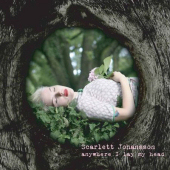
    Until today I’ve thought to keep this page about my writing – the physical, textual, words and paper aspect of my writing. Today, however, I feel compelled to stray, if only slightly, into the meta aspects of myAnywhere I Lay My Head by Scarlett Johansson writing – the ambient noise and inspiration surrounding my work. Today’s theme, Tom Waits, the core inspiration for my current novel-in-progress, “Hoist That Rag” (I’ll look into the legal issues with such blatant inspiration once I secure a publisher).

    Scarlett Johansson, of film and my dreams fame, yesterday released Anywhere I Lay My Head, an album of Tom Waits covers, give the lone original “Song For Jo.” Before I rant, let me put my love of Tom Waits into context: I have more Tom Waits CDs, posters, and inspired literature than I have love notes to my wife (most of the love letters I write go to Tom Waits; sorry Jenn). Waits is the single greatest recording artist in history, without argument. Needless to say, when I first heard late in 2007 about Johansson’s then forthcoming album I cried a little. But then I heard her take on the famous “Summertime” (see link below) and cried a little, again, but this time with an optimistic grin. This song is phenomenal.

    Today, I cry yet again. Anywhere I Lay My Head is astoundingly terrible. The music itself is unique enough to intrigue, but somewhere along the line producer David Andrew Sitek (of TV on the Radio and my nightmares fame) felt it hilarious to turn Johansson’s vocals into a deep throated, Madonna-drowing-in-a-well, reverb orgy. Excessive reverb can work for a record (D*R*I’s Smoke Rings, for example, one of my top albums of 2007), but the style has to mesh with the music. Anywhere I Lay My Head does not do this.

    Shame on you David Andrew Sitek for stealing something beautiful.

    ***Before I go I do want to reserve the right to let this album grow on me. I’ve spun it three times so far, and though I don’t anticipate a change, I have been corrected in the past. Hell, the first time I heard Tom Waits I had to fake my head bob.

    Anywhere I Lay My Head by Scarlett Johansson


  • Loading the Stone by Harley Elliott

    Loading the Stone by Harley ElliottLike the subject matter in this, Harley Elliott’s twelfth book and first collection of non-fiction, there exists below the surface, universal binds and shared histories from which the impetus of progression can be said to reside.

    The non-fiction moniker given to this collection belies the engaging, story-telling mode Elliott uses. Set against the backdrop of the Kansas prairie, Loading the Stone reads more like a story of a familial love of history used to explore the bonds threading father and son relationships than the listing of facts and dates that might be implied by the subject matter and genre. Perhaps, however, my assumptions of genre are just one example of the misunderstandings that Elliot explores. For example, the use of the word ‘Indian’:

    The word had no relationship to the people [Christopher Columbus] encountered or the land they inhabited, or to the many generations preceding them, hunters of the big, antique bison and the mammoth. Nor did the word have any relationship to the generations to follow. It was a word that robbed identity, culture, and personality at once, too thin to cover the many varieties of humans it was assigned to describe. Walker grew up on the Hollywood version. [pg 18]

    A strong theme running throughout this work is this idea of a misunderstood history, and Walker’s (our narrator) exploration of a truer history determined by the artifacts he uncovers during his walks among Kansas fields. Reflected in this understanding of history, is the bond being formed throughout the book by Walker and his father, and later Walker and his son. They commune over this enthusiasm; a relationship that suffers some turbulence about halfway through the book when our narrator first realizes that his son may not embrace flint the way he and his father have. It’s these moments of tension that beautifully keep Loading the Stone from being a tale of an isolated man connecting with the past; he is battling to connect for the sake of a future.

    The book does delve heavily into flint and arrowhead terminology and process in a deeper way than most casual readers would appreciate. The entire center section of the book (61 out of the book’s 244 pages), for example, breaks from the promise of a fluid story supported by an academic skeleton to simply the skeleton. This “The Rocking Deer Journal” appears to be a literal journal complete with lists, sketches, and meandering observations, which if delivered in a much smaller dose could have effectively developed both the intellectual nature of the story and the father of our narrator (as it is his journal). However, it comes across as redundant and worthy of just a skim through.

    Good writing can engage a reader in most any subject matter, however often is the case—and here—that the reader should come to the text with a genuine interest in the subject. I’ve done my best to judge this book objectively, as I am not, before or after reading this book, a fan of flint. I do, however, respect the writer’s craft. As Walker says in reference to an initially awkward arrowhead: “being an artist sometimes meant recognizing the spirit of material and letting it stand” [pg 170]. Likewise, being a fan of art means recognizing the spirit of the artist.


  • 6 Sick Hipsters out now

    6 Sick HipstersRayo Casablanca’s debut novel, 6 Sick Hipsters is now officially out and available for order.

    Rayo was nice enough to send me an ARC of his novel a few months back, which I reviewed for Dogmatika, here.

    Casablanca is truly a great writer and all around great guy. He can probably dance, too, which makes me even more jealous. Get his novel.

    From the review:

    “6 Sick Hipsters carries the rogue camaraderie of Joey Goebel’s The Anomalies—punk attitude and hipster lifestyles included—along with a less passive social critique found in Coupland’s Generation X. Fans of slick conspiracies and vinyl records rejoice.”


  • Extinction Journals by Jeremy Robert Johnson

    When a man in a suit made of cockroaches meets a man in a suit made of Twinkies — well, that’s about as easy as subtraction gets.

    From Jeremy Robert Johnson’s Extinction Journals

    About a year ago I came across this novella, fell in love, then promptly forgot it in favor of my ever-increasing to-read stack. Shame, really. Recently (today, actually) I revisited the story, coming away from the experience with all the enthusiasm I had after the original read.Extinction Journals cover

    Extinction Journals manages the high-concept, visceral storytelling consistent with Bizarro literature, but delivers in addition, literary quality unfortunately uncommon with a lot of work in the same genre. The literal tale is of a man, the sole survivor of a nuclear cataclysm, searching the country for survivors in a suit made of cockroaches. The deeper tale explores survivor’s will, collective consciousness, and how the two working together can be an apt gateway to the primal instincts forgotten in a world that would destroy itself with it’s own creations (while also managing to touch on snark-less political commentary).

    Buy, read, enjoy.


  • all about the writing

    Reaching for conversation I once said to Ron Carlson, author of many short story collections including The Hotel Eden and At the Jim Bridger, after his book reading in Emporia, KS (USA) that touring has got to be one of the best things about being a writer.“No,” he said. “It’s all about the writing.” Yeah, I said, but knowing that people actually want to hear you read has got to stroke your ego just a bit. He insisted still that “it’s all about the writing.”

    Okay, so it’s all about the writing, but the occasional piece of fan mail must help push through the days, weeks, months of solitude as the writer writes what he can later claim it was all about. Can I say this from experience? Yes and no.

    Last month I received a couple pieces of fan mail. How, I thought, do I have a single fan, let alone a group whose tensions might provoke one member to single him-or-herself out to make such boisterous claim? I have very few pieces on the public forum and very few people have read what I haven’t yet placed publicly, so how do I have a fan (or two)?

    Turns out I don’t. But Caleb Ross, the star of some show called The Tribe, does. In fact he has at least two fans of which I am aware, both with brief tongues and an annoyingly proud sense of self. Please observe these two emails sent to Caleb Ross the writer, addressed to Caleb Ross the actor:

    Subject: Letter from a big fan
    From: (hidden)
    To: bookrecs@calebjross.com Hi Caleb! I´m a big fan of yours. I have watch you as “Lex” in “the tribe” for almost every part of it. I´m from Sweden in Europe and I hope that you are going to visit my country soon. My name is (hidden) and my e-mail adress is:
    (hidden) So please write to me and I can tell you that I also act in teaters and films in my own country.

    Impassioned? Moderately. Flawless use of broken English? I like is say YES.

    Subject: Tja

    From: (hidden)

    To: (hidden)

    I am Maria. I am 14 years old. I Live in Sweden. You are My Idol! I see Tribe every day
    From Maria


    Darling? A little. Less desperate than the first email? Definitely.

    Do I poke fun out of jealously? Maybe, but to be honest my true beef stems from the fact that these people care almost enough about their “idol” to read a website bearing his name before submitting a fan letter. Look here for the first ever news post on this site. At least two Caleb Ross’s exist on this planet of ours and until “fans” are able to discern one from the other I claim the right to poke all the fun I want.

    But instead of poking fun my time would probably better be spent writing. I’ll go do that now.


  • Remember to BLINK by Jason M. Heim (first published at DepravedPress.com)

    Remember to BLINK by Jason M. Heim (first published at DepravedPress.com)

    Note: This review originally appeared in the now defunct DepravedPress.com

    Jason M. Heim. Remember to Blink. Lulu.com, 2003-04. $15.99, paper, ISBN: 1-4116-1121-7.

    The narrator of Jason M. Heim’s debut novel, Remember to Blink, suffers from what might best be described as a chronic case of boredom. Taking a cue from his mundane job in computer software maintenance at one of the world’s largest computer manufacturers, the unnamed narrator creates for himself an autopilot personality which he uses to handle tedious tasks while a separate, conscious part of his brain can ponder deeper ideas: “[…] whatever high concept my mind thinks is the flavor of the month. Things like evolution” (19). And evolution is one of the many trains this mind rides throughout the novel’s stream-of-consciousness styled rant, presented successfully, as a well crafted novel about a struggle for control and the resulting infinite burden this struggle carries.

    What might initially seem like a cheap gimmick, the narrator claims early on in a faux forward that he is not an author, and later (but still very early in the novel) that he has done no research, outlining, or preparation, ultimately proves to be a necessary admission. The narrator claims at the top of page 2:

    Given my mind’s tendency to wander, I can’t promise chronological continuity. And it may seem like it doesn’t make sense. For you, the beloved reader, these disjointed accounts of my life may seem to be rather random. But if you’re going to understand, you need to experience it. For me, this lack of continuity is a way of life.

    This clever device—a therapeutic memoir—allows any inconsistencies and character flaws to be glossed over and forgotten. Fortunately, however, flaws and inconsistencies are few and the story holds together well, presenting itself in such a way that only this straightforward narrative style could justify.

    Obvious comparisons to the contemporary trend of first-person, nihilistic, stream-of-conscious novels will be made. Unfortunately, the popularity of Fight Club by Chuck Palahniuk and its more popular movie adaptation have made it hard to claim the schizophrenic narrator as an original device (RTB’s minimalist style and use of jargon-laden rants doesn’t help to broaden the distinction). But RTB handles the burden well. By subtly—and more importantly, consciously—creating the autopilot personality Heim’s narrator is able to introduce and develop the ulterior personality as an part of himself, rather than attempting to fool the reader into thinking it is a completely separate person.

    Furthering the success of this distinction Heim transitions seamlessly early in the novel from the autopilot as a concept to the autopilot as a believable and effective character trait. Step back and hear of this novel from a friend and you would understandably doubt this sort of effective execution, but read the damn thing and you’ll see that it works.

    RTB is a theme-driven novel, using the characters’ mind-space to explore these themes. Think the way most contemporary literature commentaries tend to do. Any of Palahniuk’s earlier works are arguably platforms to express the author’s social discontent. Bret Easton Ellis’s American Psycho is similar in this regard; sacrificing deep character development for social observation. Heim goes this route, exploring the motif of control as a way to steer evolution. But the novel tends to suffer from its own exploration of tedium as the ultimate destructor. Page after page of cleverly twisted phrases designed to appear deep can wear at a reader’s mind. The rants can be very insightful—especially toward the end of the novel when the narrator’s newly discovered philosophy of Christianity is skillfully incorporated into his already robust set of beliefs—but before the reader really has time to absorb the moments of insight he is shoved into another rant filled with more clever phrases—sometimes logically related; sometimes not. But this is all, as the narrator states early on, a way to “[…] figure out how I got here” (2). And the patient reader willing to accept this will be greatly rewarded by the satisfying climax and unconventional denouement (hint: when you think you’ve found a plot hole in chronology, you haven’t).

    Despite a few jarring choices in narrative style, Remember to Blink succeeds as a probing literary novel with a lot to say and the right mouth to say it. One would hope that Jason M. Heim has more to say and won’t make us wait long to hear it.