Hard to believe we are already at issue #9. And the stories just keep getting better. This new issue is all about Heaven and Hell.
From Richard Thomas, #9’s editor, and Colored Chalk staple:
IS IT YOUR IDEAL HEAVEN OR UNBEARABLE HELL?
One man’s ceiling is another man’s floor. One man’s trappings are another man’s freedom. What is heaven and hell to you? Is it brimstone and hooves opposing angels floating on ethereal clouds? Is it merely the eternal battle of dark vs. light, good vs. evil, right vs. wrong? Is it pushing a boulder up a hill day after day to no avail or having your liver eaten for eternity, each new dawn awakening to this horrible echo? Is it just a quiet moment of peace, that subtle bliss as you fall asleep or waking next to those you love?
The writers in this issue of Colored Chalk all speak about their versions of heaven and hell, visions of horrible moments they hope will never happen to themselves, or the ultimate goal, the rapture and pinnacle of good and all that is right in the world and beyond. Or maybe it’s just a weekend stuck in a crummy hotel, a quick kiss before leaving for work, the commute that drains your life force, and the smiling face of a daughter or son eager to have you home.
Now wait…where were we…heaven, or hell? You tell me. I hope you enjoy the work of these gifted writers as much as I do.
Issue 9 contains fine work Zsa Zsa Wong, Vincent Louis Carella, Beth Mathison, Craig Wallwork, Karen Brown, Shaindel Beers, Christopher Dwyer, M. Kilbain Lazer, Paul Mallaghan, Michael Paul Gonzalez, Valerie Geary, Kara Kilgore, Gayle Towell, Gavin Pate, and Nik Korpon
As always, we promote legal theft as a downloadable and distributable .pdf file. Go to the Issue 9 page for details, printing instructions, and visual over-stimulation.
Over at Outsider Writers, Pat King, etiquette aficionado and all-around glorious specimen, is heading up an OW Chapbook Series, designed to paper and bind voices of the otherwise electronically chained OWC editors. So, what the hell does this have to do with me? How can I wring the appropriate ego from this post? Two ways:
I am an OWC editor, meaning that a fiction chapbook of my own waits in the pipeline. More on this in the future, you can be sure. For now, let this description suffice: Mitchell, a twenty-something Cougar Cub with a midlife girlfriend named Marsha, wakes each morning, slightly more machine, slightly less human. As his condition progresses he looses his capacity for human emotion, and potentially with it Marsha. “As a Machine and Parts” (working title) is a story of Mitchell’s struggle to find out which assembly line he belongs to.
Pat asked me to design and lay out the first chapbook, a request I immediately accepted. And, if I do say so myself, the final product is quite stunning (with help from art by Jeff Filipski, of course).
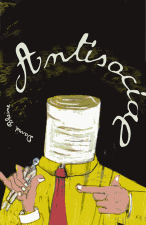
Now, I’ve never claimed to be a poet (and actually, have demonized poetry on occasion), but truly, I like this guy’s stuff. The forthcoming OWC chapbook, ANTISOCIAL is filled with examples that make poetry relevant. Forget the pseudo-intellectualizing verbosity so commonly associated with poetry. ANTISOCIAL is straightforward, digestible, yet not against encouraging a bit of self-reflection. Plus, it just might make you laugh.
Pre Orders are open now. The chap comes out in late Summer/early Fall, and as of today will be limited to 100 copies. “But Caleb, it probably costs too much.” Stop whining. $6.00 is all it takes to own this wonderful artifact. “But Caleb, I don’t know where to get it.” Click here. “But Caleb, I am out of excuses.” True, you have no excuses.
Extree, extree! The new issue of Colored Chalk sits ready for consumption amid worthy virtual newsstands/host servers! Also, corruption within the Govna’s office! Read all about it!
Will I ever be disappointed with an issue of Colored Chalk? No. No, is the answer to that question.
How best to describe the issue 8 theme, Broken Clocks? How about a some text from the minds behind the pages:
It’s the human condition to lick the wounds of our mistakes and pick at scabs of regret.
from the original theme by Alex J. Martin
Be it misery or reverie, we mutate with our memories, traversing private histories, with critical eyes, and an editor’s pen.
issue 8 editor, Jason M. Heim
Issue 8 contains fine work from Nik Korpon, Justin Holt, Derek Ivan Webster, Richard Thomas, Elizabeth Kate Switaj, Carol Stone, Stephen Graham Jones, Rebecca Gaffron, Alan Frackelton, Linda G. White, Tait McKenzie Johnson, E. Ryan Gaudreau, Christi Krug, Terence Kuch, Chris Deal, and R. James Onofrey.
As always, we promote legal theft as a downloadable and distributable .pdf file. Go to the Issue 8 page for details, printing instructions, and visual over-stimulation.
With all the talk of dwindling advances, shrinking sales, and too many scribblers willing to saturate the bookshelves with crap, Writers (with the admittedly douchey capital “W”) must become more creative in monetizing their efforts. I anticipate the recent Amazon Kindle decision to open its interface to the blogosphere at large will ultimately impact blog-structured web zines like Literary Saloon and The Elegant Variation, acting in much the same way traditional door delivery currently works. But until a collective schism happens, what are those of us who produce longer, less blog-friendly works supposed to do?
Jeremy C. Shipp, author of Vacation, Sheep and Wolves, and the forthcoming Cursed (Raw Dog Screaming Press) recently adopted the subscription model for some of his own short fiction, a venture dubbed Bizarro Bytes. Quite simply, a subscription to Bizarro Bytes guarantees 12 previously unpublished short stories, delivered one per month. Interesting idea, to say the least.
I asked him what he hopes to accomplish, and what he thinks the greater implications, both positive (earning money, gaining fans, etc.) and negative (the stigma of a produce-without-passion model, etc.) may be:
I started Bizarro Bytes because I want to connect more directly with my readers. I’m hoping to create an interactive environment, without the conventional walls between reader and writer. Some people might not like this idea, but the great majority of the feedback I’ve received so far has been extremely positive.
I’ll always publish some of my future stories and books in the traditional way, but I’m excited about creating a direct link between myself and my readers. While I have my qualms about the civilized world, I’m a people person. And already, via Bizarro Bytes, I’m getting to know my readers more personally. They’re helping to support me and my family, and for that, I’m going to send them my best work. It’s a wonderful exchange.
A wonderful exchange, indeed.
Nathan Tyree, mid-author of the uniquely materializing Tom Waits and Charles Bukowski Fistfight in Hell, took to the online auction block for some inspired writer’s fuel. Tyree held an eBay auction in which the winner was to become a character in the aforementioned Waits/Bukowski titled probable masterpiece. He netted a nice $107.50. Not bad, definitely good for a few beers to see him through the project.
I asked Nathan the same questions:
My reasons for the auction were three fold: Money, attention, direction. I figured that the gimmick could make money in a few ways: someone would pay to be a character in my book (about a 100 bucks was the most I expected to get and I did a little better than that), plus the notice (read “buzz”) would sell more copies of the book, plus the auction winner would become a partner and help sell copies to their friends and family. I also thought that the buzz around the auction (plus the follow-up notice-like this) could interest a publisher. The main thing, though, was that this would force me to produce a new novel on deadline (I work best when forced to).
There isn’t any real produce-without-passion model here. Basically I came up with the idea for a novel in which the “second lead” was malleable. The narrator is set, but I thought I could (with some finesse) work basically anybody into the secondary character. In the end I got lucky. My auction winner was a woman who used to be stripper and had a coke problem, then cleaned her life up. That’s a character I could have made the lead, if I didn’t already have such a compelling character to write about.
Differing reasons behind the endeavors, but important no matter how one approaches the concept. Writers want to make money and fans. And sadly, not many of us are worthy of a celebrity sex tape.
The path to book sales shouldn’t be paved with white smiles and checkerboard slacks. When dealing with a product that has neither life-sustaining value nor infomercial superfluence, sales might best be treated as a byproduct of a well-manicured relationship. One between author and audience, as well as among the audience members themselves. Book groups exist. George Foreman Grill groups do not.
Which is why world of mouth is a valuable route to book sales. People talking and sharing opinions, with no explicit intention of selling a product = a perfect, mutually respectful form of consumerism.
Word of mouth has adopted a kindred form online, though isn’t really “of mouth” in this mutated guise. Fan lists such as Amazon’s Listmania! help connect like-minded readers, which would logically seem to drive sales (though no hard sales data exists that I could find; although online customer reviews seem to have a “casual” effect on book sales). Forums like The Velvet and The Cult, built around specific authors and genres, promote grassroots and guerrilla “word of screen” sales as a residual effect of the social media platform.
An evolved generation of authors and publishers has learned to leverage these relationships not just as part of a sales campaign but as a component of their overall philosophy. Another Sky Press focuses on building a fanbase before building sales* . Amanda Palmer and Neil Gaiman’s passionate post-sale reaction to their pre-sale mishap would impress even the most convinced fan-centric seller. Then there is Tim Hall and his handmade slipcase series.
I can almost picture Tim Hall, sitting on his living room floor, watching TV, using the downtime to assemble these slipcases. Essentially, inviting the future reader into his living room, taking the reader/author relationship to near awkward-morning-after levels (in the best of ways). These aren’t mass products. These are one-of-a-kind tokens of genuine appreciation.
Sure, their materials are likely would-be scraps with no intrinsic value, and it’s obvious the gesture is ultimately meant to sell books, but the true power lies in the implied relationship they create. I’ll be reading Hall’s books with a more subdued pessimism than I might otherwise with a completely unknown (to me) author. And when Hall releases his next book–and should I not like these initial offerings–I’ll be more willing to give him another chance.
The take away here is that reader/author relationships are just that, relationships. Leave obsessive sales up to those who produce utilitarian staples and fluff gadgets. When it comes to selling experiences, as books are, a relationship should be part of the package.
“Be warned; this collection will polarize audiences, splitting readers according to their willingness to trust in an untethered voice. Sheep and Wolves does not believe in beach reading or in hammocks and hot chocolate. It does not believe in love at first sight or in happy marriages. To be happy, Sheep and Wolves says, is to embrace the absurd. “Lies are cheaper than therapy” [pg. 69].
Welcome to the bizarro fiction movement, hail Jeremy C. Shipp.”
The following interview took place via email between 7 September 2008 and 21 September 2008. Why email? I’m afraid of the man.
Jeremy C. Shipp: "I don’t think I’ll be writing a Christian Romance novel anytime soon"
Your first authored book, a novel titled Vacation, was published in 2007 by Raw Dog Screaming Press. Sheep and Wolves, your follow up short story collection, is set for a December 2008 release by the same publisher. Aside from the forms themselves (short stories vs. novel) what is different with Sheep and Wolves, and how does that difference reflect you as an evolved writer?
In my skull, the two books are related, but not so much so that their children would be born with webbed toes and a tail. Not that there’s anything wrong with mutations. Mutations make the world go round, as the saying goes.
Anyway, Vacation is an exploration of twisted power dynamics on a global scale, while Sheep and Wolves examines the horrors of disrespect and abuse on a smaller scale. To me, this sort of intimacy makes Sheep and Wolves much darker than its distant cousin. Because now, the darkness isn’t just invading your planet. It’s invading your homes, your dreams, your lives.
That sort of intimacy is something I picked up on immediately, and with a great sense of satisfaction. But even though the stories are contained within a more personal environment, the collection still manages to explore large, perhaps universal, issues.
Many of your stories for example feel like a form of social commentary, or even a creative manifesto. “American Sheep” is one of the more straightforward of these story types, first addressing the manual laborer’s life of oppression, then offering the idea of acceptance as a possible cure for that oppression. Radical ideas to be sure. First, is it fair to look at this story as the opinion of the author? And if so, do you fear these ideas loosing relevance as you inevitably change as a person?
When I write a story, there are two aspects of this new reality I focus my attention on. The emotional/psychological reality of the characters, and the systemic forces that influence the world around them. And so, the horrors I write about tend to be both personal and systemic.
My basic political viewpoint: almost every aspect of civilization horrifies me. Therefore, my stories are based on very personal, emotional reactions—to things like racism/sexism/exploitation/oppression/etc. Writing about my disgust and dread (and finding some threads of hope in this world) is both therapeutic and empowering. Plus, I just love writing stories.
“American Sheep” is indeed a reaction to real-life societal horrors, although I wouldn’t say that I support the main character’s opinions on how to deal with oppression. I understand my character, psychologically. Some people resign themselves to abuse, because they’ve been taught to submit to authority their whole lives. For some people, submission is a (tragic and soul-shattering) defense mechanism.
So in the end, the ideas my characters present aren’t my ideas. With Sheep and Wolves, I wanted to create a collection filled with people who react to power and rationalize their actions in a myriad of ways. And as their stories are told, the real villains begin to show themselves. The true villains, to me, are systems and ideas.
In your interview with Jennifer Prado, you say that you like to “create layers of meanings, with complex interactions. That’s how [you] see the world, so that’s how [you] write.” This seems to suggest that your writing is a representation of reality rather than an attempt to understand it. Do you see any of your work as a search for answers rather than as a depiction of questions?
Vacation: "Nothing and memory don't belong in the same sentence" pg. 69
To me, the best way to find an answer is to thoroughly explore the question. For instance, I could ask the question: “Why do serial killers exist?” And there are some easy answers out there. “They’re aberrations,” or “they’re screwed up in the head.” But this isn’t really the kind of answer I’m looking for. Once I start exploring the question, then I realize that what I’m really asking is: “Why do serial killers exist? Why are there more serial killers in the US than anywhere else in the world? What societal ideas help form their perspectives? Where does the notion of dominance as power come from? Who benefits from this idea?” And so on.
Ultimately, I find that by creating representations of reality (even twisted funhouse mirror representations) that make sense to me, I can more clearly see the interactions between ideas and resources and rationalizations. In other words, I can see a bit of the truth.
Now, of course, I am waiting for a story addressing the converse of your example above: why are we not all serial killers?
I actually have a new novel in the works called Cursed, which delves deep into the serial killer phenomenon.
And maybe, in a sense, we are all serial killers. By participating in certain aspects of our civilized society, we indirectly murder all sorts of living beings. Humans included.
Anything more you can give us about Cursed?
Cursed is my first full-length novel since Vacation. The setting is modern day America, and it’s about a group of characters who band together and attempt to deal with very weird problems. The plot is strange, dark and interesting (to me, anyway), but it’s really the characters who make the book what it is. I’m very fond of these imaginary people, and I almost hate to finish the book, because then I’ll have to say goodbye (unless I write a sequel—but I don’t usually write sequels). Since I’m only a few chapters away from the end, the novel could potentially be published in 2009.
By creating this alternate representation of reality that you mention above, your stories often demand from your reader a strong reciprocal involvement. Is it important to you that your readers come to your work ready to work themselves?
I do depend on my readers to think about my work; to make connections; to open their minds and their spleens in new ways. Also, I consider myself a minimalist, and so I leave a lot of open space in my stories—space that my readers can fill in themselves. Ultimately, I’m looking to find readers who enjoy and appreciate my style of writing. If they’re not enjoying themselves, then they shouldn’t read my work.
And what’s even more important to me than what my readers do or don’t do, is what I do. I always make it a priority for me to write freely. I would never tone down or dumb down anything. I respect my readers (and myself) too much to do that.
A project of yours that I anticipate won’t require as much reciprocity, simply by nature of the visual medium, is EGG. Tell me a bit about that, if you can.
EGG is a short film I wrote, directed by Jayson Densman, which is currently in post production. I can’t say too much about the plot at this point, but I can share this link to the trailer and behind-the-scenes photos and articles: http://www.rawdogscreaming.com/egg.html
When writing the screenplay, I wanted to utilize the possibilities of visual storytelling, and so I focused much of my energies on the imagery of the film. There is dialogue and narration as well, but I wanted the visuals to play such a vital role that the short would be powerful even with the sound off.
With the visuals being so important to you, how do you handle handing your work over to a director? Are you involved behind the camera at all?
If the director didn’t understand my vision for the script, then I’m sure a collaboration would be
Sheep and Wolves: "Our swords meet, fall in love, divorce and hate each other's guts" pg. 58
frustrating for me. But I trusted Jayson with the script. He gets my work, and his ideas mesh well with my own. He’s done an awesome job with EGG. My only involvement behind the camera was indirect, as a creative advisor, which just means Jayson and I had many conversations about various elements of the film.
You say in your MySpace interview with JenniferCaress that you edit incessantly, and when you perceive a piece as finished, you edit more. Is it the fluidity of your ideas that encourages this editing fetish, or perhaps an obsession with story mechanics; grammar, sentence structure, etc.?
I believe this is a multi-layered form of useful insanity. First, there’s my obsession with rhythm. When I write, the rhythm has to sound “right” to me, whatever that means. If I can’t think of a word that sounds right, then I’ll just sit there and keep thinking until I find one that fits. Beyond the rhythm of the words, there’s also the fact that I see my stories as puzzles. I need every “piece” to fit together correctly, so that the overall “image” makes sense.
One story from Sheep and Wolves that I particularly like is “Sin Earth,” a morality tale that flips traditional modes of Demon vs. Angel to reveal the potential legitimacy of “Demonry” as a way of life. I suppose the fanboy in me just wants to know the story behind this story, if there is one.
I’m both fascinated and horrified by the use of demonization in our world. This is a social tool that cultivates hierarchical mindsets, and helps people to (unjustly) rationalize committing all sorts of atrocities. Civilized societies have a long history of demonizing tribal/pagan groups, which I, of course, have a big problem with. And so, Sin Earth was borne from my own horror.
Also, I think demons are cool.
You’ve listed Amy Hempel and Amiee Bender as two of your favorite authors; their influence on your work is obvious to anyone familiar with their minimalist and—in the case of Bender—magical realist styles. One author who struck me as an odd favorite, considering the style of your other listed picks, is Francesca Lia Block. I just recently got into her. What about her work grabs you?
Francesca Lia Block, to me, is a master of emotionally evocative imagery. She writes a lot about suffering, which is all well and good, but the icing on the cake for me is her talent in writing about love. The love that makes up the foundation of her books is neither cliché nor insulting. And, as a big fan of love, I appreciate that.
I want to touch on genre a bit. Sheep and Wolves is categorized as Literary/Horror. Much of you work has been lumped into the burgeoning Bizarro genre. With work as potentially polarizing as yours, I think genre can be a great thing. Do you write with genre in mind?
Not only am I fan of love, I’m an enormous fan of the Bizarro and Horror genres as well. Whenever my work is classified as either of these (or psychological fantasy, etc.), I’m honored, but when writing a book or a story, I don’t think in terms of genre. This isn’t to say that I’m not conscious about the conventions of various genres. It’s just that during the actual writing process, I try to give my imagination as much freedom as possible. There are certain boundaries I vigilantly maintain, however, such as those that support the psychological and emotional reality of my characters.
I’m interested in how an author’s work is influenced by personal life. Is your family, wife, brothers, sisters, anybody, involved at all in your writing process?
My wife, Lisa, is usually the first to read anything and everything that I write these days. Her encouragement is like getting a shot of B-12 and drinking a shot of wheatgrass at the same time. She’s very honest with me, so when she tells me she likes a particular sentence or story, I can take that to heart.
Lisa’s especially fond of my new novel, Cursed, and so when she says things like, “Do you have any more pages? I want to know what happens next,” I feel even more motivated to write.
My dad also reads quite a bit of my writing. And my brother, Joshy, is the only person who’s ever read everything I’ve ever written, since I started writing books at the age of 13. My other brother, Jake, is always there for me when I need to ramble on about a new story idea. Suffice it to say, I’m blessed to have so many supportive people in my life.
And they’re not just supportive, they’re interesting as well. Various family members have inspired me to create certain characters. And I’ve had countless philosophical conversations with my kinfolk over the years. All this, of course, affects my writing.
How does your immediate family react to your writing? I can imagine the visceral content of your stories being a tough sell.
I have a few fans. My wife, dad, brothers, some cousins. And then there are those who don’t particularly enjoy my work. My mom, for instance, doesn’t read much of what I write. She’s always been very supportive. She just doesn’t like dark fiction. And I’d never hold that against her.
At times, certain members of my familial tribe take it upon themselves to tell me what sort of books and stories I should be writing. And that’s always a bit funny. When this happens, I’ll smile and nod, but I don’t think I’ll be writing a Christian Romance novel anytime soon.
Jeremy C. Shipp is an author whose writer creations inhabit various magazines, anthologies, and drawers. These include over 40 publications, the likes of Cemetery Dance, ChiZine, and The Bizarro Starter Kit (blue). While preparing for the forthcoming collapse of civilization, Jeremy enjoys living in Southern California in a moderately haunted Victorian farmhouse with his wife, Lisa, and their legion of yard gnomes.
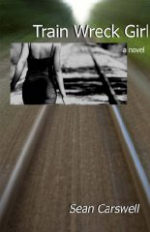
Before I go any further, know that Train Wreck Girl will easily be one of the best novels of 2008. At 20 pages in, the earth paused. I remained absolutely entranced through the final page. Novels like this don’t happen very often, so pay attention.
Train Wreck Girl poses as a fairly straightforward story of a man traveling cross-country to flee his past, returning years later, only to re-immerse in all that he tried to originally escape. He’s outgrown this childhood town of Cocoa Beach, FL, but only in width. The slug line describes the narrative beautifully: One man’s quest to figure out what to do with his life now that it is too late for him to die young.
Beyond the immediately arresting imaginative structural elements (the first chapter is told as a countdown to New Year’s, 1999; some following chapters are told as itineraries outlining the protagonist’s day life) is a narrative so beautifully balanced between plot and character that it wasn’t uncommon for me to breeze through 50 pages without realizing a single blink.
The protagonist, Dan, for example, is a poor, seemingly uneducated man, yet carries an impressive cultural awareness that artfully dodges the dirty savant trope so common with “hard life” literature:
She called me white trash. Which hurt. The “trash” part I can take. But I don’t know why she had to throw “white” in there. [pg. 18]
Or this observation, when introducing two of the narrator’s old friends:
Marigold wore a ring on her left ring finger. Christian didn’t. I took that to mean they were engaged. [pg. 45]
It is this uncanny ability to completely mine a character with initially apparent minutiae that allows Train Wreck Girl to avoid so many potential pitfalls into character-generic cliché. This could have easily been a simple crime novel, a straightforward road trip story, or even a terrible love story. But it isn’t. Perhaps it is this very ability to tease, while simultaneously comforting the reader that carries the novel.
Here’s the ultimate test of a successful novel: can the story humanize a scene involving people farting on a corpse? Train Wreck Girl can, and does.

 The first author,