Tag: newsletter

  • David Mamet gets bleeped on The Simpsons, and maybe Chuck Palahniuk is there too

    David Mamet gets bleeped on The Simpsons, and maybe Chuck Palahniuk is there too

    (part of my ongoing Unexpected Literary References series)

    More Unexpected Literary references from The Simpsons. Surprised? You shouldn’t be.

    Okay, The Simpsons, time to step aside and let some other cartoon be the smarty-pants lit reference show. You’ve been the hipster long enough. Your gags are disproportionately literary-based, and for that The Simpsons, I would appreciate more fart jokes.

    By now you are probably thinking, “wait, I thought you loved lit references in cartoons.” Good call you.

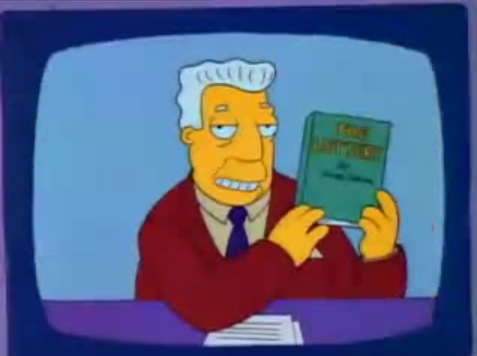
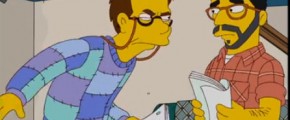
    Playwright David Mamet makes an appearance as the dumped-on sitcom screenwriter for the fake 80s Growing Pains derivative Thicker Than Water. Mamet is perhaps most famous for his 1984 Pulitizer Prize winning play, Glengarry Glen Ross. What many might not know (but The Simpsons writers surely did) is that Mamet wrote a 1987 episode of the TV drama Hill Street Blues and is also an oft-writer of the television series The Unit. I hope his depiction as the shat-upon sitcom writer in The Simpsons didn’t bring up long buried painful memories.

    Earlier in the episode, another reference may have slipped by the casual viewer. While watching an episode of Thicker Than Water Homer quips after the television announcer states “filmed before a live studio audience” that “everyone in that studio audience is dead now.” Is this a reference taken from Chuck Palahniuk’s novel, Lullaby?:

    “Most of the laugh tracks on television were recorded in the early 1950s. These days, most of the people you hear laughing are dead” (pg 15).

    If it were any other show, I’d say this is a coincidence. But because The Simpsons bogarts everything literary, I’m thinking they’ve read some Palahniuk.

  • Validating the three publishing options: Traditional, Small/Independent, DIY

    Validating the three publishing options: Traditional, Small/Independent, DIY

    Honestly, when in the company of commercial press authors, defending my place as independent press author can be difficult. To those who have “made it” into the commercial presses, I would assume my defense comes across not nearly as articulately and convincingly as I would hope. Afterall, the examples of small press authors immigrating into the world of commercial presses far outweighs the number of commercial authors willing to emigrate to the small press world. The commercial press gatekeeper is much more discriminating than the indies; I understanding the disbelief. I too would go commercial if given the right opportunity.

    But things are getting easier. Not only are small press books showing face on historically commercial press-dominated shortlists (the recently announced 2010 National Book Critics Circle award finalists includes quite a few small press titles), but with the help of Jane Friedman the various publishing paths have been defined, and by extension, validated.

    In the summary of her Writers Digest Conference 2011 talk on publishing options Friedman very clearly explains what she sees as the basic three options for publishing:

    1. Tradition
    2. Independent or niche presses
    3. Self-publishing/DIY publisher

    But more, she outlines the viability of each path and goes even further to categorize according to which path that might suit them best. Her bullet-points follow:

    Pros, Cons, and Requirements:

    Traditional publishing:

    • It’s a commercially-driven business
    • Competitive – many people are trying to break in
    • National distribution – your work needs to merit that
    • Slower to market (usually)
    • Not the time to experiment
    • Persistence & patience
    • For non-fiction: you need a platform

    Small/independent press:

    • Weaker distribution, smaller print run
    • More personal attention, dedication
    • Usually less money
    • Niche marketing – smaller, specialized market; they’re experts in the field
    • More accepting of “art” (could be nonprofit), more service-minded

    DIY:

    • Entrepreneurial spirit
    • Direct connections with readership (for sales)
    • Must be comfortable with technology
    • Must enjoy connecting with people (online and off)
    • Requires energy to market and promote

    ALL of the options actually require energy to market and promote.

    It all boils down to you – your strengths, your work, your readers – to determine what’s best.

    Hell, just read the original post. (more…)

  • Social media is a natural fit for authors. Tip your readers!

    Social media is a natural fit for authors. Tip your readers!


    When I’m not authoring mind explosions, I spend part of my time professionally involved with social media. One of the items my company stresses with our clients is that social media is not about pushing a message of product, product, product. It’s about engaging with customers and potential customers on a personal level. This means breaking the traditional advertising bullhorn approach of “BUY THIS NOW” with quips about the weather or TV shows, for example (though perhaps still tangentially related to the company’s product line). For most companies, dialog sans advertising is a foreign concept. For authors, this should be easy.

    Authors are their books

    Authors are inextricably linked to their products in a way that traditional companies are not. Denis Dutton in The Art Instinct: Beauty, Pleasure, & Human Evolution explores the idea that fiction always concerns and navigates three persons, one of whom is the author.

    “There is also the transaction between reader and author—the latter understood by the reader as an actual person, the creator of the story, who negotiates between the various points of view of fictional persons (the characters), the author’s own point of view, and the point of view of the reader. These three elements are present in every experience of fiction; in fact, they exhaust the list of operative elements” (pg 124).

    Authors control the show by “persuading, manipulating, wheedling, planting hints, adopting a tone, and so forth: whatever will appeal to the reader and create a convincing interpretation, including interpretations of ambiguous events. This makes the experience of a story inescapably social” (pg 125).

    The author is always present. This is not the case when, for example, going to a pizza shop; you don’t normally consider the pizza chef when eating pizza, whether consciously or unconsciously. When reading, you do consider the author.

    Authors vs. books: one is not more important than the other

    The author’s aversion to social media is understood. Most of us like to think of our work not as a product to be sold but as an artifact worth cherishing and that the book should be thought of independently from the author. It’s a simple personal life vs. profession life argument. However, this is a romantic ideal, not a reality.

    The truth is our DVD-behind-the-scenes-extras culture has trained us to expect glimpses of the minds behind the art. This expectation should be embraced, not avoided. Would Dostoyevsky fall from his pedestal if he tweeted that he had a particularly terrible sandwich from the corner bistro? Maybe, for some. But I think the number of current readers that would be alienated by this humanization would be offset by a crowd of new potential readers who would be endeared by the man’s personal revelations.

    Take Ray Garton (@RayGarton) for example. Here’s a writer I would never have known had it not been for his phenomenal presence on Twitter. He’s personable, rarely salesy, and funnier than most tweeting comedians. I didn’t learn about the author after learning of his books. Instead I got interested in the books after learning about the author, which is a transposition that seems to be more and more common.

    How to engage using social media

    An article at the London Book Fair site offers this advice for authors looking to engage in social media:

    “It’s probably a mistake for authors to be part of more than one network – it’s simply too time-consuming to keep up with several accounts, so choose Facebook or MySpace, but not both. They should also be aware of posting in haste the sort of personal detail that may be repented at leisure, and they should certainly resist the urge to respond to every criticism and to promote their own work at the expense of others. More than one exposé has demonstrated the dangers of that.”

    I would agree with all but the first point. There are many tools available to make simultaneously posting to multiple platforms easy (Tweetdeck, Twitterfeed, and RSS Graffiti together will take care of 99% of your cross-posting needs). Besides, not all of your potential readers are on a single network; you should be where your readers are (NOTE: as of this posting, I have actually deleted my MySpace account. Shame on me, I suppose. MySpace caters to MTV watchers, and I don’t think my readers fit that demographic. Now, if The Discovery Channel or the Film Noir Foundation buy MySpace, then I’ll probably be back).

    A few more tips:

    • Work humor into your messages. Nothing breaks down defenses quite like humor.
    • Post messages a few times/day if possible. Publish blog posts a few times/week.
    • Leave comments on reader blogs (like this one) and Facebook messages. Re-tweet reader tweets.
    • Your first priority should be engaging with readers. Selling books should be a second or third tier goal.
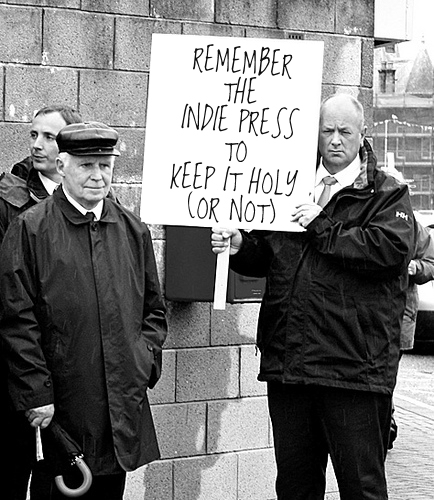
    • The Simon & Schuster.biz site has many more tips. Go there.

    Consider yourself a member of the literary community, not just a content producer

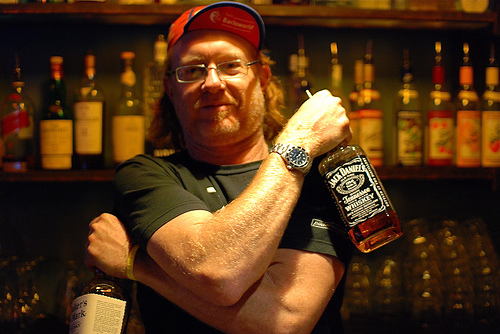
    Honestly, when perceived as a gesture of inclusion, the author who doesn’t participate in social media could be seen as a kind of a dick. I don’t want to generalize—there are valid reasons for not participating, of course—but for those authors without a good reason, refusing to interact with readers is like not tipping your bartender.

    Photo credit: http://www.flickr.com/photos/jcroft/
  • American Dad fandangles Dr. Seuss’ red fish typewriter blue fish

    American Dad fandangles Dr. Seuss’ red fish typewriter blue fish

    (part of my ongoing Unexpected Literary References series)

    Season 1, episode 15 (“Star Trek”), of the always entertaining “American Dad” plots the sudden rise of Steve Smith as a children’s book author. This premise, of course, is perfect for literary nods. Strange, though, that I only caught two.

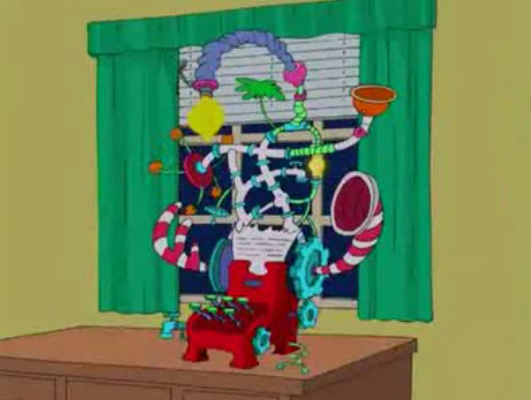
    Dr. Seuss' First Typewriter
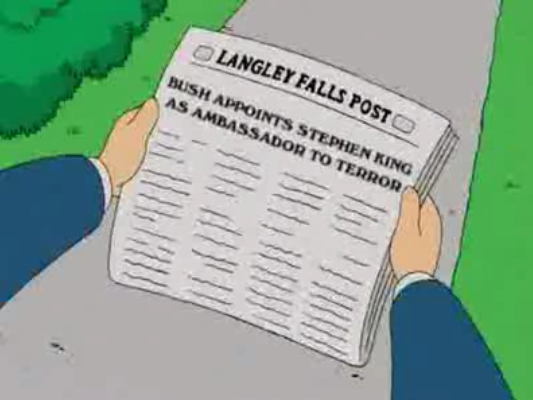
    Nod to Stephen King in the opening gag

    See the entire episode here:

    Additional hilarious photo (I paused the embedded video at just the right/wrong time):

  • Literary critics aren’t dying, but they are threatening suicide…again.

    Literary critics aren’t dying, but they are threatening suicide…again.

    The December 31st, 2010 episode of the New York Times Review of Books podcast focused on a conversation on the relevance of professional literary criticism, especially in respects to the ‘everyone does it’ mentality associated with Amazon book reviews, Facebook statuses, and amateur lit crit blogs. Though the entire conversation was extremely interesting, the following point was especially intriguing. Said Katie Roiphe, a professor at the Arthur L. Carter Journalism Institute at New York University, about the current position of a critic in relation to what so many people want to call today’s death of literature (slightly paraphrased; dates are my insertions):

    It is tempting to say that we live in this dangerous death of literature, but the critic has always said that. If you go back to Matthew Arnold (1822-1888), if you go back to Dwight Macdonald (1906-1982), Randall Jarrell (1914-1965) and their generation. There is something romantic for the critic to see themselves as this lone, embattled defender of the culture against the vast desert that is our uncaring population. It’s an appealing stance, but I think we have to recognize that it is a romantic role that we embrace and somehow take on. In the end, the books remain, the critic remains, and I think that the idea of the death of the critic or the death of literature is just an eternal one for the critic, sort of a fascinating one for the critic.

    The concept of historic consistency when it comes to traditionally un-mainstream mediums has always fascinated me. It seems very generational-centric/ego-centric to think of our time as somehow more unstable or somehow better off in terms of literature. But even when I hear such a concise, and example-laden, view of this fallacy as quoted above, I still can’t help but dismiss it. Do I just want to be a part of a suddenly underdog industry? Or has the industry always been a consistent underdog? Or does the term underdog not apply?

    Be sure to read the corresponding essays from each of the episode panelists:

  • The top 5 most popular blog posts of 2010

    During 2010 I went from a seldom-posting recluse to an annoying gnat. But apparently some people like being bothered by insects, because a few of my posts actually rose out of the white noise to become respectable accidental meant-to-search-for-porn landing pages.

    #1 | Great Unexpected Literary References (posted in June)
    Top entrance keywords: literary references, literature references in family guy, south park literary references, simpsons literary references, family guy brian great expectations reference

    #2 | Peter Griffin does porn and literature

    Top entrance keywords: peter griffin porn, griffin porn, caleb porn, porn in literature, porn literature

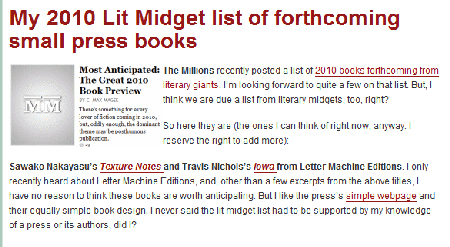
    #3 | My 2010 Lit Midget list of forthcoming small press books

    Top entrance keywords: midget list, noah cicero the insurgent, “noah cicero”, “termite parade”, “letter machine”

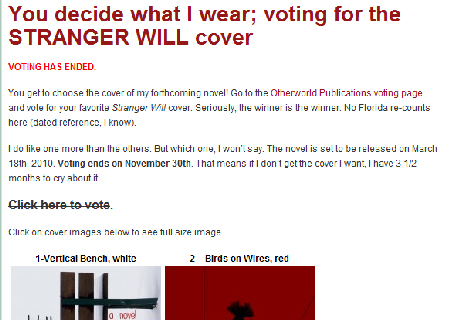
    #4 | You decide what I wear; voting for the Stranger Will cover

    Top entrance keywords: stranger vote 2010 nov, stranger vote november 2010 (most of the visits for this page came from direct referrals)

    #5 | Shirley Jackson’s “The Lottery” mentioned in The Simpsons

    Top entrance keywords: the lottery the simpsons, the simpsons the lottery, the lottery simpsons, simpsons the lottery shirley jackson, the simpsons + the lottery

  • Ideas I’ve had (probably while drinking): bottle stories

    Ideas I’ve had (probably while drinking): bottle stories

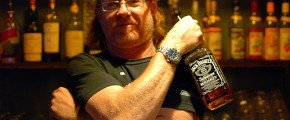
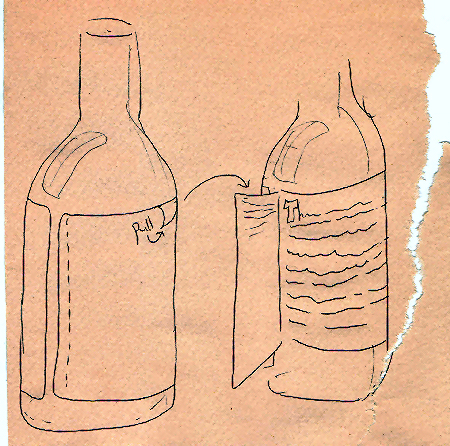
    The beer bottle label is grossly misappropriated real estate. When sold as a six- or twelve-pack, the bottle label is hidden by the outside packaging. And nobody buys a single bottle of beer. So why not use the label for something more than null-advertising? We drink for the morning after stories over greasy breakfast, so why not pull those stories back by a few hours and give them when drinking?

    The content of the stories could be anything from true life tales of drunken debauchery, to short fictions that somehow involve drinking, to short bios of famous authors (and their drunken exploits), to stories that incorporate the unique canvas (stories about glassblowers or, if drinking a red ale, vampires).

    For those advertising traditionalists, the label facade could be left intact, reserving a hidden underside for the story. Think the way cigarette cartoons often display coupons.

    Attention investors: money please!