Tag: newsletter

  • More love from Orange Alert, Stranger Will gets Watched…

    More love from Orange Alert, Stranger Will gets Watched…

    How could you not love Jason at Orange Alert? For the second day in a row I get a bit of love from that lovely soul. This time, in the from of a mention on his weekly The Watch List segment for my Stranger Will book trailer.

  • A rest from the road to read at Orange Alert Podcast, episode 70

    A rest from the road to read at Orange Alert Podcast, episode 70


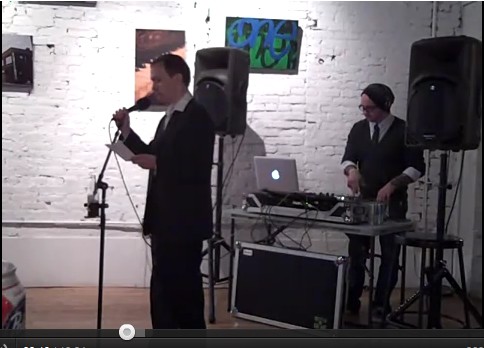
    Literature lover and good natured promoter of all things indy, Jason Behrends offers up his newest episode of the Orange Alert Podcast with lovely side dish of yours truly. He has included my reading of the first chapter of As a Machine and Parts (from a March reading at Method in Kansas City) in this newest episode. Jason was one of the earliest supporters of As a Machine and Parts, so it means a lot to have him include me.

    Listen to the full episode here.

  • Why’d You Go and Do That, Caleb? Pablo D’Stair asks and I ask Pablo.

    Pablo D’Stair simply doesn’t stop. He has recently begun yet another project. His Why’d You Go and Do That? series asks authors to confess to a long hidden secret, and subsequently answer a few questions about how that secret may have forged the author’s thematic sensibilities. This guy has so much going on that he’s basically become his own online school. Though I hope this trend of uncomfortable confession doesn’t take over his entire curriculum; someone will likely be calling HR.

    Head over to the Why’d You Go and Do That? site to read my confession, my answers, Pablo’s confession, and his answers to my questions. Here’s a taste:


    So, first thing I’d like to ask—coming at less the full on subject matter here, but one of your set-up points—is whether you feel in your desire to write some drive to eventually “be free of the tedium of a job” so to speak—do you, at this time, earnestly find time-at-work to be time-away from-writing? And to further a bit, do you think if you didn’t have to work, if you were set-up, well-to-do, that you would fill that time with writing, with active pursuit of your literature? I’ve always been good with having a job, myself, never really (principally) found it as something that takes away from writing and I’ve met some people who I think kind of say they think working is a drain, but really that’s just something they say (as in, I doubt if they didn’t have to work they’d really produce any more or less). Ideally, do you think writing, or any art, is something that should have room to breathe, space, time, something built of a life without such concerns as dayjobs and all? A lot of questions, so answer

    however you like—I guess it boils down to “Do you think time away from writing, required time away, is the enemy of writing?”


    For a long time I thought of my dayjob simply as something I do between bouts of writing. I’ve realized, fairly recently, that my position on the dayjob was due primarily to me having a shitty one. Now, I’m actually quite content and often find myself letting dayjob duties infringe in what would traditionally be considered my writing time. I hope this is not a testament to an eventual takeover of the dayjob stuff, wherein the writing would dissipate completely. I’m sure it isn’t; writing means too much to me.

    More to your question, I know, quite for sure, that should I be given all day to write I wouldn’t use the day in that way. I work best with a balance of outside obligations and writing struggle. If writing were all I had to do, I wouldn’t have any other option to oppose. We need conflict. People need to work in order to appreciate their off-time. I need my job to appreciate my writing time. Required time away therefore might be quite the opposite of the enemy; it could be the best possible mate.

  • Stranger Will tour stop #44: Pela Via’s blog

    What follows is a conversation between myself and writer and Warmed and Bound editor, Pela Via. Why? We like chatting about ourselves. Or, read a much prettier version at Pela’s blog.

    Pela Via: Thanks for talking to me again, Caleb. You are one of the hardest workers in contemporary fiction; I always love a chance to corner you into a long, stifling conversation. Are you as prolific as you seem?

    Caleb J. Ross: Prolific is a term that seems appropriate at first, but really a better way to say it would be “got lucky all at once.” Stranger Will and I Didn’t Mean to be Kevin, the two 2011 novels, were both written a few years ago, each a year or so apart. And the novella also to be released this year, As a Machine and Parts, was written even later than the novels. This is all to say that I spent about eight years writing the books, but the one year release schedule implies otherwise. I’m actually quite the disappointment.

    PV: Hardly. Your short work is everywhere. Do you plan to release any books in 2012?

    CJR: As for 2012, nothing is contracted yet. But I have plenty to write.

    PV: What do these two novels represent in your writing career?

    CJR: The books both deal with parenthood, but from opposite angles. Stranger Will is about a parent not wanting his child. IDMtbK is about a child wanting nothing more than to have a parent. IDMtbK was written later, and I see it as a reaction to Stranger Will; it is both a personal goal (as in “now, let me see if I can to the opposite of what I just did”) and a reader-based goal (as in “I had better show readers that I’m not as crazy as Stranger Will would imply”).

    PV: Do you feel more official this year, as a writer? I know it’s not your first book, but Stranger Will is your first published novel. Has it helped your ego?

    CJR: The ego has taken a bit of a stroke, for sure. What makes me feel the most validated with Stranger Will is that I have a lot of strangers commenting on the book. With Charactered Pieces, my first book, I would say about 70% of the readers knew me personally. With Stranger Will that number seems significantly different.

    PV: I’m frightened of reaching that place where my work is just barely popular enough to be reviewed by non-friends (and consequently panned).

    CJR: I wouldn’t worry about having strangers review your work. I’ve found that the panning is about the same with strangers and friends. The difference being that friends tend to critique you as a person along with the work (“Wow, I can’t imagine you writing something like this”) whereas strangers tend to focus on the work itself.

    PV: Interesting. So does it sting a bit more, then, when it comes from friends, if they have a complaint? Does it feel like they’re speaking to your general ability as a human and writer?

    CJR: Most of my friends who read early drafts are writers themselves, so I understand that all intentions are good. That said, it can still sting. But the sting is more because of my passion for the work rather than my relationship to the reader.
    (more…)

  • Stranger Will tour stop #43: Monkeybicycle

    Stranger Will tour stop #43: Monkeybicycle

    The wonderful bl pawelek has invited me to participate in his Ten Everywhere questions series at Monkeybicycle.

    Click here to read the question series. Also, don’t forget that if you comment on all guest blog posts, you will get free stuff.

    See all tour stops here

  • Quoted for Tattooed Truth

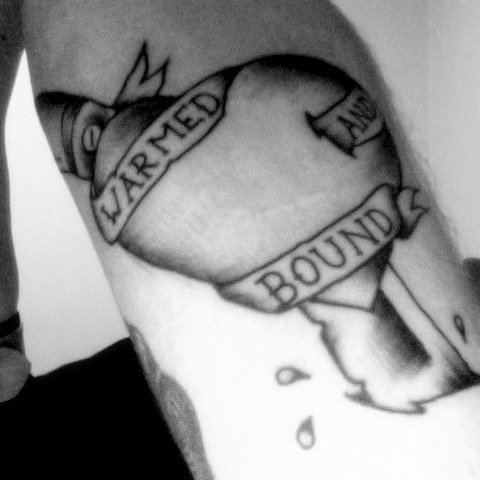
    This entire post is pulled from the Warmed & Bound book site, written by editor Pela Via. If she didn’t already have the words, I swear this could have come from my fingers verbatim (though with less Caleb Ross praise; I try to subdue the ego as much as I can):

    It was this time last year I sent out the first anthology emails. If I remember right, first to JR Harlan, begging for his story “Love,” and to Craig Clevenger, with more unsubtle begging. Then others, Richard Thomas, Gordon Highland and Caleb Ross, asking for publishing advice and whether they liked various titles—one a play on the well-loved existing phrase: The Velvet warms and binds.

    I don’t know what happened between then and now. But this photo, and rumors of other people to be similarly inked, tell one part of it better than I could.

    The idea of a Velvet anthology existed well before I was involved. And somehow, we still managed to stumble into something incredible with this project. I am in awe. And tempted to frame Doc’s arm in my home. It has come to mean more to me each day I’ve known about it.

    The ink makes sense when you see how much these writers care—about the work and about each other. I’m lucky to have been involved. The book is lucky to have these writers.