Today I stop by Ryan W. Bradley’s blog (publisher at Artistically Declined Press and future Black Coffee Press label-mate; his Code for Failure comes out in 2012, shortly after my I Didn’t Mean to be Kevin later this year). I offer a few words on my humility as a writer and the idea that being humble is way different than being self-depreciating (the latter of which my dumb ass tends to do).
Following is a guest post from David Baboulene, author of The Story Book. He is currently preparing to defend his Ph.D. thesis at Brighton University that subtext is the defining substance of story, and by measuring subtext presence, depth and extent, he can tell you in advance how successful a story is likely to be.
If you are like me, you are unlikely to understand the next two paragraphs, but by the end of this article we will visit them again and hopefully you willunderstand them and your life will be all the richer for it and you will love me. Here we go, then:
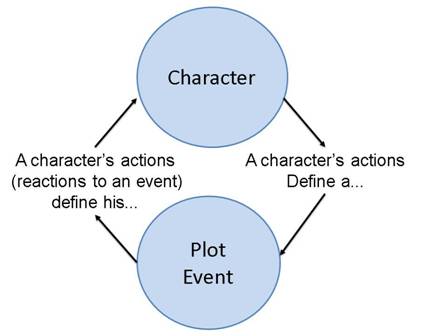
Plot is character, and character is plot, because as soon as a character takes a meaningful action, his action is driving your plot (whether you like it or not). Conversely, as soon as an event happens which elicits a meaningful reaction from your character, then his true character is developing in the eyes of the audience (whether you like it or not).
Note that it is not the event which reveals a player’s character, but his reaction to the event. The action he takes defines his character. Similarly, it is not the event which drives the plot (as you might expect), but the action taken by the character that defines the event, and drives the plot.
Confused? Let’s step through some explanation, and then come back to these paragraphs at the end and see if we have got anywhere.
Action without character
Let’s look at what happens if we separate plot from character. There are three levels of action without character, each with increasing subtlety.
1. At the blatant end, we have an event with no character involvement whatsoever. Lightning strikes a tree in a remote forest. So what? It’s not a story because no reaction is required of an emotional protagonist. This is not a story. This is a screensaver.
2. In the middle ground, we have an ‘emotionally detached’ action. If you watch the news and see that someone was killed in New York, the event is meaningless because you are not emotionally connected with the individuals on the news.
If we increase the known character, we increase the emotion: say we find out that John Lennon has been shot in New York. This is a person we ‘know’; we have been through his Act l and Act ll, and now relate to the tragedy at climax. Look at the emotion on the faces of the friends and relatives of the deceased in New York as they experience the same death, but on a different level of emotional involvement.
3. The most subtle example of action without character actually happens rather a lot in stories that fail to grip. A character takes an action, but it is not a meaningful action, because there is no dilemma riding on his decision to act. If the character is, say, Luke Skywalker, we know he will ‘decide’ to kill the next stormtrooper to come round the corner, and the one after that, and the one after that. Sure, his life is under threat, but that just serves to make his decision to kill even more obvious. His decisions involve no dilemma, so we learn nothing about his true character. However, if the next representative of the Dark Side to come round the corner is also… his father, suddenly he has meaningful decisions and difficult choices with severe consequences. Can he kill his father? Can he risk not killing his father? Now his decision is meaningful… and we in the audience cannot move until we know what he is going to do…
Character without Action
From the opposite end of the argument, let’s say we are shown a man. So what? Until he does something, we don’t know anything about him. Let’s dress him up as a policeman. OK, so now we have some characteristics as our brains overlay stereotypical presumptions about what makes up ‘Policemen’, but beware: this is still an individual without character.
Characteristics are just the wrapping. We don’t know if this person is courageous, extrovert, alcoholic, cowardly or a good father. We don’t even know if he is a criminal or not! Only his actions can reveal these things. When he is faced with a difficult decision
– say, to risk his own life to save someone else’s,that is when we will find out about his true character. What he does will define him. And guess what: what he does – the actions he takes – instantly becomes the plot (whether you like it or not).
A player’s character is defined only by his meaningful actions. The plot is defined only by the actions taken by the players
Writers are taught to define their characters in isolation. They also have a plot they have mapped out to the finest detail. They then find that the way the character wants to behave, if he’s true to himself, is not helpful towards a plot which needs a different behaviour to drive it believably. The story is compromised from the outset because the character is not credible in taking the actions the plot demands.
Considering either plot or character in isolation from the other will trip you up, because whichever you consider will drive the other whether you like it or not. The practical point is that we effectively have to develop both plot and character at the same time and as the same thing. Join them together. Don’t think about ‘plot’ and ‘character’. Think about the two as a single entity made of Character Behaviours. This entity is called a story.
Stories are about character behaviours. What characters do is who they are and what characters do is what happens.
When your writing has this unity of character and plot, your stories will burst into a third dimension of power that comes from consummating their relationship. And you’ll know it and feel it when it happens, and you’ll never write without it again. So, do those first two paragraphs make sense now?! If not, do please get in touch and I will send you the complete chapter on Plot and Character from which this post is drawn.
Best of luck in your writing.
David
Since first being published in 2002, David Baboulene has produced two humorous books, two children’s books and has had three film productions deals, two in Hollywood and one in the UK. His fifth publication – ‘The Story Book‘ provided readers with an understanding of what stories are, why the exist and what authors do that give stories power.
The wonderful guys at Booked Podcast are conducting a marathon series of interviews with the contributors to Warmed and Bound story collection. I am lucky enough to have appeared at their podcast once before, so coming back feels more like a stop back to hang out than an actual interview in which I am trying to sell a book.
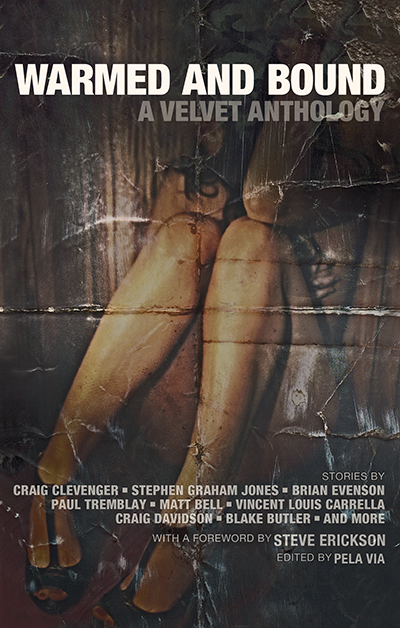
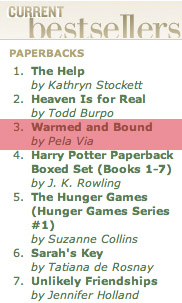
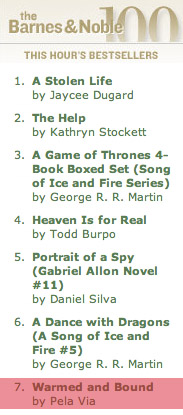
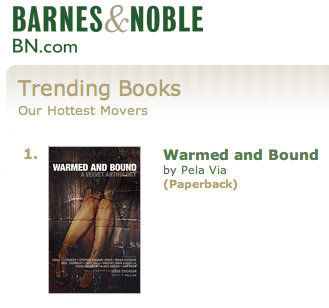
The day of attrition is upon us. Also, coincidentally, the day that Warmed and Bound is released is also upon us. For those of you not yet in the know, prepare to be baptized.
For those with an tendency toward great noir fiction, this collection simply will not disappoint. In fact, the amazing Steve Erickson has offered his own view words to this effect:
“The writers of The Velvet are contemporary fiction’s most effective and least self-conscious aesthetic guerrillas…the result is fiction at once conceived from high artistic intent and executed with depraved populist energy.”
Today I squeeze into the (rightfully) crowded seats of Monkeybicycle once again, this time to express my sadness that I never truly got to experience the wonder that likely was the Penny Universities.
Here’s a bit from Pablo’s Stranger Will investigation:
There can come a point where the magnetism of the internal conflict of a central character can be abandoned or toned down for “the reveal” the exposition of the superficialities of the plot (“whodunit”, as they say, taking center stage) a delicate tension can be lost which to me is always a shame.
Returning to Chinatown, a piece exemplary of what I consider a flaw in some branches of noir, a piece in which the unveiling of who-did-what-to-who-and-why-and-when demolishes the connection to the world, takes the intimacy of the shared experience and makes it remote, only observed, no longer “lived” (even only vicariously). Because of Chinatown, of the letdown I feel every time I get wrapped in its spell and its spell for me falls limp, I always dread when it seems we’re going to learn of a “dark secret” or “a cover up” or any of the conventions, it gets my guard up.
And Ross plays in the tropes, as though cognizant of precedent as something essential. This was evident to me from early on, inseminated in the prose, the clip-and it reinforced my reading it through my own stance on genre.

![[Guest Post] Character and Plot – One and The Same Thing..?: A guest post from David Baboulene](https://calebjross.com/wp-content/uploads/2011/07/Story-290x120.jpg)


 The
The