Tag: newsletter

  • Booked Podcast. Noir at the Bar. The Velvet Podcast.

    Booked Podcast. Noir at the Bar. The Velvet Podcast.

    I’ve been non-stop busy the past few weeks. I feel as though I’ve done nothing, as my to-do list never shrinks. But somehow, as I look back, all that I felt never happened, is done. Here’s a few things:

    The wonderful Robb Olson and Livius Nedin at Booked Podcast did a full episode about my work, splitting time with my two newest books, I Didn’t Mean to be Kevin and As a Machine and Parts. The things these guys say, it makes me blush colors of red never before blushed by humans. Listen to the full episode now, and be sure to stay to the end to hear Mlaz Corbier say awesome things about my awesome socks.

    Pablo D’Stair and I recorded another episode of The Velvet Podcast. We talked about one my recent tweets:

    [blackbirdpie url=”https://twitter.com/calebjross/status/158648828218707968″]

    I hope to have the episode edited and posted within a week. As always, taking with Pablo is a true joy. I hope the listener gets as much from the episode as I got from recording it.

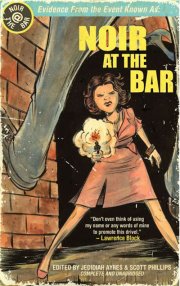
    I’ll be reading in St. Louis as part of the Noir at the Bar series at the Meshuggah Café on February, 28th. The next day, I’ll be at the AWP Conference in Chicago just hanging out. Head over to the Facebook event page for more info. You should be there.

  • Family Guy’s Brian runs over Dean Koontz

    Family Guy’s Brian runs over Dean Koontz

    (part of my ongoing Unexpected Literary References series)

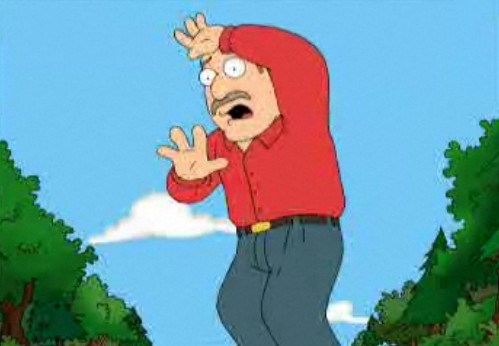
    Though the episode is quite old, I caught this reference to Stephen King and Dean Koontz in the episode called “Brian in Love” from season 2 of Family Guy. On the surface, the gag speaks simply to the poor man’s Stephen King perception of Dean Koontz. But, when you consider the real life car accident that Stephen King suffered in 1999 the gag gets way gaggier.

  • What is Domestic Grotesque Fiction and Why Do I Write It?

    What is Domestic Grotesque Fiction and Why Do I Write It?

    I’ve called myself a writer of grotesque family fiction, but what does that term really mean? I give a brief definition of grotesque domestic fiction, or grotesque family fiction, by way of example, in an earlier blog post:

    Take a family situation—usually some sort of broken family dynamic—mix in something grotesque—possibly morbid but not necessarily—and you’ve probably got domestic grotesque.

    But I don’t know if that fully captures it. Up front, I have to say that I’ve always been the type to back away from definitions that try too hard to avoid definition. You know the type; those writers who say, “No, I don’t write horror fiction, I write transgressive commentaries on modernist life where social norms are exposed as metaphorical fangs in the collective neck…” But in the world of marketing, it is important to simultaneously embrace and reject established genres. You know, ride coattails while sewing your own. So, I write literary fiction but I actually write domestic grotesque fiction.

    With that in mind, I coined the term “domestic grotesque” fiction, which Solarcide called a genre all my own (though, probably because I’ve been promoting the term as my own). In that Solarcide interview, I use a scene from Stranger Will to exemplify the term:

    I find something inherently interesting with taking the trope of father/son catch and twisting it just enough to be jarring (re: dead raccoon) but still remain entirely relatable. These subtle twists are where I get the descriptor for my work, domestic grotesque.

    So why do I write domestic grotesque fiction? Part aesthetics and part concept penetration. Domestic grotesque fiction isn’t only fun to write, it also allows me to very effectively zero in on an idea by pairing dissimilar concepts. Stranger Will = pregnancy and cleaning up dead bodies. I Didn’t Mean to be Kevin = lost parenthood and body parts. “Click-Clack” = newborn baby (implying potential) and mental retardation (no potential). It’s fun.


    Subscribe to be immediately notified when new posts go live:

    [subscribe2 hide=”unsubscribe”]

    Photo credit: http://www.flickr.com/photos/paulgrand/451080165/

  • Am I Jaded? Are Unexpected Literary References Everywhere?

    Am I Jaded? Are Unexpected Literary References Everywhere?

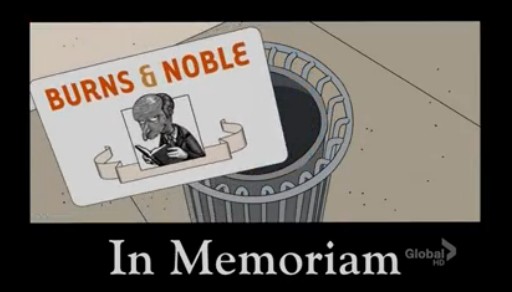
    I love cartoons. I love books. I love when these two vices come together. Since June 2010, when I noticed a Shirley Jackson nod in an episode of South Park, I’ve become sensitive to other literary references in pop-culture, specifically cartoons. These past few months have been strong for my Unexpected Literary References series. South Park, American Dad, Looney Tunes, Conan O’Brien, and The Simpsons all delivered.

    But what makes this blog post worthy is a comment on a recent-ish blog post (about Neil Gaiman’s appearance on The Simpsons):

    “why are they ‘unexpected’? Especially in the programs you tend to feature (especially in the Looney Toons!–not to mention Hannah and Barbara stuff, not that you’ve mention that, yet) it is actually quite expected and part of the draw of the programs.”

    What do you think? Am I jaded? Are references to literature in pop culture more common than I give credit for? I’m seriously considering writing a book about the intersection of popular culture with “hi-culture” specifically in regards to cartoons and literature. Help me. Guide me.

  • I Didn’t Mean to be Kevin is here!!!

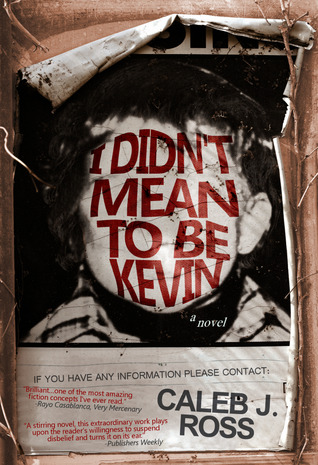
    How the hell did I not post about this already? Things have been busy around here, in all good ways, I assure you. But that’s no excuse. You should have known much earlier than now that I Didn’t Mean to be Kevin is officially here!

    For now, it’s available in the Kindle store and will be going live in other stores, both electronic and print, in the coming days. Get it now.

  • They Know Your Name, but They Aren’t the Ones You Want. Directional Marketing for Authors

    They Know Your Name, but They Aren’t the Ones You Want. Directional Marketing for Authors

    Back in November I wrote a blog post about standardizing your name for search engines. One of the most common responses I received from this post was from authors with unique pen names who cited their unique names as a reason to exempt them from the post’s advice. Basically, their ideas went that a writer with an uncommon name—we’ll use Maximus Pandroistien for this example—should not be worried about being outranked by other websites in a search results page because the likelihood of a similar name existing is nil. While this logic is true, it is narrow-minded. And please, pass along my condolences to Mr. Maxie Pandy and his presumably horrible childhood.

    But here’s the important bit: potential readers who already know your name are not your target demographic. After all, they already know about you. You want to reach those who may be interested in your style of work but have no idea you exist. This is the difference between branding and directional marketing (branding = getting your name out there; directional marketing = being available when/where customers are looking).

    Your Domain Name

    Your initial focus should be your domain name. If you are able to buy your own name (branding) definitely do. Though search engines will try to downplay the power of keywords in a domain name (see this video of Google Matt Cutts dancing around the issue) research consistently speaks to their importance. In fact, in the aforementioned name standardization post, I speak to own troubles with acquiring my own name as a domain.

    So, what if your name isn’t available as a domain name? Then, you are free to focus on directional marketing names, ones that speak to your writing in terms of content, aim, or marketing desire. For example, I currently own the domain names TheSocialMediaAuthor.com and NoirLiterature.com, which contain keywords that speak to the content I create. (note: these two domain names aren’t the best examples, as they currently redirect to CalebJRoss.com; in order for keywords in domains to matter to search engines, the domains generally have to represent unique sites. Search engines are smart enough to know when people are trying to game the system by buying and redirecting keyword-stuffed domains).

    Your Site Content

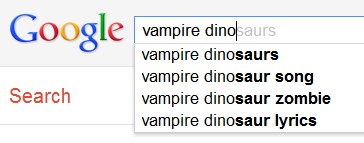
    Now that you’ve taken care of your domain name, the next consideration should be the actual content of your site. When writing content, whether that is pages or blog posts (or meta content, which is a different post entirely), keep your desired keyword targets in mind. If you write about vampire dinosaurs on mars, use phrases that speak to that content as often as possible. Of course, keep readability in mind; don’t stuff your content full of keywords solely for the sake of the search engines.

    The basic idea is to help your website rank for search terms that could lead to more readers. When someone types in “book about vampire dinosaurs” or “I want to read about dinosaurs and vampires” or “are vampire dinosaurs real?” then you want your website (and by extension, your book) to appear in the results.

    When blogging, write about themes in your book, the characters, the plot, and any other interesting element that could be expanded upon in an entertaining way for your blog readers. Pair these ideas with the overall tone you are trying to establish with your content to create something unique that speaks to your personality. For example, if you are a fiction writer, but you also love movies, write about movies that share elements with your books. If you pride yourself on knowing about cutting edge technological advances, writing about how new technology helps you as a writer of vampire dinosaur fiction.

    Of course, all this speaks solely to on-site content. I haven’t even touched off-site elements yet (social networks, inbound links to your site, and offline media). I’ll save those for a future post.


    Subscribe to be immediately notified when new posts go live:

    [subscribe2 hide=”unsubscribe”]
  • “As a Machine and Parts: LOVING IT! So sharp, so sharp…”

    “As a Machine and Parts: LOVING IT! So sharp, so sharp…”


    As a Machine and Parts is getting some love:

    “As a Machine and Parts: LOVING IT! So sharp, so sharp…”

    -Mr. Sean P. Ferguson

    “Fucking insane”

    -Mr. Chester Pane

    “This book is fantastic. I think you guys are going to love it. Very inventive but it doesn’t crumble under its own weight and devolve into merely clever.”

    -Mr. Nik Korpon

    So, if you are easily swayed by the words of people you might not know, then rush out to get your copy of As a Machine and Parts now. While you are at it, this guy I know says that Cheez-Its are good. So, I guess you should buy those.