Tag: murmurs

  • Watch book-related videos, win something cool.

    Watch book-related videos, win something cool.

    As I get more and more into this YouTube channel thing, I’m starting to understand more about the YouTube community. One thing I’ve noticed is that when channels hit subscriber milestones (100 subscribers, 500 subscribers, etc.) they do something special as a way to say thank you. So, I’m going to do just that.

    I currently have 75 subscribers. Once I hit 100 subscribers I am going to give something away to one randomly chosen subscriber. What will that giveaway be? Not sure yet, but I promise it will be good and it will be made by my very own hands. I generally err on the side of handmade slipcases and a copy of one of my books, but who knows, maybe I’ll do more.

    Here’s how it will work:

    1. You MUST be a subscriber to my YouTube channel.
    2. Once I hit 100 subscribers I’ll make a video outlining the giveaway details.
    3. Win a prize (or lose).

    I anticipate item #2 above will go something like this: If you are a subscriber AND you comment on the giveaway video, I’ll assign a number to your comment and use a random number generator to do the ugly work for me. Then I’ll reach out to you with the good news.

    Considering I’ll have only about 100 subscribers during the contest, your chances are damn good that you will win. Many channels with 500+ subscribers do giveaways, too.

    Also, don’t think of this as charity for me. You’ll be subscribing to get amazing weekly(ish) videos containing book reviews, book skits, and other bookish buffoonery.

    Subscribe here: http://www.youtube.com/user/calebjross

    And PLEASE, share on Facebook, Twitter, Google+ and all the rest if you feel so compelled.

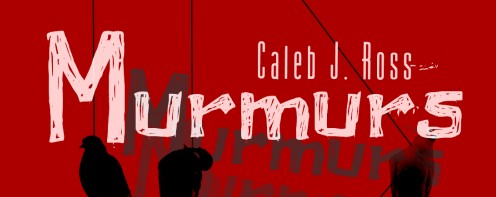
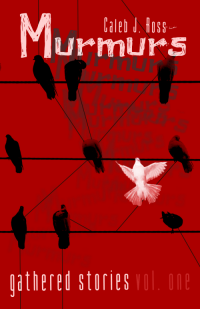
  • New review of Murmurs: “If another writer tells stories quite like this, I do know know of him”

    New review of Murmurs: “If another writer tells stories quite like this, I do know know of him”

    A beautiful few words from reader Frank Edler:

    “These are fairly short bursts of that unique domestic fiction that Ross not only has a penchant for writing but also executes to a level that could earn him the moniker of ‘Father of Domestic Fiction’. If another writer tells stories quite like this, I do know know of him or her…Once again I walk away from another of Caleb J. Ross’ work with an uneasy feeling. ..The author is brilliant at looking at a tender moment and peeling away the layers to reveal the disturbing grotesque. We connect with it because under all our facades lies a bit of that same ugliness to some degree or another.

    I must now venture forth into his longer works, STRANGER WILL and I DIDN’T MEAN TO BE KEVIN….I can not wait to have my emotions unsettled a little bit more.”

    Read the full review here.

  • I did it. I have an official author Facebook page now. Changes coming.

    I did it. I have an official author Facebook page now. Changes coming.

    I did it. I broke down and created an official Caleb J. Ross author page on Facebook. I’ve been averse to doing this for a while, primarily because I want to avoid perceived ego as much as possible (well, as much as a guy with a self-titled website can do), but also because I don’t want to bombard people with duplicate content posts. The logic being that until the official author page gains traction, I would have to post updates to both the author page and my personal page in order to curb anybody missing out on my genius (see, no ego there). Nobody needs double Caleb.

    So, here’s what I propose:

    1. If you are currently a Facebook friend via my personal page, but you ONLY WANT TO RECEIVE AUTHOR TYPE UPDATES, then un-friend my personal page and Like my author page. You can actually do this by clicking this link or you can click “like” in the sidebar box to the right.
    2. If you are currently a Facebook friend via my personal page, and you want to receive BOTH AUTHOR AND PERSONAL TYPE UPDATES, then stay friended AND Like my author page. You can actually do this by clicking this link or you can click “like” in the sidebar box to the right.*
    3. If you are not currently a Facebook friend via my personal page, and you are not currently a fan of my author page, then you are likely responsible for the Holocaust. Sorry.
    *The inevitable question: “If I am a Facebook friend on your personal page and I Like your author page, won’t I be bombarded with duplicate content?” At first, yes. However, I have started a new category on this blog called Un-Writerly. Any blog post with this tag will ONLY be posted to my personal page and WILL NOT be posted to my author page. For example, if all is set up correctly, you are able to view this very blog post ONLY on my personal page. You may still receive a few duplicate status updates, but those should be very minimal.
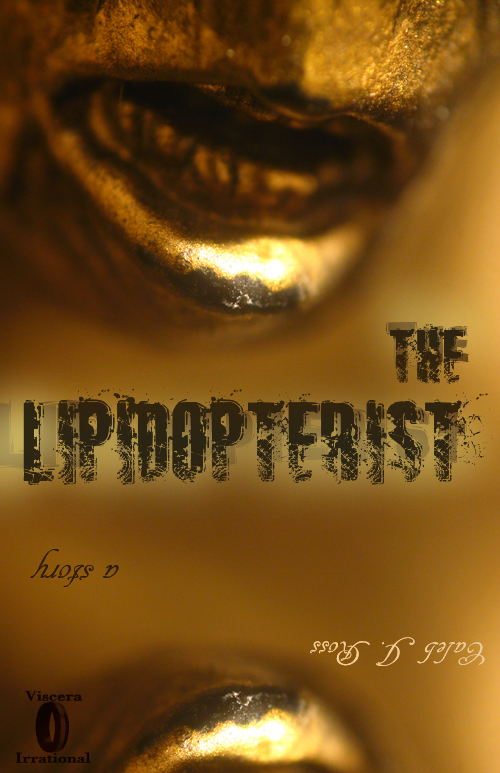
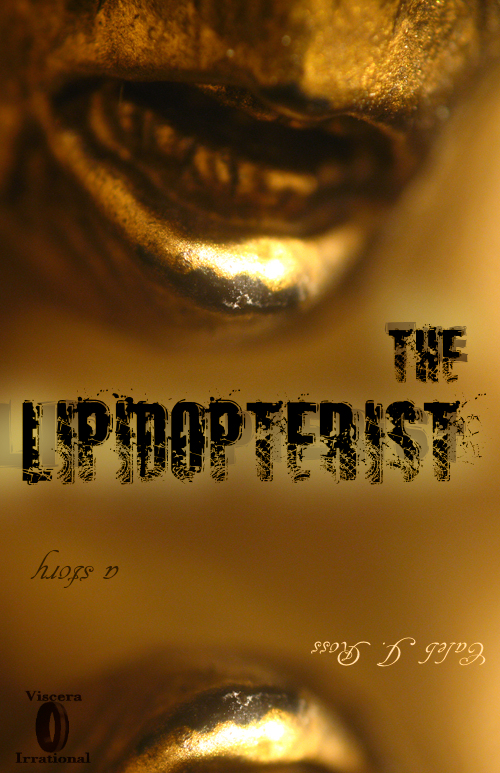
  • New short story available at Amazon.com, “The Lipidopterist.” Man collects human lips. Ex-wife wants half of his collection.

    New short story available at Amazon.com, “The Lipidopterist.” Man collects human lips. Ex-wife wants half of his collection.

    It has been a while since I’ve had a short story to whore out to the world. While I’ve been busy bombarding poor souls with news of my 3 recent book releases, I haven’t had much to say in the way of short stories since…well, since September, if you can count my non-fiction piece “Denis Johnson Almost Drank My Pee” as a short story at Dark Sky (though “short story” implies fiction, and the Dark Sky piece isn’t). Anyway, my story “The Lipidopterist” is now available as a Kindle story over at Amazon.com. I recently read this story in St. Louis at the Meshuggah Cafe. The reactions were quite good, I must say.

    I believe it is also part of the Kindle lending library thing, or at least will be shortly. Still, though, it’s only $0.99. Fork over the coins!

    Available now from the fake publisher Viscera IrrationalBuyRead.

  • Quotes from Flannery O’Connor’s “Some Aspects of the Grotesque in Southern Fiction”

    Quotes from Flannery O’Connor’s “Some Aspects of the Grotesque in Southern Fiction”

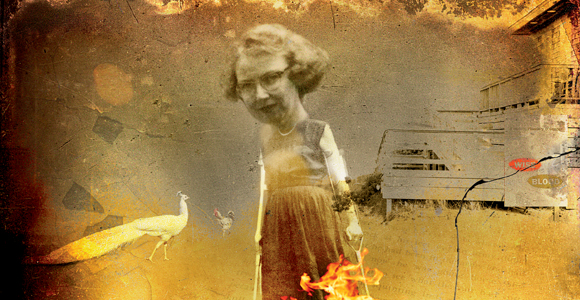
    In the world of grotesque fiction, Flannery O’Connor is the go-to mouth to voice what’s worth our academic time and what’s worth ignoring. Knowing my love of the grotesque and my respect for Flannery O’Connor, Richard Thomas passed along a copy of O’Connor’s important “Some Aspects of the Grotesque in Southern Fiction” (1960) which somehow I had never read before. I’m glad I have now rectified that problem. Below are a few choice quotes, words I’m sure I will cite for the rest of my writing career, especially when citing my own grotesque fiction.

    On mystery as motivation

    …if the writer believes that our life is and will remain essentially mysterious, if he looks upon us as beings existing in a created order to whose laws we freely respond, then what he sees on the surface will be of interest to him only as he can go through it into an experience of mystery itself. His kind of fiction will always be pushing its own limits outward toward the limits of mystery, because for this kind of writer, the meaning of a story does not begin except at a depth where adequate motivation and adequate psychology and the various determinations have been exhausted. Such a writer will be interested in what we don’t understand rather than in what we do.

    On exhausting human knowledge

    Fiction begins where human knowledge begins–with the senses–and every fiction writer is bound by this fundamental aspect of his medium.

    On the path of least resistance

    Henry James said that Conrad in his fiction did things in the way that took the most doing. I think the writer of grotesque fiction does them in the way that takes the least, because in his work distances are so great. He’s looking for one image that will connect or combine or embody two points; one is a point in the concrete, and the other is a point not visible to the naked eye, but believed in by him firmly, just as real to him, really, as the one that everybody sees.

    On sentimentality

    Even though the writer who produces grotesque fiction may not consider his characters any more freakish than ordinary fallen man usually is, his audience is going to; and it is going to ask him–or more often, tell him–why he has chosen to bring such maimed souls alive. Thomas Mann has said that the grotesque is the true anti-bourgeois style, but I believe that in this country, the general reader has managed to connect the grotesque with the sentimental, for whenever he speaks of it favorably, he seems to associate it with the writer’s compassion.

    On being Christ-haunted

    Whenever I’m asked why Southern writers particularly have a penchant for writing about freaks, I say it is because we are still able to recognize one. To be able to recognize a freak, you have to have some conception of the whole man, and in the South the general conception of man is still, in the main, theological. That is a large statement, and it is dangerous to make it, for almost anything you say about Southern belief can be denied in the next breath with equal propriety. But approaching the subject from the standpoint of the writer, I think it is safe to say that while the South is hardly Christ-centered, it is most certainly Christ-haunted. The Southerner, who isn’t convinced of it, is very much afraid that he may have been formed in the image and likeness of God. Ghosts can be very fierce and instructive. They cast strange shadows, particularly in our literature. In any case, it is when the freak can be sensed as a figure for our essential displacement that he attains some depth in literature.

    On audience limitations

    The novelist must be characterized not by his function but by his vision, and we must remember that [the author’s] vision has to be transmitted and that the limitations and blind spots of his audience will very definitely affect the way he is able to show what he sees. This is another thing which in these times increases the tendency toward the grotesque in fiction.

    On novelists and and poetry

    The great novels we get in the future are not going to be those that the public thinks it wants, or those that critics demand. They are going to be the kind of novels that interest the novelist. And the novels that interest the novelist are those that have not already been written. They are those that put the greatest demands on him, that require him to operate at the maximum of his intelligence and his talents, and to be true to the particularities of his own vocation. The direction of many of us will be more toward poetry than toward the traditional novel.

    photo credit: http://marcyankus.com/site/

  • What is Grotesque Noir?

    What is Grotesque Noir?

    Logically, grotesque noir can be defined by a mashup of the traits that define grotesque and noir separately, so perhaps we can best define the combined term by investigating the individual components.

    What is noir fiction?

    Noir fiction is not so much a genre as it is an overlay to existing genres. Most people probably think of early black and white detective films as representative of noir, and while those films may represent some of the overlay’s qualities, in truth film noir can generally be more accurately (more specifically) categorized as detective noir or mystery noir. So what exactly is this mysterious noir overlay? There are a few fantastic attempts at definition out there. A couple of the most important, I think, are:

    From Noir Fiction Is About Losers, Not Private Eyes by Otto Penzler:

    Noir is about losers. The characters in these existential, nihilistic tales are doomed. They may not die, but they probably should, as the life that awaits them is certain to be so ugly, so lost and lonely, that they’d be better off just curling up and getting it over with.

    [Regarding the traditional private eye story, by contrast]…this rather cynical figure–underpaid, disrespected, threatened, shot at, beaten up–has a code of ethics that guarantees he’ll do the best he can for his client, who’s probably lying to him anyway. A heroic figure stands at the center of the private eye novel; there are no heroic figures in noir fiction.

    From The French Word for Bleak by Ray Banks:

    Noir is about restraint. That might seem weird, considering the level of violence and depravity on display, but chances are, the violence is given time to simmer before it boils over and the depravity is confined within the protagonist’s head.

    The great noir writers cared about their protagonists…And because they cared, their readers cared. It’s impossible for a reader to get into a character’s head if the writer hasn’t been there first.

    Compassion. An empathetic connection. The reason we read fiction over non-fiction…So I really only have one rule for writing noir – write with compassion.

    So why does noir fiction get dragged into the crime and detective genres so much? Because crime and detective fiction, by their very nature, depend on morality to tell a story. At some point in any crime or detective story the protagonist is going to have to wrestle with his ethical and moral affirmations. Pair this inevitability with the depraved characters generally populating a crime or detective story and the attributes of noir fiction tend to organically congeal into the crime or detective result.

    What is grotesque fiction?

    Like noir, grotesque is an overlay commonly attributed, but never fully represented by, an existing genre. For noir that genre is crime or detective. For grotesque that genre is horror.

    So why does grotesque fiction get dragged into the horror genre so much? Because the term grotesque often conjurers images of the macrabe. While blood and guts can be grotesque, such images are not universally defined as such. Grotesque simple refers to something “skewed” or abnormal, though generally brings with it a visceral impact. Flannery O’Connor, for example, is often thought of as a writer of grotesque. Her story “Good Country People,” about a woman with a wooden leg and a thieving bible salesman is definitely grotesque, and there is no blood or monsters to speak of.

    So, what is grotesque noir fiction?

    Grotesque noir is fiction that takes the existential conflict of noir and applies the skewed or abnormal in order to further explore the already morally difficult path of its characters. Perhaps a few examples would help. The most successful contemporary grotesque noir novel that I can think of is Brian Evenson’s Last Days. Here we have a detective who must solve a murder by infiltrating an amputation fetish cult. The detective–mentally struggling with the idea of volunteer amputation, and how he must become a part of it (noir)–must ultimately dismember himself (grotesque) in order to solve his case.

    Okay, Last Days is an obvious choice. So, what about a less obvious novel like Fight Club by Chuck Palahniuk? After all, moral struggle is still struggle, even if as a symptom of a mental illness. And as for grotesque, the book (and movie) is stuffed full. Willing self-brutalization, making soap from human fat, a man with “bitch tits;” Fight Club is more grotesque than just about any horror novel.

    What do you think? Share your thoughts or examples in the comments below. Also, don’t forget to subscribe to this blog to receive new posts via email.

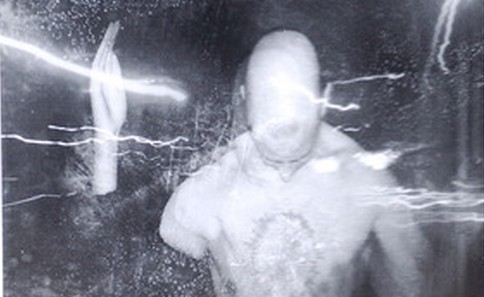
    photo credit: the above image is a partial scan of Brian Evenson’s novella, Brotherhood of Mutilation, which is a precursor to Last Days.
  • 99 cents, now through January 17th, Charactered Pieces and Murmurs.

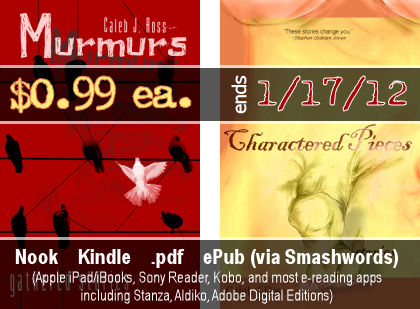
    99 cents, now through January 17th, Charactered Pieces and Murmurs.

    All eBook versions of either Charactered Pieces or Murmurs: Gathered Stories Vol. One are only $0.99 from now through January 17th. Why January 17th? Because that is the official release date for my newest novel, I Didn’t Mean to be Kevin.

    Just click a link below to go either directly to the Amazon Kindle store or to the Smashwords pages where other formats can be purchased (including NOOK, Sony, Kobo, iBooks, etc.)

    Please, spread the word if you are willing and able. This is a damn fine deal, I must say, and is a great opportunity to whet your appetite for the upcoming I Didn’t Mean to be Kevin.

    [box title=”Charactered Pieces” color=”#000″]

    Amazon Kindle $0.99

    Smashwords $0.99
    [/box]

    [box title=”Murmurs” color=”#000″]

    Amazon Kindle $0.99

    Smashwords $0.99
    [/box]