Tag: I Didn’t Mean to be Kevin

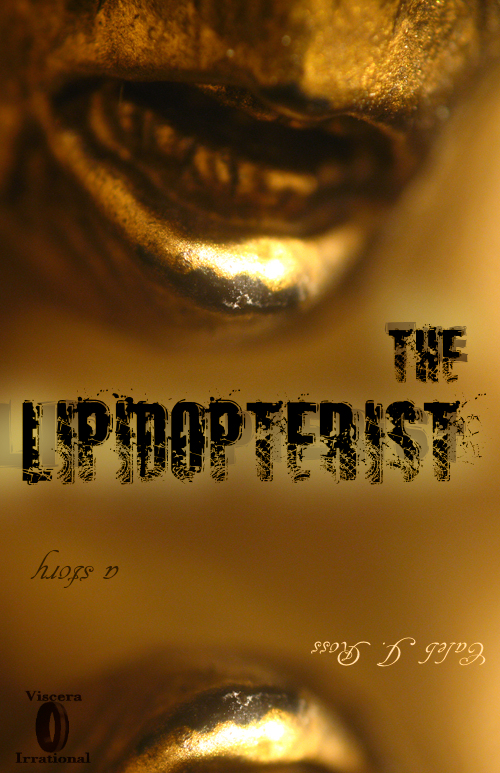
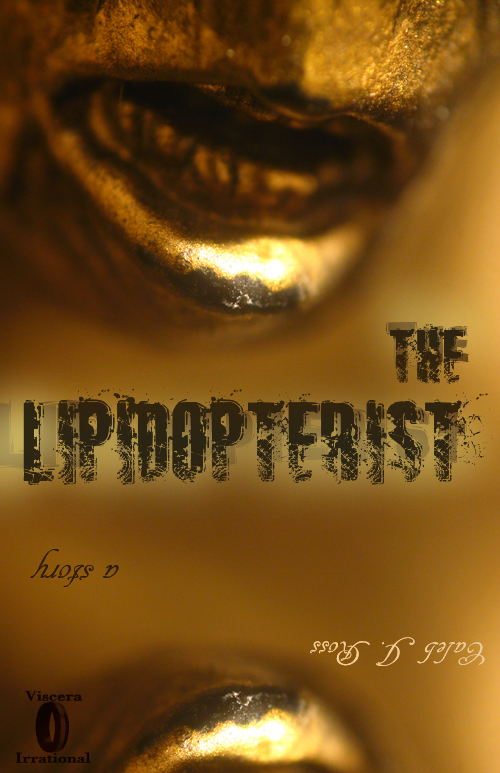
  • New short story available at Amazon.com, “The Lipidopterist.” Man collects human lips. Ex-wife wants half of his collection.

    New short story available at Amazon.com, “The Lipidopterist.” Man collects human lips. Ex-wife wants half of his collection.

    It has been a while since I’ve had a short story to whore out to the world. While I’ve been busy bombarding poor souls with news of my 3 recent book releases, I haven’t had much to say in the way of short stories since…well, since September, if you can count my non-fiction piece “Denis Johnson Almost Drank My Pee” as a short story at Dark Sky (though “short story” implies fiction, and the Dark Sky piece isn’t). Anyway, my story “The Lipidopterist” is now available as a Kindle story over at Amazon.com. I recently read this story in St. Louis at the Meshuggah Cafe. The reactions were quite good, I must say.

    I believe it is also part of the Kindle lending library thing, or at least will be shortly. Still, though, it’s only $0.99. Fork over the coins!

    Available now from the fake publisher Viscera IrrationalBuyRead.

  • Quotes from Flannery O’Connor’s “Some Aspects of the Grotesque in Southern Fiction”

    Quotes from Flannery O’Connor’s “Some Aspects of the Grotesque in Southern Fiction”

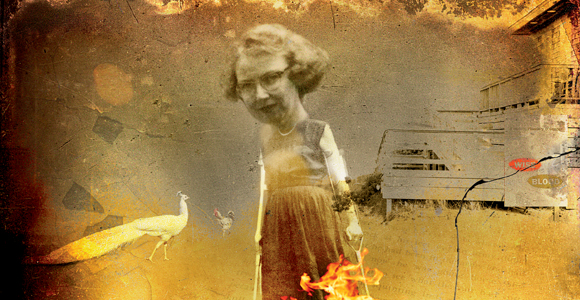
    In the world of grotesque fiction, Flannery O’Connor is the go-to mouth to voice what’s worth our academic time and what’s worth ignoring. Knowing my love of the grotesque and my respect for Flannery O’Connor, Richard Thomas passed along a copy of O’Connor’s important “Some Aspects of the Grotesque in Southern Fiction” (1960) which somehow I had never read before. I’m glad I have now rectified that problem. Below are a few choice quotes, words I’m sure I will cite for the rest of my writing career, especially when citing my own grotesque fiction.

    On mystery as motivation

    …if the writer believes that our life is and will remain essentially mysterious, if he looks upon us as beings existing in a created order to whose laws we freely respond, then what he sees on the surface will be of interest to him only as he can go through it into an experience of mystery itself. His kind of fiction will always be pushing its own limits outward toward the limits of mystery, because for this kind of writer, the meaning of a story does not begin except at a depth where adequate motivation and adequate psychology and the various determinations have been exhausted. Such a writer will be interested in what we don’t understand rather than in what we do.

    On exhausting human knowledge

    Fiction begins where human knowledge begins–with the senses–and every fiction writer is bound by this fundamental aspect of his medium.

    On the path of least resistance

    Henry James said that Conrad in his fiction did things in the way that took the most doing. I think the writer of grotesque fiction does them in the way that takes the least, because in his work distances are so great. He’s looking for one image that will connect or combine or embody two points; one is a point in the concrete, and the other is a point not visible to the naked eye, but believed in by him firmly, just as real to him, really, as the one that everybody sees.

    On sentimentality

    Even though the writer who produces grotesque fiction may not consider his characters any more freakish than ordinary fallen man usually is, his audience is going to; and it is going to ask him–or more often, tell him–why he has chosen to bring such maimed souls alive. Thomas Mann has said that the grotesque is the true anti-bourgeois style, but I believe that in this country, the general reader has managed to connect the grotesque with the sentimental, for whenever he speaks of it favorably, he seems to associate it with the writer’s compassion.

    On being Christ-haunted

    Whenever I’m asked why Southern writers particularly have a penchant for writing about freaks, I say it is because we are still able to recognize one. To be able to recognize a freak, you have to have some conception of the whole man, and in the South the general conception of man is still, in the main, theological. That is a large statement, and it is dangerous to make it, for almost anything you say about Southern belief can be denied in the next breath with equal propriety. But approaching the subject from the standpoint of the writer, I think it is safe to say that while the South is hardly Christ-centered, it is most certainly Christ-haunted. The Southerner, who isn’t convinced of it, is very much afraid that he may have been formed in the image and likeness of God. Ghosts can be very fierce and instructive. They cast strange shadows, particularly in our literature. In any case, it is when the freak can be sensed as a figure for our essential displacement that he attains some depth in literature.

    On audience limitations

    The novelist must be characterized not by his function but by his vision, and we must remember that [the author’s] vision has to be transmitted and that the limitations and blind spots of his audience will very definitely affect the way he is able to show what he sees. This is another thing which in these times increases the tendency toward the grotesque in fiction.

    On novelists and and poetry

    The great novels we get in the future are not going to be those that the public thinks it wants, or those that critics demand. They are going to be the kind of novels that interest the novelist. And the novels that interest the novelist are those that have not already been written. They are those that put the greatest demands on him, that require him to operate at the maximum of his intelligence and his talents, and to be true to the particularities of his own vocation. The direction of many of us will be more toward poetry than toward the traditional novel.

    photo credit: http://marcyankus.com/site/
  • Booked Podcast. Noir at the Bar. The Velvet Podcast.

    Booked Podcast. Noir at the Bar. The Velvet Podcast.

    I’ve been non-stop busy the past few weeks. I feel as though I’ve done nothing, as my to-do list never shrinks. But somehow, as I look back, all that I felt never happened, is done. Here’s a few things:

    The wonderful Robb Olson and Livius Nedin at Booked Podcast did a full episode about my work, splitting time with my two newest books, I Didn’t Mean to be Kevin and As a Machine and Parts. The things these guys say, it makes me blush colors of red never before blushed by humans. Listen to the full episode now, and be sure to stay to the end to hear Mlaz Corbier say awesome things about my awesome socks.

    Pablo D’Stair and I recorded another episode of The Velvet Podcast. We talked about one my recent tweets:

    [blackbirdpie url=”https://twitter.com/calebjross/status/158648828218707968″]

    I hope to have the episode edited and posted within a week. As always, taking with Pablo is a true joy. I hope the listener gets as much from the episode as I got from recording it.

    I’ll be reading in St. Louis as part of the Noir at the Bar series at the Meshuggah Café on February, 28th. The next day, I’ll be at the AWP Conference in Chicago just hanging out. Head over to the Facebook event page for more info. You should be there.
  • What is Domestic Grotesque Fiction and Why Do I Write It?

    What is Domestic Grotesque Fiction and Why Do I Write It?

    I’ve called myself a writer of grotesque family fiction, but what does that term really mean? I give a brief definition of grotesque domestic fiction, or grotesque family fiction, by way of example, in an earlier blog post:

    Take a family situation—usually some sort of broken family dynamic—mix in something grotesque—possibly morbid but not necessarily—and you’ve probably got domestic grotesque.

    But I don’t know if that fully captures it. Up front, I have to say that I’ve always been the type to back away from definitions that try too hard to avoid definition. You know the type; those writers who say, “No, I don’t write horror fiction, I write transgressive commentaries on modernist life where social norms are exposed as metaphorical fangs in the collective neck…” But in the world of marketing, it is important to simultaneously embrace and reject established genres. You know, ride coattails while sewing your own. So, I write literary fiction but I actually write domestic grotesque fiction.

    With that in mind, I coined the term “domestic grotesque” fiction, which Solarcide called a genre all my own (though, probably because I’ve been promoting the term as my own). In that Solarcide interview, I use a scene from Stranger Will to exemplify the term:

    I find something inherently interesting with taking the trope of father/son catch and twisting it just enough to be jarring (re: dead raccoon) but still remain entirely relatable. These subtle twists are where I get the descriptor for my work, domestic grotesque.

    So why do I write domestic grotesque fiction? Part aesthetics and part concept penetration. Domestic grotesque fiction isn’t only fun to write, it also allows me to very effectively zero in on an idea by pairing dissimilar concepts. Stranger Will = pregnancy and cleaning up dead bodies. I Didn’t Mean to be Kevin = lost parenthood and body parts. “Click-Clack” = newborn baby (implying potential) and mental retardation (no potential). It’s fun.


    Subscribe to be immediately notified when new posts go live:

    [subscribe2 hide=”unsubscribe”]

    Photo credit: http://www.flickr.com/photos/paulgrand/451080165/

  • I Didn’t Mean to be Kevin is here!!!

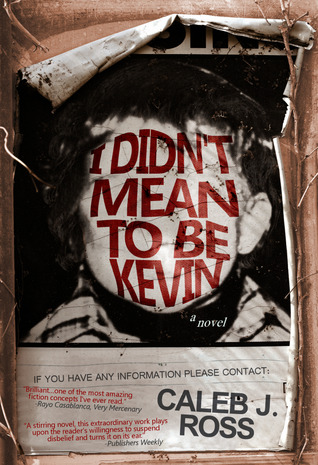
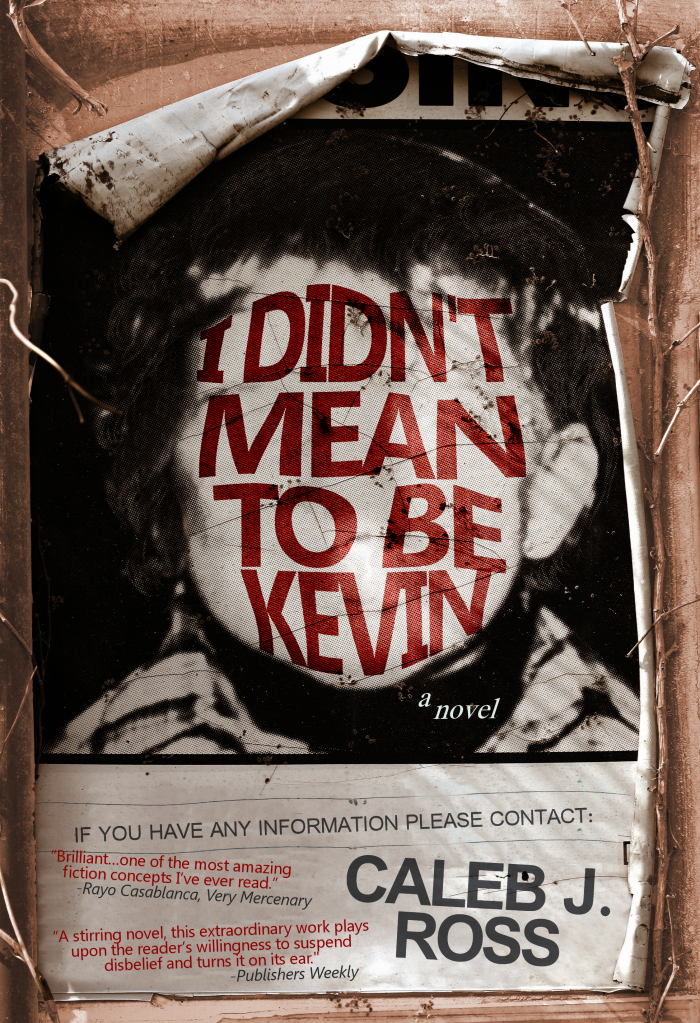
    How the hell did I not post about this already? Things have been busy around here, in all good ways, I assure you. But that’s no excuse. You should have known much earlier than now that I Didn’t Mean to be Kevin is officially here!

    For now, it’s available in the Kindle store and will be going live in other stores, both electronic and print, in the coming days. Get it now.

  • 99 cents, now through January 17th, Charactered Pieces and Murmurs.

    99 cents, now through January 17th, Charactered Pieces and Murmurs.

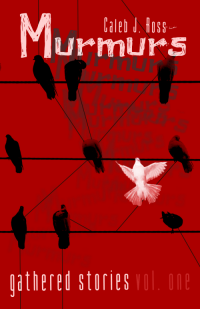
    All eBook versions of either Charactered Pieces or Murmurs: Gathered Stories Vol. One are only $0.99 from now through January 17th. Why January 17th? Because that is the official release date for my newest novel, I Didn’t Mean to be Kevin.

    Just click a link below to go either directly to the Amazon Kindle store or to the Smashwords pages where other formats can be purchased (including NOOK, Sony, Kobo, iBooks, etc.)

    Please, spread the word if you are willing and able. This is a damn fine deal, I must say, and is a great opportunity to whet your appetite for the upcoming I Didn’t Mean to be Kevin.

    [box title=”Charactered Pieces” color=”#000″]

    Amazon Kindle $0.99

    Smashwords $0.99
    [/box]

    [box title=”Murmurs” color=”#000″]

    Amazon Kindle $0.99

    Smashwords $0.99
    [/box]

  • It’s official. I Didn’t Mean to be Kevin releases January 17, 2012. Preorders start December 19th.

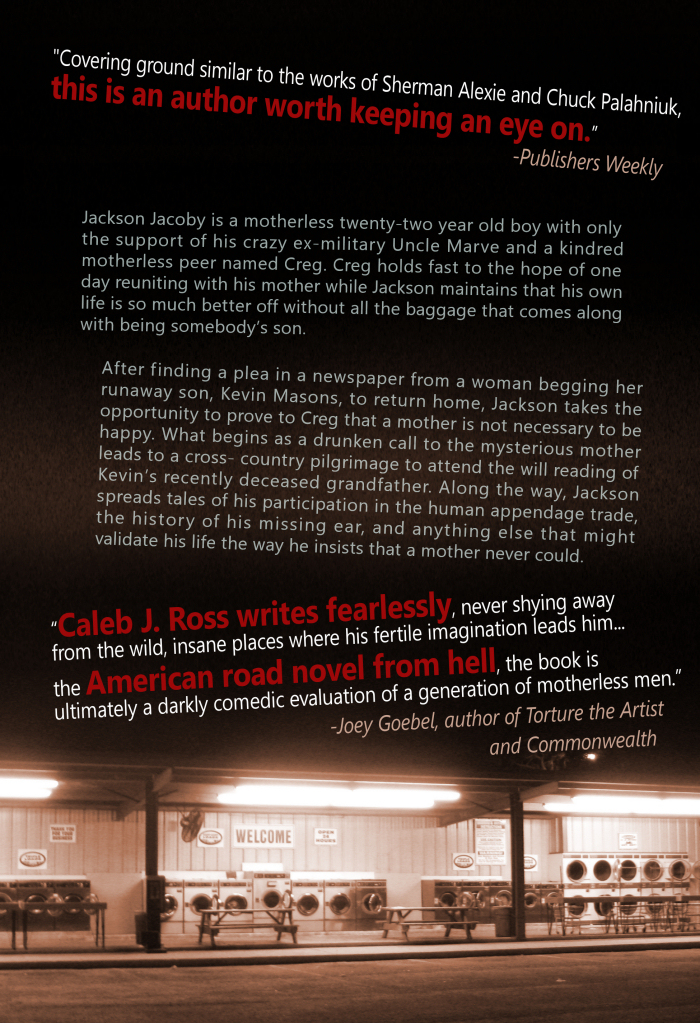
    Preorder details for my new novel, I Didn’t Mean to be Kevin are forthcoming. Until then, get all excited with this synopsis. Tis the season for Caleb, more Caleb, and a little bit of Jesus (if there’s time).