(This post isn’t so much a cohesive argument but more of a textualized exploration. I welcome contributions to the topic)
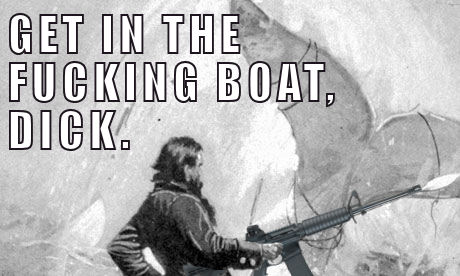
I rarely incorporate guns into my fiction. To me, the (sudden) presence of a gun shifts the trajectory of a story much too easily. No matter how a character has been established during the preceding pages, a gun suddenly—and more importantly, unfairly—gives ultimate power to that character. When given a gun, either 1) a lackluster character becomes the fulcrum of a scene (or story) or 2) a well-developed character gets robbed of all the reader investment by artificially becoming the fulcrum of a scene (or story)[1]Of course there are exceptions. If the gun itself is important to the character’s makeup, or if the context of a story supports guns (a war story, for example), or, as in the case of one of my … Continue reading. Either way, a gun generally says to the reader “I’m a lazy author, and I don’t respect your time, reader.”
 But I do incorporate what I would consider valid character traits/histories. Some of the more common traits I use being difficult childhoods, physical deformities, and general familial strife.
However, this morning, I asked myself what’s the difference between a physical deformity and a gun? Aren’t they both, in some way, just crutches used to advance plot. Some perhaps more nuanced than a gun, but still, aren’t they all simply elements designed to steer the plot’s trajectory?
Is there a universal hierarchy of character traits, ranging perhaps from the most subtle (re: most acceptable and vetted) to the most obnoxious (re: the most potential to artificially steer a plot; re: gun)? Of course the answer is no; nothing is universal and there are plenty of examples of guns in quality fiction. But the question is worth exploring.
Perhaps a better way to approach this topic is by asking, is it possible for a story to work without containing any narrative crutches at all? When asked this way, the same response, no, means so much more.
Now that we can accept that a story MUST contain character traits (crutches), especially when we acknowledge that the very purpose of a character trait is to advance (re: steer) plot. The original concern then returns: are guns simply an especially lazy character trait. Yes. Yes they are.
[references/]
Footnotes
| ↑1 | Of course there are exceptions. If the gun itself is important to the character’s makeup, or if the context of a story supports guns (a war story, for example), or, as in the case of one of my novels, the very power of something like a gun to quickly change a story’s trajectory is exactly one of the points of the novel. |
|---|