Not enough time. The forever growing stack of to-reads will never be tamed due to this one simple fact. Though I read every day, sometimes for hours at a time, I’m never able to get to all of the books I feel deserve to be read. With that, I bring you this short list of to-reads that I own already but have, embarrassingly, not had the chance to read. Why this post? Perhaps to keep me honest. Or, perhaps a way to get a few people to comment with variations of “what?” and “how could you?”
To Kill a Mockingbird by Harper Lee |
 Is my procrastination justified? No. This book was required reading in high school, yet I managed to coast by with barely even cracking the spine. Back then I was not into reading. I existed on a steady intellectual diet of video games and Family Guy. Even if the message of this book lacks any true modern day application, a classic is a classic for a reason, I suppose. Is my procrastination justified? No. This book was required reading in high school, yet I managed to coast by with barely even cracking the spine. Back then I was not into reading. I existed on a steady intellectual diet of video games and Family Guy. Even if the message of this book lacks any true modern day application, a classic is a classic for a reason, I suppose. |
The Catcher in the Rye by J.D Salinger |
 Is my procrastination justified? Maybe. Part of me embraces the hipster implications of having never read a classic, especially a classic such as this one, heralded as a shining example of teenage angst in literature. I’m proud of never having read this book in the same way I am proud to have never seen any of the Star Wars movies. Is my procrastination justified? Maybe. Part of me embraces the hipster implications of having never read a classic, especially a classic such as this one, heralded as a shining example of teenage angst in literature. I’m proud of never having read this book in the same way I am proud to have never seen any of the Star Wars movies. |
The Idiot by Fyodor Dostoyevsky |
 Is my procrastination justified? Yes. I’ve tried reading this tome more than a few times. I think my contemporary attention span prevents me from getting past the fifteenth hexa-syllablic Russian name. I’ll likely try again in the future. Otherwise, I suppose, it wouldn’t be on this list, right? Is my procrastination justified? Yes. I’ve tried reading this tome more than a few times. I think my contemporary attention span prevents me from getting past the fifteenth hexa-syllablic Russian name. I’ll likely try again in the future. Otherwise, I suppose, it wouldn’t be on this list, right? |
Naked Lunch by William S. Burroughs |
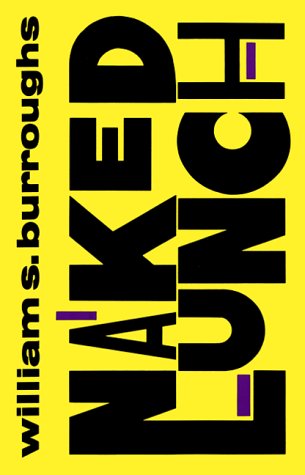 Is my procrastination justified? No. I’ve been told by many people whose opinion I respect that this book is amazing and should be a staple in any literatuer’s diet. However, I’ve been told by an equal number of people whose opinion I respect that the book is too self-indulgent, too non-linear, and all around too terrible for me to waste my time. Anything this divided deserves at least one attempt. Is my procrastination justified? No. I’ve been told by many people whose opinion I respect that this book is amazing and should be a staple in any literatuer’s diet. However, I’ve been told by an equal number of people whose opinion I respect that the book is too self-indulgent, too non-linear, and all around too terrible for me to waste my time. Anything this divided deserves at least one attempt. |
Arc D’X by Steve Erickson |
 Is my procrastination justified? No. Though Arc d’X isn’t considered by most Erickson fans as his best work, I picked it up at a bargain book sale simply because it is an Erickson work. I’ve read The Sea Came in at Midnight, Rubicon Beach, and Tours of the Black Clock (and I have Our Ecstatic Days on my to-read as well), so being the completest that I am, this book is bound to get read at some point. It’s been a while since I’ve read an Erickson book, which is why at least one of them finds its way to this list. Is my procrastination justified? No. Though Arc d’X isn’t considered by most Erickson fans as his best work, I picked it up at a bargain book sale simply because it is an Erickson work. I’ve read The Sea Came in at Midnight, Rubicon Beach, and Tours of the Black Clock (and I have Our Ecstatic Days on my to-read as well), so being the completest that I am, this book is bound to get read at some point. It’s been a while since I’ve read an Erickson book, which is why at least one of them finds its way to this list. |
The Little Sleep by Paul Tremblay |
 Is my procrastination justified? No. I’ve only read short fiction by Tremblay, and judging from my experience with those shorter works it’s a travesty that I haven’t yet read The Little Sleep. Tremblay and I hang out a bit at the same Liternets so my procrastination is even more non-justified. At least with The Little Sleep being unread I’ll have something to really, really look forward to. Is my procrastination justified? No. I’ve only read short fiction by Tremblay, and judging from my experience with those shorter works it’s a travesty that I haven’t yet read The Little Sleep. Tremblay and I hang out a bit at the same Liternets so my procrastination is even more non-justified. At least with The Little Sleep being unread I’ll have something to really, really look forward to.
[EDIT: I have officially started reading this book. I have unofficially already crapped my pants in awe] |
The Gift: Creativity and the Artist in the Modern World by Lewis Hyde |
 Is my procrastination justified? Maybe. Author friends have told me that this book reads like a definitive manifesto on creativity. Sounds great. The problem is that I have an aversion, albeit an unwarranted one, to books that have self-help titles and pictures of hearts on the cover. Call the book Creativity Kicks So Much Ass and replace the heart with some titties or a fist and you’ve got me interested. Is my procrastination justified? Maybe. Author friends have told me that this book reads like a definitive manifesto on creativity. Sounds great. The problem is that I have an aversion, albeit an unwarranted one, to books that have self-help titles and pictures of hearts on the cover. Call the book Creativity Kicks So Much Ass and replace the heart with some titties or a fist and you’ve got me interested. |
Crime and Punishment by Fyodor Dostoyevsky |
 Is my procrastination justified? Maybe. Much of what I said above about Dostoyevsky’s The Idiot can be said here as well. Crime and Punishment carries a bit more gravitas, thus placing it higher on my to-read stack on my nightstand. That is if impressing visitors were important to me. Though, the kind of visitor that would be within close proximity to my nightstand probably doesn’t need any more impressing. </ douchey ego trip> Is my procrastination justified? Maybe. Much of what I said above about Dostoyevsky’s The Idiot can be said here as well. Crime and Punishment carries a bit more gravitas, thus placing it higher on my to-read stack on my nightstand. That is if impressing visitors were important to me. Though, the kind of visitor that would be within close proximity to my nightstand probably doesn’t need any more impressing. </ douchey ego trip> |
The Colony by Jillian Weise |
 Is my procrastination justified? No. I met Jillian earlier this year at the AWP conference in Washington, DC. She’s a gem. She has presence, can crack a damn fine joke, and knows her way around a conversation. In fact, she’s such a great person that I feel bad not having read this book before even leaving the conference for the airport. I’m terrible. Is my procrastination justified? No. I met Jillian earlier this year at the AWP conference in Washington, DC. She’s a gem. She has presence, can crack a damn fine joke, and knows her way around a conversation. In fact, she’s such a great person that I feel bad not having read this book before even leaving the conference for the airport. I’m terrible. |
C by Tom McCarthy |
 Is my procrastination justified? Maybe. I’ve never read a McCarthy book. I’ve heard so many mixed opinions both from strangers and from people who know my tastes well. What ultimately brought me to wanting to read this book is the way Jennifer Eagan goes on and on about it on the Sept 10, 2010 episode of the NY Times Book Review Podcast. So, if it sucks, it’s your fault Eagan. Is my procrastination justified? Maybe. I’ve never read a McCarthy book. I’ve heard so many mixed opinions both from strangers and from people who know my tastes well. What ultimately brought me to wanting to read this book is the way Jennifer Eagan goes on and on about it on the Sept 10, 2010 episode of the NY Times Book Review Podcast. So, if it sucks, it’s your fault Eagan. |
A Pint of Plain: Tradition, Change and the Fate of the Irish Pub by Bill Barich |
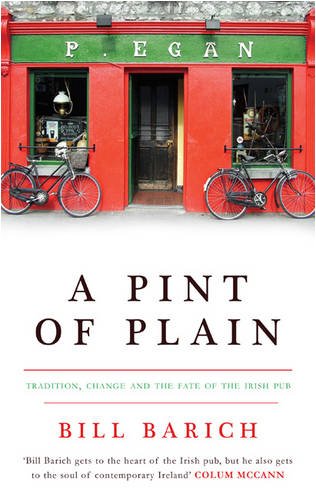 Is my procrastination justified? Probably. Every since visiting Ireland in 20…um…2007 I think, I’ve been quite interested in the pub life of the country. Hell, I’ve been interested in the pub life of every country since I first started drinking, but never before have I actually been to the native pubs (Ireland is the only trip abroad I’ve ever taken). Having a physical association with the content of this book makes me think it will be well worth my time and worth the inevitable Guinness flashbacks. Is my procrastination justified? Probably. Every since visiting Ireland in 20…um…2007 I think, I’ve been quite interested in the pub life of the country. Hell, I’ve been interested in the pub life of every country since I first started drinking, but never before have I actually been to the native pubs (Ireland is the only trip abroad I’ve ever taken). Having a physical association with the content of this book makes me think it will be well worth my time and worth the inevitable Guinness flashbacks. |
The Ones That Got Away by Stephen Graham Jones |
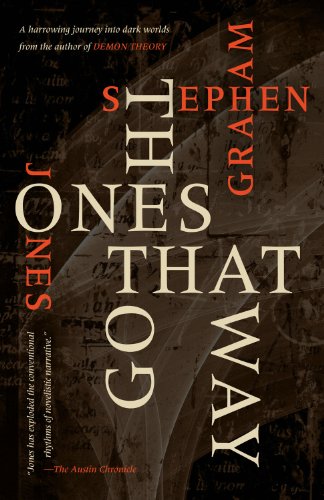 Is my procrastination justified? No. Stephen Graham Jones is one of those authors who can get away with writing any genre. He’s just so good. My favorite pieces of his, short fiction, are what make up this entire book. Couple those passed-thru filters with the fact that Stephen hangs out at The Velvet writing forums more than most non-super-amazing-authors, and there is just no reason for me not having read this book. Is my procrastination justified? No. Stephen Graham Jones is one of those authors who can get away with writing any genre. He’s just so good. My favorite pieces of his, short fiction, are what make up this entire book. Couple those passed-thru filters with the fact that Stephen hangs out at The Velvet writing forums more than most non-super-amazing-authors, and there is just no reason for me not having read this book. |
The Savage Detectives by Roberto Bolano |
 Is my procrastination justified? Yes. I don’t know much about this book other than the author is dead and a lot of my reading friends rave about it. The reason I give this book a “yes” to the question above is simply because I know so little of it. Is my procrastination justified? Yes. I don’t know much about this book other than the author is dead and a lot of my reading friends rave about it. The reason I give this book a “yes” to the question above is simply because I know so little of it. |
Freight by Mel Bosworth |
 Is my procrastination justified? No. I’ve known Mel on the interwebs for a while. He’s a fellow contributor over at Outsider Writers Collective, he’s written a handful of amazing short books, he’s beloved by all, and this book is apparently somewhat of a departure not just for him but for contemporary literature in general. It’s a Choose Your Own Adventure type of book, from what I hear. Amazing, right? Is my procrastination justified? No. I’ve known Mel on the interwebs for a while. He’s a fellow contributor over at Outsider Writers Collective, he’s written a handful of amazing short books, he’s beloved by all, and this book is apparently somewhat of a departure not just for him but for contemporary literature in general. It’s a Choose Your Own Adventure type of book, from what I hear. Amazing, right? |