Category: Marketing & Promotion

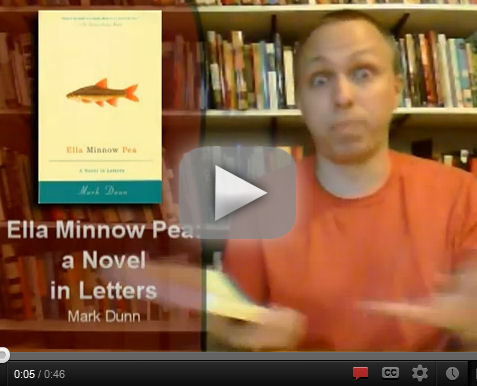
  • Wordless Book Reviews – Mark Dunn, Adam Johnson, Steven Levy, Richard Grossman (Video Blog Ep 015)

    Wordless Book Reviews – Mark Dunn, Adam Johnson, Steven Levy, Richard Grossman (Video Blog Ep 015)

    First off, please forgive the video quality here. I was trying a new recording method, which obviously didn’t work that well.

    Here is another Wordless Book Reviews episode. Here I review four books using only sound effects and facial expressions. The books: Ella Minnow Pea: a Novel in Letters by Mark Dunn, Emporium: Stories by Adam Johnson, In the Plex: How Google Thinks, Works, and Shapes Our Lives by Steven Levy, and The Book of Lazarus by Richard Grossman.

    Click the image above to watch the video review
  • Social Media for Authors and Planting a Story Seed. Slideshow fans, get ready to geek out.

    Social Media for Authors and Planting a Story Seed. Slideshow fans, get ready to geek out.

    This past weekend I was fortunate enough to have been invited to be a part of the 2012 Tallgrass Writing Workshop. This thing has been going on every year for the past 27 years; I definitely do not take lightly the privilege of being part of such a legacy.

    Aside from participating in general camaraderie, I taught two sessions. Both of which seem to have been pretty successful (despite my habit of talking WAY too much).

    For the benefit of those who were not able to attend my sessions (due to simultaneous, better sessions), I have uploaded my two original slideshows for the viewing pleasure of all. The social media one even has audio included. Neat!

    Click the links below the images to access the slideshows.
    Watch at Slideshare.net (with audio) | Watch using Google+

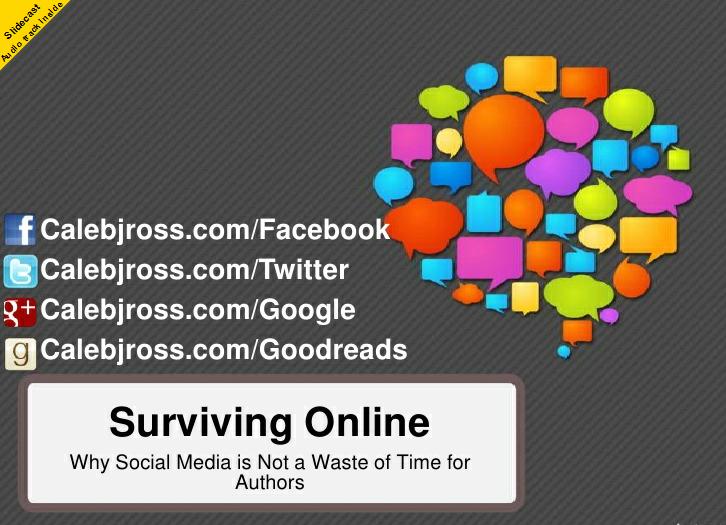
    SURVIVING ONLINE: Why Social Media is Not a Waste of Time for Authors

    Some writers claim that time spent engaging in social media is time wasted. But what is an author but a communicator of ideas, and what is social media but a platform for exchanging ideas (primarily by text, I might add). This session will focus on how the entrepreneurial author, even without a book yet to promote, can use social media not just for nurturing a potential readership but for nurturing story ideas as well.
    Watch at Slideshare.net | Watch using Google+

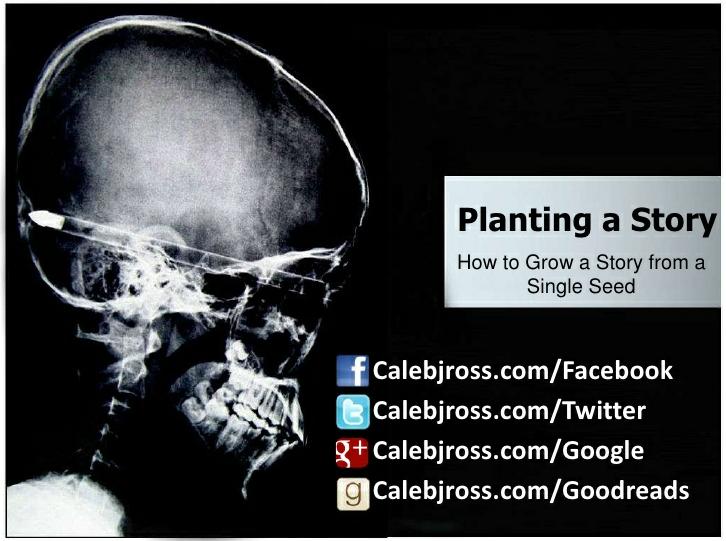
    PLANTING A STORY: How to Grow a Plot from a Single Seed

    Author Stephen Graham Jones has said that many of his story ideas stem from misheard conversations. This session will explore the process of building an entire story from practically nothing, with special consideration given to dismantling the sham known as writer’s block.

  • Book design, Cover Alteration, Slipcases, and Integral Design (Video Blog Ep 013)

    Here, in this part 2 of a 2 part-er, I look at a few examples of book design: Cover Alteration, Slipcases, and Integral Design. Examples include Donna Tartt’s The Secret Friend, Chuck Palahniuk’s Diary, Douglas Coupland’s The Gum Thief, Mark Z. Danielewski’s Only Revolutions and House of Leaves, Adam Novy’s Avian Gospels, Chip Kidd’s The Learners, and a collection of three Tim Hall books.

    View part one here.

  • Why You Will Never Stop Reading Books by that Shitty Author You Secretly Love

    Extree, extree, this just in, Caleb tells you why you may have shitty taste in books. New article at Slothrop.com just went live, titled “Why You Will Never Stop Reading Books by that Shitty Author You Secretly Love.” A taste:

    My goal here, it would seem, is to strip away the magic and aesthetic pleasure from the reading experience until all that remains is a conscious system of if/thens made to cultivate so much data and worry that you’d be better to build an apocalypse bunker, devoid of all text, than to crease the spine of a highly anticipated blockbuster from James Patterson (though, you’d be wise to avoid the latter no matter my intentions with this blog post). Yes, it seems that way. But no. Rather, it is important to understand the very basics of the free will argument if we are to at all suppose books as a unique medium.

    Head over to Slothrop to read the post. Leave a comment. Let Phil know how much you love the article. Maybe he will have me back.

  • The Author Who Gets Free Drinks: a (Hopefully) True Story, live (again) at Broken Piano for President

    The Author Who Gets Free Drinks: a (Hopefully) True Story, live (again) at Broken Piano for President

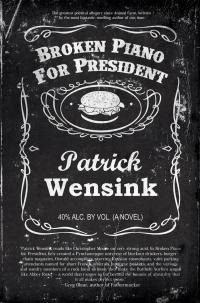
    Patrick Wensink kindly re-posted my short essay thing “The Author Who Gets Free Drinks: A (Hopefully) True Story,” over at his blog, Broken Piano for President, which not coincidentally is the title of his recently released book. Head over to the site, take in the story. It’s about Tom Waits, free drinks, and Southwest Airlines. Here’s a lick:

    This is the already true part: in June of 2008 I stood on a beach in San Diego wearing a full suit, paying more attention to my watch than to the ocean in front of me. For a boy from Kansas City, where the largest body of water might be a wort vessel at the Boulevard Brewery, this transposed priority says a lot. I had a flight, and as always, the airline schedule superseded any perceived relaxation. And it’s especially hard to relax when, with my suit beachwear I looked the part of a misplaced predator. Bikinied women covered themselves as I strolled the boardwalk.

  • Because if I can’t have Tom Waits read my story…

    …Phil Jourdan is a damn good runner-up.

    Here he reads a page or so from my story “Click-Clack” which a lot of people seem to really like (both the story and Phil’s voice).

  • Writer’s Block is Just an Excuse for Broken Storytelling

    Just live, late, late last night, a new post over at Phil Jourdan’s Slothrop blog.

    Writer’s block has nothing to do with motivation (if the story is working, you’ll have plenty of motivation). It has nothing to do with a weak plot (plenty of great books are weak on plot; The Great Gatsby is “guy moves into a house next to rich guy”…that’s about it). It has nothing to do with your own seemingly problematic writing environment (Chuck Palahniuk wrote Choke while bound up in a hospital bed; you aren’t allowed to complain). Most of the time writer’s block is simply your brain’s reaction to a weakness in your story.

    Head over to Slothrop to read the post. Leave a comment. Let Phil know how much you love the article. Maybe he will have me back.

    Also, as a bonus, this article can act as a glimpse of what I’ll be teaching for June’s Tallgrass Writing Workshop at Emporia State University. If you like the article and will be in Kansas in June, sign up for the workshop.