Category: Marketing & Promotion

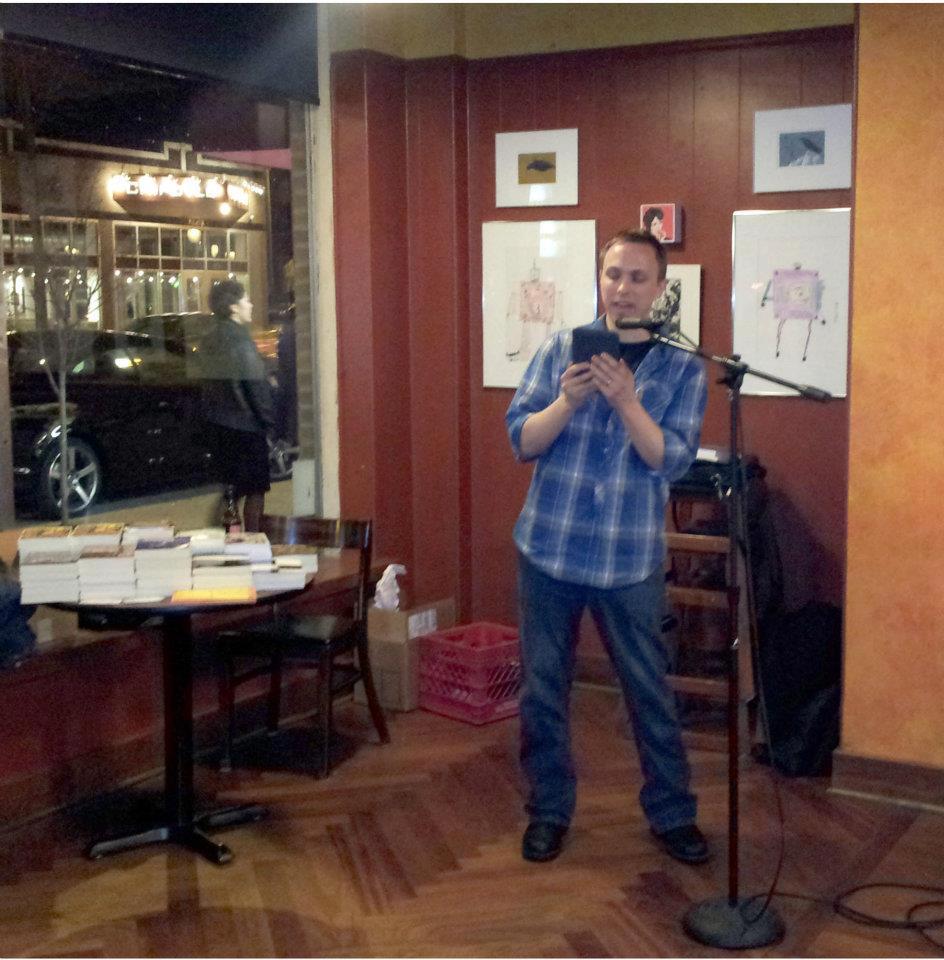
  • New story, “The Lipidopterist,” read live at The Meshuggah Cafe, recorded by Booked Podcast

    New story, “The Lipidopterist,” read live at The Meshuggah Cafe, recorded by Booked Podcast

    The fellows over at Booked Podcast are gents in the truest sense of the word. By that I mean they are whimsical placcards on the bathroom doors of bar restrooms. Also, they happen to be amazingly active participants in the podcast and reading communities, so much so that they are dedicating many future episodes of their podcast to live readings as recorded during the 2012 AWP Conference in Chicago, IL.

    Though my reading, done at The Meshuggah Cafe in St. Louis on February 28th, wasn’t officially part of the AWP Conference (which started February 29th in Chicago), the entire week blends for me into a single mess of drink, friends, and drunk friends.

    This recording captures the first time I had read “The Lipidopterist” out loud in front of an audience. All-in-all, I think it worked.

    Have a listen, then check out Booked Podcast for more. Be sure to subscribe to the podcast so you will never miss an episode.

    Lastly, head over to Amazon to buy “The Lipidopterist,” why doncha? It’s even available for FREE if you have that Amazon Prime thing.

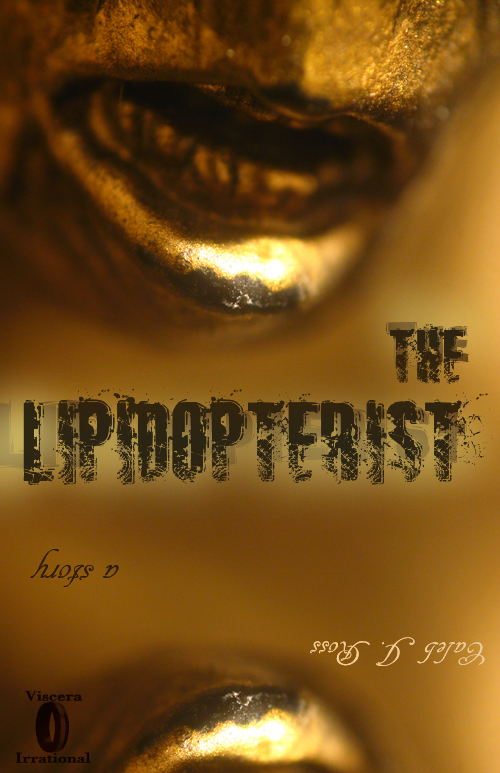
  • New short story available at Amazon.com, “The Lipidopterist.” Man collects human lips. Ex-wife wants half of his collection.

    New short story available at Amazon.com, “The Lipidopterist.” Man collects human lips. Ex-wife wants half of his collection.

    It has been a while since I’ve had a short story to whore out to the world. While I’ve been busy bombarding poor souls with news of my 3 recent book releases, I haven’t had much to say in the way of short stories since…well, since September, if you can count my non-fiction piece “Denis Johnson Almost Drank My Pee” as a short story at Dark Sky (though “short story” implies fiction, and the Dark Sky piece isn’t). Anyway, my story “The Lipidopterist” is now available as a Kindle story over at Amazon.com. I recently read this story in St. Louis at the Meshuggah Cafe. The reactions were quite good, I must say.

    I believe it is also part of the Kindle lending library thing, or at least will be shortly. Still, though, it’s only $0.99. Fork over the coins!

    Available now from the fake publisher Viscera IrrationalBuyRead.

  • What is the value of a Goodreads.com book Giveaway? 93% of entrants had never heard of me. 88% plan on reading my books.

    What is the value of a Goodreads.com book Giveaway? 93% of entrants had never heard of me. 88% plan on reading my books.

    Does giving away your books lead to more readers, and in turn, more fans?

    I’ve long read of the marketing effectiveness of giving away books using the Giveaways option at Goodreads.com. And though I’ve conducted one giveaway in the past (for Stranger Will) I’ve not yet been able to confidently attribute any gains in readership or sales due to that giveaway. With this attribution gap in mind, I set out to conduct a giveaway for  As a Machine and Parts, that would allow me to more precisely measure the value of a Goodreads.com user. My conclusion: a Goodreads.com user stands a great chance of becoming a reader.

    The setup

    I listed a 2 copy giveaway for As a Machine and Parts to take place between 2/3/2012 and 2/15/2012. During this time the giveaway received a total of 398 entries. After the giveaway was closed for entries, I followed up with all but 46 entrants (because I either knew them personally, which could skew the results, or the user was not accepting personal messages) with a survey of 8 simple yes/no questions that touch on topics such as prior recognition, intent to read/buy my books, intent to connect on social networks, and the desire to connect with me, as an author, in real life. The actual questions asked in the survey include:

    • Had you heard of author Caleb J. Ross before this Goodreads.com giveaway?
    • Had you heard of the book As a Machine and Parts before this Goodreads.com giveaway?
    • Do you intend to purchase As a Machine and Parts in the future?
    • Do you intend to read As a Machine and Parts in the future?
    • Do you intend to read any other books by author Caleb J. Ross?
    • Do you plan to connect with author Caleb J. Ross on social networks such as Twitter, Facebook, and Google+?
    • If Caleb J. Ross were to visit your city/town for a reading, would you consider attending?
    • Would you like to subscribe to the Caleb J. Ross newsletter?

    The results of my Goodreads.com giveaway

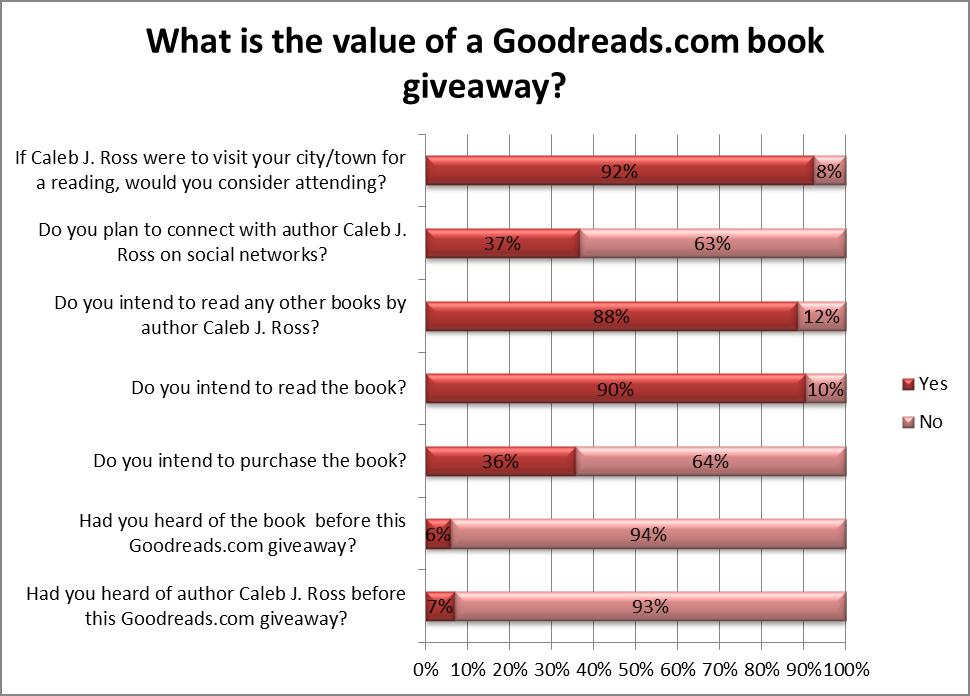
    • 93% of non-winning entrants had never heard of me before this contest. Translation: I’m speaking to an audience who might not otherwise have heard me.
    • 94% of non-winning entrants had never heard of As a Machine and Parts before the contest.
    • 36% of non-winning entrants said they planned on purchasing the book, even though they didn’t win. This is a strange percentage when compared to the 90% of people who intend to read the book. I suppose most readers will look to their library for this book?
    • 88% of non-winning entrants intend to read other books by me. This is an incredibly huge number, especially when compared to the 94% of entrants who had never even heard of me.
    • 37% of non-winning respondents plan to connect with me on social networks
    • 92% of non-winning respondents would come to a reading event if I were to visit their town.
    • 51% of non-winning respondents signed up for my Email is Dead email newsletter. Though I’m convinced that an email newsletter can offer what RSS feeds and social statuses don’t offer more effectively, I do believe that newsletters play a role in summarizing valuable content (which was affirmed with an earlier Facebook poll conducted on this very topic).
    • 38% of non-winning respondents added As a Machine and Parts to one of their Goodreads.com bookshelves
    • 25% of non-winning respondents downloaded Charactered Pieces
    • 25% of non-winning respondents downloaded Murmurs: Gathered Stories Vol. One downloaded

    Additional Goodreads.com giveaway results not included in the chart above

    • 51% of non-winning respondents signed up for my Email is Dead email newsletter. Though I’m convinced that an email newsletter can offer what RSS feeds and social statuses don’t offer more effectively, I do believe that newsletters play a role in summarizing valuable content (which was affirmed with an earlier Facebook poll conducted on this very topic).
    • 38% of non-winning respondents added As a Machine and Parts to one of their Goodreads.com bookshelves

    How many people actually downloaded the free ebooks?

    These percentages are interesting because it means that 75% of people who filled out the survey did not download either of the free ebooks. Either people love filling out surveys or they’ve simply forgotten to download the books.

    • 4% of non-winning respondents added Charactered Pieces (one of the free ebooks given away to survey respondents) to one of their Goodreads.com bookshelves
    • 1% of non-winning respondents added Murmurs: Gathered Stories Vol. One (one of the free ebooks given away to survey respondents) to one of their Goodreads.com bookshelves

    These percentages, when compared to the download percentages above, are interesting as they may elude to a few possibilities: 1) Goodreads.com users may be averse to adding ebooks to reading lists, 2) Goodreads.com users may not always add a book to their lists as soon as they receive the book; perhaps they wait until they actually begin reading it, 3) something else entirely. This seems too big of a discrepancy to ignore, so if anyone has any thoughts, please let me know.

    Why do I think my survey was effective? OR Here Come the Caveats.

    The response-rate for the survey was an amazing 29%. The industry open-rate for Art/Artist newsletters is 17.54% [1]According to Mailchimp. This isn’t exactly a parallel comparison, as open-rate is not the same as response-rate, but it’s a close enough comparison to provide some valuable insight. The response rate is also likely inflated because of the following factors:

    • The entrants were already “in the sales funnel” in that they had already reached out with an interest in my book. In other words, I’m not blindly sending the survey to readers. I’m instead sending the survey to interested readers.
    • I allowed only yes/no answers, leaving out “uncertain” responses. In hindsight, I probably should have provided an “uncertain” response (and perhaps a comments section for each answer).
    • It’s possible that users may have only considered certain actions because the survey included them (connecting on social networks, for example). Would the respondents have connected with me on social networks had they not been introduced to the idea by way of the survey itself? Possibly not.
    • I promised free ebook downloads to all respondents. Obviously, free books must have a lot to do with the high response rate.
    • My communication was very sales averse. I approached giveaway entrants with respect. Truthfully, I am a naturally respectful guy, so I just spoke the way I would normally speak.
    • The survey was incredibly simple. 12 questions with 9 of them being yes/no questions.

    What are your thoughts? Have you conducted a similar survey? What did your results indicate?

    Footnotes

    Footnotes
    1 According to Mailchimp
  • Book Metadata. Let the Algorithm Sell Your Books For You. A Primer.

    Book Metadata. Let the Algorithm Sell Your Books For You. A Primer.

    There’s a rule when it comes to search engine optimization: Content is King. Basically, this means that above everything else—all the link building, code tweaking, and social networking—the most important factor of any well-optimized web presence is the content itself. What good is your website without compelling content? And without compelling content, how can you expect other websites to link back to yours? I would go so far as to suggest the rule should be Content is God, but then we lose out on the lovely alliteration.

    But the Content is King rule governs everything, not just your website or social profiles. Your books themselves actually contain Kingable Content that can be tweaked and optimized for marketing benefits. I’m not suggesting that you to manipulate your book’s words for the sake of search engines; that would be [keyword]ing+<h1>stupid</h1>. Rather, I’m here to clue you in to an area of underutilized content that supports your book even after publication. Metadata.

    What is Metadata?

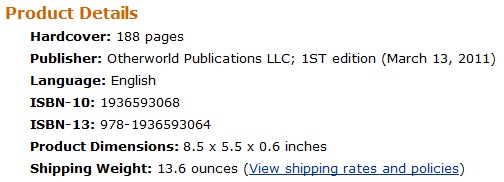
    Metadata, whether it’s book metadata or webpage metadata, is basically the same thing: behind-the-scenes data (subject, genre, theme, etc.) that describes the front-and-center content (the book itself). The categories assigned to help shelve books within the Dewey Decimal system, that’s a form of metadata. Those Product Details on every Amazon.com book page. That’s metadata. When you do a search on a computer for an author or topic, the search results are partially powered by metadata. Those Amazon.com If You Liked ____, You May Also Like ____ recommendations…metadata factors in to those.
    Why Care About Metadata?

    The more information available to search engines and book sites about your book, the more information those search engines and book sties have to use in providing relevant results and recommendations to readers. And while descriptions such as publisher, shipping weight, and product dimensions (pictured above) may be useful for some purposes, they don’t speak to the general concerns of most readers, such as theme, genre, subject, etc. That’s where enhanced metadata comes in.

    Not many people realize just how deep the metadata rabbit hole goes. Which is why, for lack of a better term, I’m using “enhanced metadata” to refer to all those unseen rabbit hole nooks and crannies. Enchanced metadata allows you, the author or the reader, to supply book sites with in-depth information about a book. Such information may include, but is not limited to:

    • fiction or nonfiction categorization
    • genre
    • subjects
    • pace
    • tone
    • writing style
    • perspective of the narration
    • tense (past, present, future)
    • are there strong male or strong female characters
    • errata
    • movie connections
    • books that influenced this book
    • books influenced by this book
    • books that cite this book
    • books cited by this book
    • characters
    • first sentence
    • how many characters does the book follow
    • literary devices used

    Where Can Metadata be Manipulated?

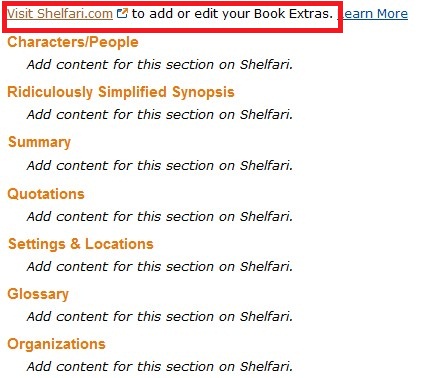
    Shelfari (refers to enhanced metadata as Book Extras)

    Shelfari is a social networking and book cataloging site which powers much of the enhanced metadata provided to Amazon.com. Existing Book Extras data can be seen either by accessing a particular book’s page at Shelfari.com or by accessing the book’s page via your Author Central account at Amazon.com.
    More about Shelfari Book Extras

    Goodreads (refers to enhanced metadata as Book Metadata)

    Goodreads, like Shelfari, is a social networking and book cataloging site. Goodreads feels to me like a much more engaging platform than Shelfari, with far more opportunities for networking with readers.

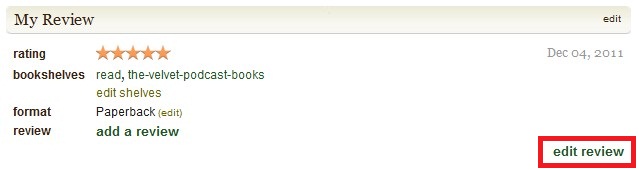
    To access the Book Metadata at Goodreads, first click on the “edit review” link of any book you’ve read. On the next page, toward the bottom, you’ll click on the “edit book metadata” link.  If you have not read a book, Goodreads requires that you become a “librarian” to edit the Book Metadata.
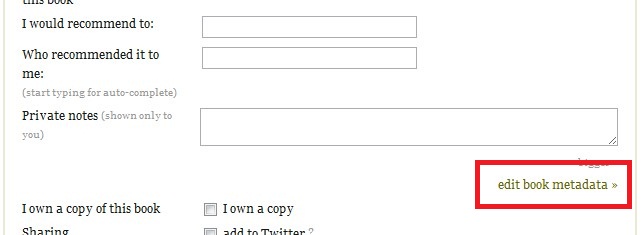
    Goodreads also allows some users to become Librarians, meaning they are able to edit not only book metadata, but also all information about a book including authors, descriptions, publishers, page numbers, and on and on. I highly recommend applying for librarian status. Not only am I an organization nerd, I love being able to more fully control the data with the books I’ve written.

    LibraryThing (refers to enhanced metadata as Common Knowledge)

    LibraryThing is yet another book networking site, and in my opinion is the least user-friendly. But readers use it, so as an author it’s important for me to be there.

    To access the Common Knowledge section, simply open up an existing book page and scroll down to about the middle of the page.
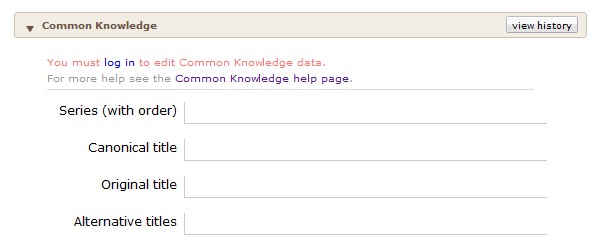
    More information about the LibraryThing Common Knowledge metadata can be found here.

    Additional information on metadata (as well as general SEO information for authors) can be found in this amazing PBS.org article, “A Self-Publisher’s Guide to Metadata for Books.”

    top photo credit: http://www.flickr.com/photos/leprecon/
  • Booked Podcast. Noir at the Bar. The Velvet Podcast.

    Booked Podcast. Noir at the Bar. The Velvet Podcast.

    I’ve been non-stop busy the past few weeks. I feel as though I’ve done nothing, as my to-do list never shrinks. But somehow, as I look back, all that I felt never happened, is done. Here’s a few things:

    The wonderful Robb Olson and Livius Nedin at Booked Podcast did a full episode about my work, splitting time with my two newest books, I Didn’t Mean to be Kevin and As a Machine and Parts. The things these guys say, it makes me blush colors of red never before blushed by humans. Listen to the full episode now, and be sure to stay to the end to hear Mlaz Corbier say awesome things about my awesome socks.

    Pablo D’Stair and I recorded another episode of The Velvet Podcast. We talked about one my recent tweets:

    [blackbirdpie url=”https://twitter.com/calebjross/status/158648828218707968″]

    I hope to have the episode edited and posted within a week. As always, taking with Pablo is a true joy. I hope the listener gets as much from the episode as I got from recording it.

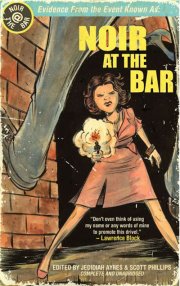
    I’ll be reading in St. Louis as part of the Noir at the Bar series at the Meshuggah Café on February, 28th. The next day, I’ll be at the AWP Conference in Chicago just hanging out. Head over to the Facebook event page for more info. You should be there.
  • They Know Your Name, but They Aren’t the Ones You Want. Directional Marketing for Authors

    They Know Your Name, but They Aren’t the Ones You Want. Directional Marketing for Authors

    Back in November I wrote a blog post about standardizing your name for search engines. One of the most common responses I received from this post was from authors with unique pen names who cited their unique names as a reason to exempt them from the post’s advice. Basically, their ideas went that a writer with an uncommon name—we’ll use Maximus Pandroistien for this example—should not be worried about being outranked by other websites in a search results page because the likelihood of a similar name existing is nil. While this logic is true, it is narrow-minded. And please, pass along my condolences to Mr. Maxie Pandy and his presumably horrible childhood.

    But here’s the important bit: potential readers who already know your name are not your target demographic. After all, they already know about you. You want to reach those who may be interested in your style of work but have no idea you exist. This is the difference between branding and directional marketing (branding = getting your name out there; directional marketing = being available when/where customers are looking).

    Your Domain Name

    Your initial focus should be your domain name. If you are able to buy your own name (branding) definitely do. Though search engines will try to downplay the power of keywords in a domain name (see this video of Google Matt Cutts dancing around the issue) research consistently speaks to their importance. In fact, in the aforementioned name standardization post, I speak to own troubles with acquiring my own name as a domain.

    So, what if your name isn’t available as a domain name? Then, you are free to focus on directional marketing names, ones that speak to your writing in terms of content, aim, or marketing desire. For example, I currently own the domain names TheSocialMediaAuthor.com and NoirLiterature.com, which contain keywords that speak to the content I create. (note: these two domain names aren’t the best examples, as they currently redirect to CalebJRoss.com; in order for keywords in domains to matter to search engines, the domains generally have to represent unique sites. Search engines are smart enough to know when people are trying to game the system by buying and redirecting keyword-stuffed domains).

    Your Site Content

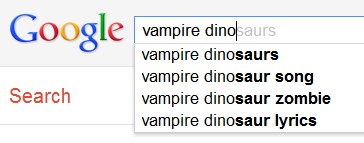
    Now that you’ve taken care of your domain name, the next consideration should be the actual content of your site. When writing content, whether that is pages or blog posts (or meta content, which is a different post entirely), keep your desired keyword targets in mind. If you write about vampire dinosaurs on mars, use phrases that speak to that content as often as possible. Of course, keep readability in mind; don’t stuff your content full of keywords solely for the sake of the search engines.

    The basic idea is to help your website rank for search terms that could lead to more readers. When someone types in “book about vampire dinosaurs” or “I want to read about dinosaurs and vampires” or “are vampire dinosaurs real?” then you want your website (and by extension, your book) to appear in the results.

    When blogging, write about themes in your book, the characters, the plot, and any other interesting element that could be expanded upon in an entertaining way for your blog readers. Pair these ideas with the overall tone you are trying to establish with your content to create something unique that speaks to your personality. For example, if you are a fiction writer, but you also love movies, write about movies that share elements with your books. If you pride yourself on knowing about cutting edge technological advances, writing about how new technology helps you as a writer of vampire dinosaur fiction.

    Of course, all this speaks solely to on-site content. I haven’t even touched off-site elements yet (social networks, inbound links to your site, and offline media). I’ll save those for a future post.


    Subscribe to be immediately notified when new posts go live:

    [subscribe2 hide=”unsubscribe”]
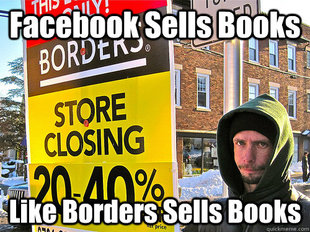
  • I lost $ 75.48 on a Facebook ad campaign, and you can too! -OR- Can Facebook ads sell books? Quick answer: no. Long answer: noooooooooooooooo.

    I lost $ 75.48 on a Facebook ad campaign, and you can too! -OR- Can Facebook ads sell books? Quick answer: no. Long answer: noooooooooooooooo.

    (part of my ongoing Search Engine Optimization for Authors series[1]I understand that paid search ads aren’t traditionally umbrellaed under search engine optimization. However, because tracking and optimization is involved, I’m including it in the series)

    Part of being a great author-marketer is knowing how to filter promotion time wastes from time worthwhiles. Some options are simple to filter. “Should I do a Goodreads.com giveaway to attract potential readers?” Yes (all it costs is the price of a few copies of a book to receive interest from hundreds of readers). “Should I rent a billboard for a month?” No (billboards offer either 1) travel-oriented products/services or 2) products with a high profit margin). Some options aren’t so simple. And in the case of the Facebook ad, prominence adds to the should I or shouldn’t I debate. Well, I’m here to help. (more…)

    Footnotes

    Footnotes
    1 I understand that paid search ads aren’t traditionally umbrellaed under search engine optimization. However, because tracking and optimization is involved, I’m including it in the series