Category: Media Featuring Caleb

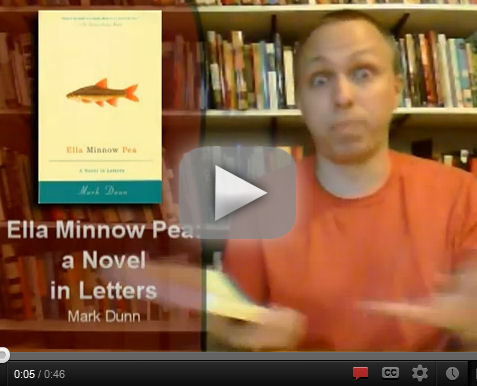
  • Wordless Book Reviews – Mark Dunn, Adam Johnson, Steven Levy, Richard Grossman (Video Blog Ep 015)

    Wordless Book Reviews – Mark Dunn, Adam Johnson, Steven Levy, Richard Grossman (Video Blog Ep 015)

    First off, please forgive the video quality here. I was trying a new recording method, which obviously didn’t work that well.

    Here is another Wordless Book Reviews episode. Here I review four books using only sound effects and facial expressions. The books: Ella Minnow Pea: a Novel in Letters by Mark Dunn, Emporium: Stories by Adam Johnson, In the Plex: How Google Thinks, Works, and Shapes Our Lives by Steven Levy, and The Book of Lazarus by Richard Grossman.

    Click the image above to watch the video review
  • Social Media for Authors and Planting a Story Seed. Slideshow fans, get ready to geek out.

    Social Media for Authors and Planting a Story Seed. Slideshow fans, get ready to geek out.

    This past weekend I was fortunate enough to have been invited to be a part of the 2012 Tallgrass Writing Workshop. This thing has been going on every year for the past 27 years; I definitely do not take lightly the privilege of being part of such a legacy.

    Aside from participating in general camaraderie, I taught two sessions. Both of which seem to have been pretty successful (despite my habit of talking WAY too much).

    For the benefit of those who were not able to attend my sessions (due to simultaneous, better sessions), I have uploaded my two original slideshows for the viewing pleasure of all. The social media one even has audio included. Neat!

    Click the links below the images to access the slideshows.

    Watch at Slideshare.net (with audio) | Watch using Google+

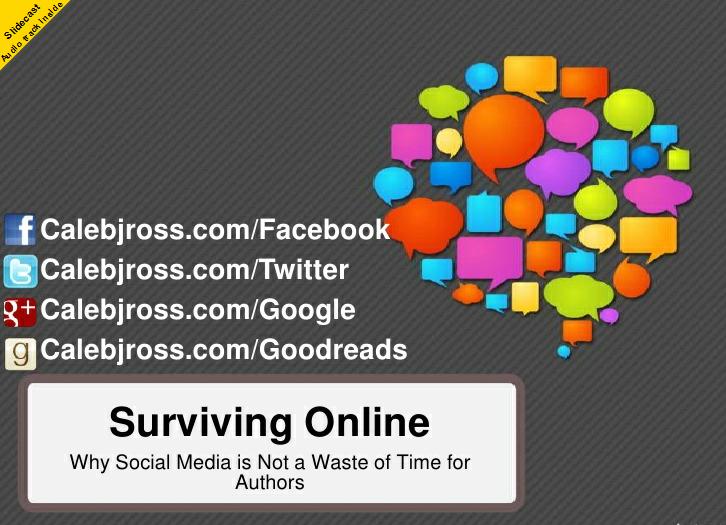
    SURVIVING ONLINE: Why Social Media is Not a Waste of Time for Authors

    Some writers claim that time spent engaging in social media is time wasted. But what is an author but a communicator of ideas, and what is social media but a platform for exchanging ideas (primarily by text, I might add). This session will focus on how the entrepreneurial author, even without a book yet to promote, can use social media not just for nurturing a potential readership but for nurturing story ideas as well.

    Watch at Slideshare.net | Watch using Google+

    PLANTING A STORY: How to Grow a Plot from a Single Seed

    Author Stephen Graham Jones has said that many of his story ideas stem from misheard conversations. This session will explore the process of building an entire story from practically nothing, with special consideration given to dismantling the sham known as writer’s block.

  • Book design, Cover Alteration, Slipcases, and Integral Design (Video Blog Ep 013)

    Here, in this part 2 of a 2 part-er, I look at a few examples of book design: Cover Alteration, Slipcases, and Integral Design. Examples include Donna Tartt’s The Secret Friend, Chuck Palahniuk’s Diary, Douglas Coupland’s The Gum Thief, Mark Z. Danielewski’s Only Revolutions and House of Leaves, Adam Novy’s Avian Gospels, Chip Kidd’s The Learners, and a collection of three Tim Hall books.

    View part one here.

  • Because if I can’t have Tom Waits read my story…

    …Phil Jourdan is a damn good runner-up.

    Here he reads a page or so from my story “Click-Clack” which a lot of people seem to really like (both the story and Phil’s voice).

  • Solarcide interviews me, one of the most interesting interviews yet: The Digital Age of Domestic Grotesque

    Nathan Pettigrew, one of the two minds behind the lit site Solarcide, asked me for an interview a few days ago. This guy knows how to ask questions, ones that not only evoke my own passion for the subject matter but also make it easy for me to answer in a way that is hopefully entertaining for readers.

    Head over to Solarcide now. Read the interview. Learn of my greatness.

    Here’s a taste of Nathan’s humbling intro:

    He’s one of literature’s most lethal rising stars and highly prolific with not one, but four new releases in 2011.

    His debut novel from earlier this year, Stranger Will (Otherworld Publications), established Caleb J. Ross as a true talent to be reckoned with. His writing can be described as stylistically beautiful while depicting some of the darkest and most disturbing worlds that fiction has to offer.

    Picking up on concurrent themes throughout his work pertaining to family, some have begun to refer to his style as Domestic Grotesque—a genre all his own.

  • Spinetingler Magazine reviews Click-Clack from Warmed and Bound: “This vignette is a song masquerading as short story. It achieves this with a brilliance as flawless as any modern masterpiece of music.”

    Spinetingler Magazine reviews Click-Clack from Warmed and Bound: “This vignette is a song masquerading as short story. It achieves this with a brilliance as flawless as any modern masterpiece of music.”

    “Click-Clack” is a favorite of my stories. It has a rhythm and a focus that I am particularly proud of. So, it makes me all warm and bound to read Matthew C. Funk‘s review of the story at Spinetinger Magazine. Spinetingler, for whatever beautiful reason, has decided to review a handful of stories from the recent Warmed and Bound anthology, in which my story, along with 37 others, appear for your reading pleasure.

    Rather than blather on, I’ll just post a few of Mr. Funk’s words:

    Click-Clack by Caleb J. Ross is attuned to these mortal rhythms, and makes them sing seamlessly in a narrative that is as much a ballad as it is lyrical prose. This vignette is a song masquerading as short story. It achieves this with a brilliance as flawless as any modern masterpiece of music.

    Ross crafts wondrously illustrated personalities. Jack and Ernie are vivid as both symbols in a fable and people in a beautiful and brutal struggle.

    This deep understanding of the dynamic between father and son is just one aspect of Click-Clack’s beauty. Ross also infuses the work with flourishes of consonance, rhyming words in a subtle way that make the power of rhythm a real force for the reader…His rhythms run through it like tides. They rise and fade in the writing like the passing of trains.

    Click-Clack hits all the right notes. It is a pin-point, sad-hearted portrait of the track of birth and death that fathers and sons must follow. It took on speed, swept me up and kept echoing after it passed…Do not miss this train.

    Read the full review at Spintingler Magazine. While there, take in the rest of the words, both kind and not so kind, about Warmed and Bound.

  • Six Personal Investigations of the Act of Reading: Caleb J. Ross’ Stranger Will at the Sri Lanka Sunday Observer

    Six Personal Investigations of the Act of Reading: Caleb J. Ross’ Stranger Will at the Sri Lanka Sunday Observer

    Pablo D’Stair returns with his second installment of his Six Personal Investigations of the Act of Reading, this time with my novel, Stranger Will, as the article’s referent object (with a focus on Genre). I simply could not be more delighted. He’s already tackled Stephen Graham Jones’ The Bird is Gone: a manifesto and is prepping investigations of Goodloe Byron’s The Wraith (which I am currently reading), Amelia Gray’s, AM/PM, D. Harlan Wilson’s Peckinpah: an ultraviolent romance, and Brian Olu’s So You Know It’s Me. This guy could run his own online psychology classes, I swear. I’d enroll (mostly so I could shoot virtual spitballs at his touchscreen whiteboard).

    Here’s a bit from Pablo’s Stranger Will investigation:

    There can come a point where the magnetism of the internal conflict of a central character can be abandoned or toned down for “the reveal” the exposition of the superficialities of the plot (“whodunit”, as they say, taking center stage) a delicate tension can be lost which to me is always a shame.

    Returning to Chinatown, a piece exemplary of what I consider a flaw in some branches of noir, a piece in which the unveiling of who-did-what-to-who-and-why-and-when demolishes the connection to the world, takes the intimacy of the shared experience and makes it remote, only observed, no longer “lived” (even only vicariously). Because of Chinatown, of the letdown I feel every time I get wrapped in its spell and its spell for me falls limp, I always dread when it seems we’re going to learn of a “dark secret” or “a cover up” or any of the conventions, it gets my guard up.

    And Ross plays in the tropes, as though cognizant of precedent as something essential. This was evident to me from early on, inseminated in the prose, the clip-and it reinforced my reading it through my own stance on genre.

    And perhaps even greater than Pablo’s inclusion of Stranger Will in his investigations, is an interview with the man himself, here, part one of Exploring writers’ intricate world
    By Ranga Chandrarathne
    . Pablo is a true thinker, with words that could level armies.