Category: Unexpected Literary References

  • Am I Jaded? Are Unexpected Literary References Everywhere?

    Am I Jaded? Are Unexpected Literary References Everywhere?

    I love cartoons. I love books. I love when these two vices come together. Since June 2010, when I noticed a Shirley Jackson nod in an episode of South Park, I’ve become sensitive to other literary references in pop-culture, specifically cartoons. These past few months have been strong for my Unexpected Literary References series. South Park, American Dad, Looney Tunes, Conan O’Brien, and The Simpsons all delivered.

    But what makes this blog post worthy is a comment on a recent-ish blog post (about Neil Gaiman’s appearance on The Simpsons):

    “why are they ‘unexpected’? Especially in the programs you tend to feature (especially in the Looney Toons!–not to mention Hannah and Barbara stuff, not that you’ve mention that, yet) it is actually quite expected and part of the draw of the programs.”

    What do you think? Am I jaded? Are references to literature in pop culture more common than I give credit for? I’m seriously considering writing a book about the intersection of popular culture with “hi-culture” specifically in regards to cartoons and literature. Help me. Guide me.

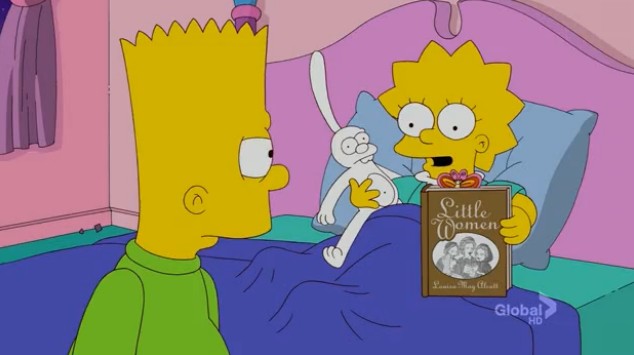
  • Bart Simpson and Little Women

    (part of my ongoing Unexpected Literary References series)

    Though the wonderful Pablo D’Stair recently called me out on the possible inaccuracy of calling this series “unexpected” literary references, I’m too far in to change the name (re: too lazy to change the name). And this latest find, from last week’s episode of The Simpsons, does not help defend any point I may have had about the unexpectedness of lit references in cartoons. Perhaps the series should be called “Great Unexpected Literary References For Those Who Don’t Watch Much TV But Also Don’t Read Much So Therefore Probably Only Bake Cookies And Make Crafts With Hot Glue Guns.”

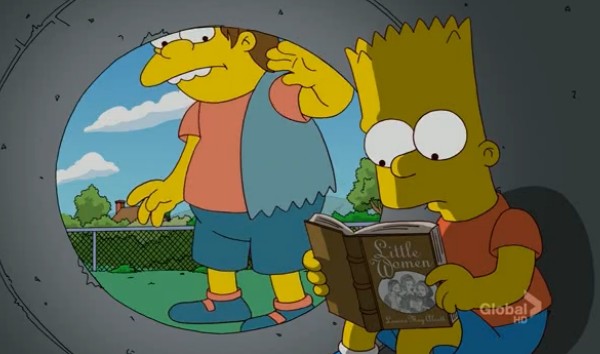
    In this episode (S23E7 – “The Man in the Blue Flannel Pants”) Bart learns that he actually enjoys reading, and in doing so must hide his new love from Nelson and the rest of the bullies.

    Why is this reference blog worthy? First, I’m not very discriminating. Second, it’s refreshing to see the act of reading so directly supported in a TV medium. Many references appear as clever asides or Easter Eggs for the astute watcher, but here we see reading actually addressed directly as a worthy form of entertainment.

  • Neil Gaiman on The Simpsons, tween lit lovers rejoice and/or get depressed

    (part of my ongoing Unexpected Literary References series)

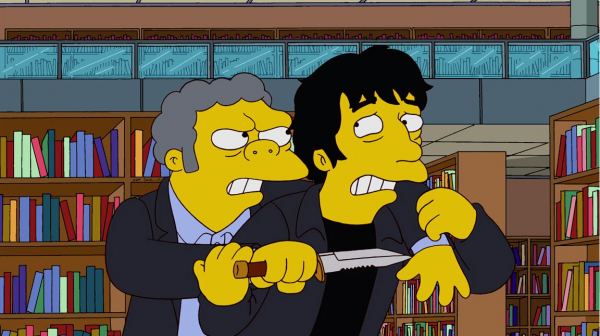
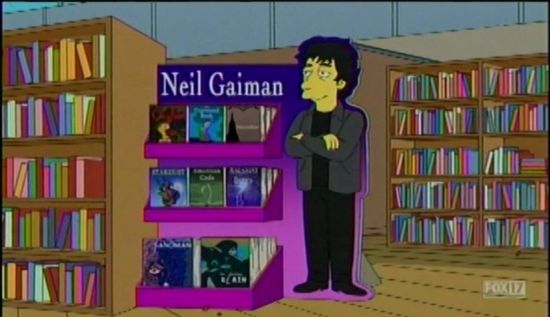
    Yesterday (11-20-2011) The Simpsons continued its legacy of literary references with an episode featuring Neil Gaiman, author of American Gods, Anansi Boys, and many others . The episode, “The Book Job” (season 23, episode 6), explores the culture of tween lit, specifically stories featuring vampires and magicians, using an Ocean’s Eleven-style heist as the plot backdrop. Though the episode speaks primarily to the idea that tween lit may be hugely factory produced for market consumption rather than intellectual stimulation, the optimistic take-away is that even in a world where television and the internet dominate as means of entertainment and information distribution, books seem to be making a resurgence. This, my hope anyway, will seed these tween literateurs with a life-long love of reading.

    About “The Book Job“:

    Lisa becomes disheartened when she learns the shocking truth behind the “tween lit” industry and her beloved fantasy novel characters, but Homer decides to cash in on the craze and forms a team to group-write the next “tween lit” hit, with the king of fantasy, Neil Gaiman, lending his expertise to the effort. After catching the eye of a slick industry publisher at the Springfield Book Fair, the team gets an advanced copy of their work and discovers that the corporate lit business is a bigger operation than they imagined.

  • The Tale of Scrotie McBoogerballs vs. The Catcher in the Rye

    (part of my ongoing Unexpected Literary References series)

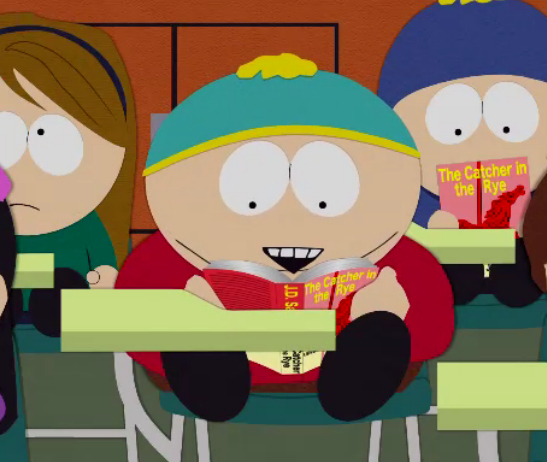
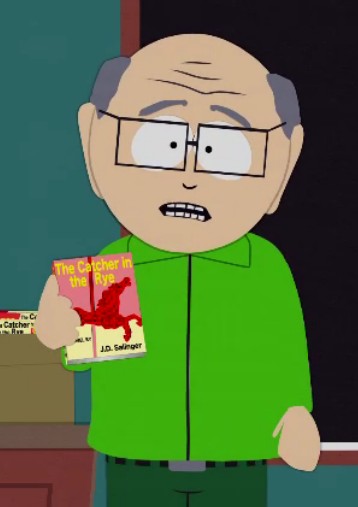
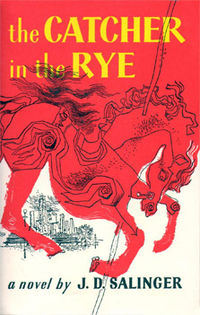
    I briefly mentioned this Unexpected Literary Reference way back on the first official post of this series, but this one certainly deserves some special attention. The Tale of Scrotie McBoogerballs (Season 14, Episode 2) is an episode of South Park that speaks directly to the idea that historically banned books, placed in the context of modern media, simply don’t have the power that they once may have. The is called out for being a poor commentary on contemporary teenage angst.

    About The Tale of Scrotie McBoogerballs (taken from Wikipedia):

    The students at South Park Elementary are assigned to read The Catcher in the Rye, and grow excited when Mr. Garrison tells them that the book has caused so much controversy, it has been banned frompublic schools in the past. However, after reading the book, StanKyleCartman, and Kenny are angry to find the content completely inoffensive, and feel the school has “tricked” them into reading. They decide to write their own offensive novel, The Tale of Scrotie McBoogerballs, with the intention of disgusting as many people as possible and getting the book banned…Fearful they will get into trouble for the book’s content, Stan and the boys tell Butters he actually wrote the book.

  • Two Looney Tunes literary references (well, one literary and one drama)

    (part of my ongoing Unexpected Literary References series)
    It has been quite a number of years since I woke early to watch Saturday morning cartoons. People of my age (late 20s) will remember that Saturday morning was often reserved for a solid 3-4 hour block of cartoon watching. But since the introduction of all-cartoon networks like Cartoon Network and even Nick Jr. (as a stand-alone network, not as a day-time block on Nickelodeon), the idea that cartoons are something to be packaged and presented only once per week has become a bit of a foreign concept.

    So, you can imagine my glee when I brought my son (2 1/2) into the living room this morning, turned on the TV, and found not only cartoons, but the very Looney Tunes cartoons I watched as a child (and as a hungover college student). Looney Tunes always had a reputation for mixing the literary with the cartoon. Back in the 50s and 60s (when the episodes I am most familiar with were originally made) books were still a key form of entertainment. Therefore, including literary references wouldn’t have been such a shocker. Which is why finding two references, back-to-back, wasn’t surprising this morning.

    This first one actually comes from a play, not a book, but the writer, Tennessee Williams, is considered by many to be as much a literateur as any author. I am not familiar enough with A Streetcar Named Desire to know if this Looney Tunes’ episode plot of “A Street Cat Named Sylvester” actually reflects the plot of the play.
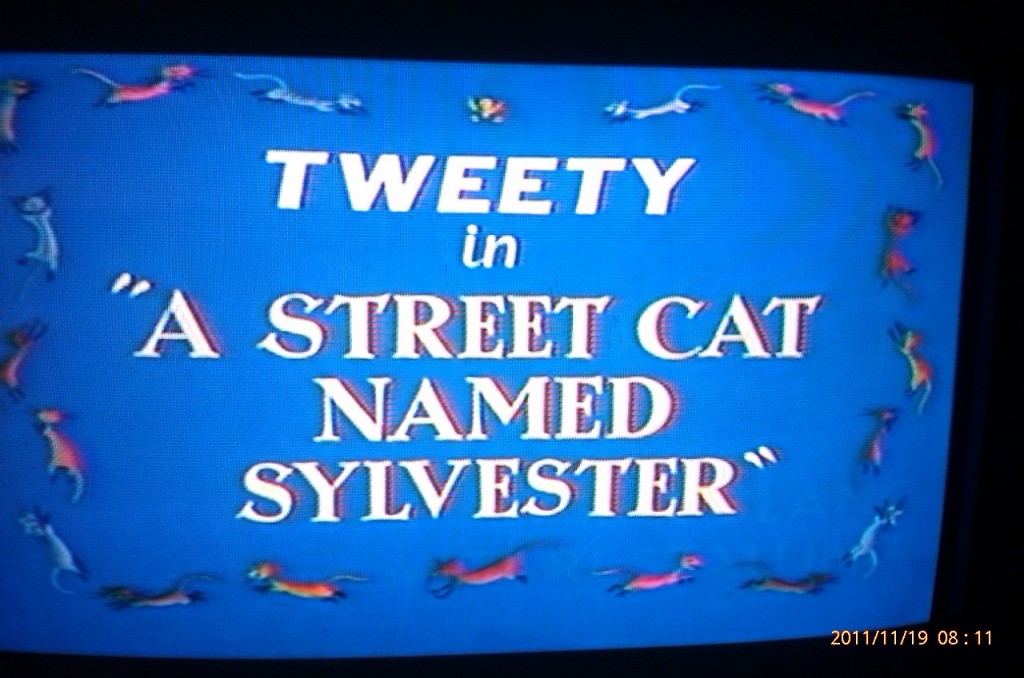
    About “A Street Cat Named Sylvester“:

    Tweety stumbles into Sylvester’s house looking for shelter and Sylvester hesistates if he saw a tweety bird in the same manner Tweety wonders if he saw a ‘Putty Cat’. Sylvester snatches him inside but has to hide Tweety in a vase covered by books, when Granny appears. While an injured Hector remains bedridden, Sylvester causes whatever diversion he can to stop Granny from spotting Tweety, making Granny give multiple doses of medicine to Hector. When Hector gets in Sylvester’s way from eating Tweety, Sylvester injures himself. Tweety spikes Hector’s medicine resulting in Sylvester ingesting the disgusting stuff.

    The second reference of the morning comes from an episode called “Rabbitson Crusoe” which obviously comes from the title of the novel Robinson Crusoe. Like the previous reference, I don’t know enough about the original referent to know how much the Looney Tunes episode plot plays off of the literature plot. I can say that the Looney Tunes episode is pretty good (Bugs Bunny and Yosemite Sam; you can hardly do better)
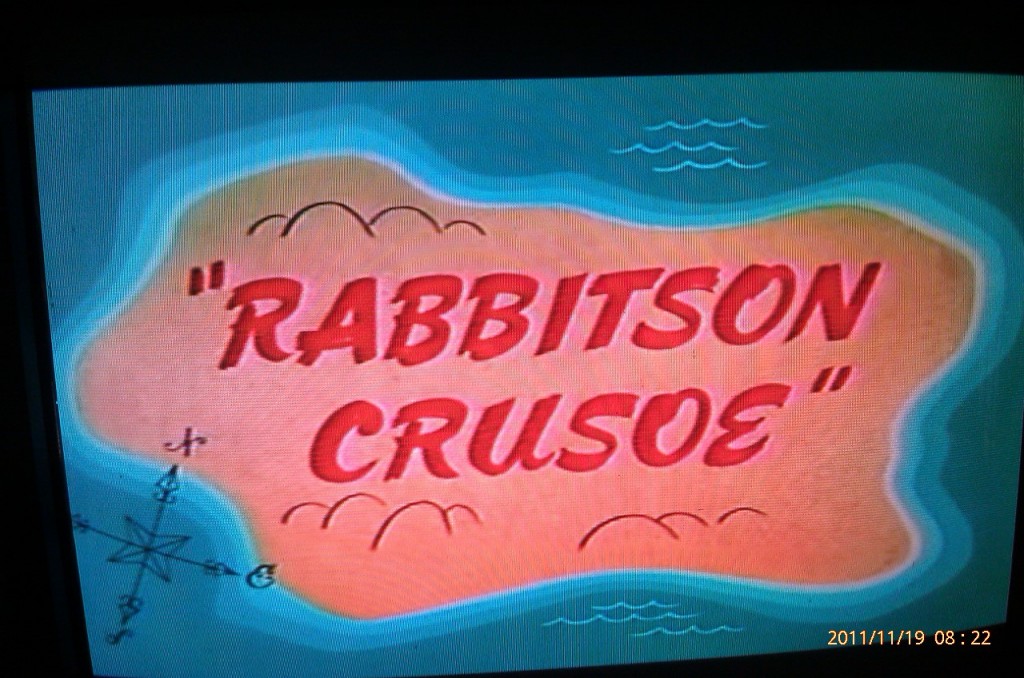
    About “Rabbitson Crusoe“:

    Yosemite Sam narrates that a low tide and high rocks caused his shipwreck on a small island. After the ship’s remaining food stores have been used up, the only source of food is from a coconut tree on an adjacent island. Crossing between the islands, however, is always difficult because of a man-eating shark called Dopey Dick (another parody, this time based on Moby-Dick). Sam manages to get rid of the shark, who jumps after him on land, only by having a mallet ready on the tree with which to whack the shark back. On his way back to his island, he’s chased again by the shark, but this time has a baseball bat ready to whack the shark. Sam mutters that the shark has tried getting him for 20 years, but misses every time. As a result, one can infer that since the shipwreck, Sam has been marooned on the island for the amount of time described above.

    Enter Bugs Bunny and the chase antics we all know and love.

    Side-note, the new, updated version of Looney Tunes and Merrie Melodies called The Looney Tunes Show is actually pretty amazing. I recommend for anyone who grew up on the original.
  • American Dad says The Hunt for Red October is boring

    (part of my ongoing Unexpected Literary References series)

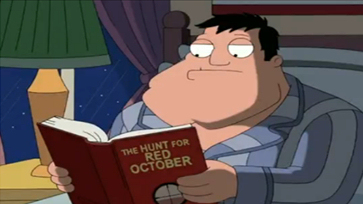
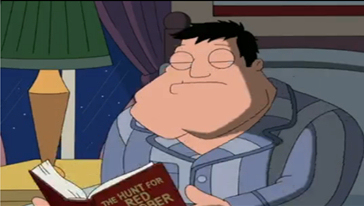
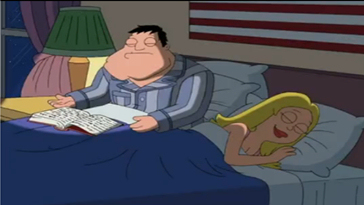
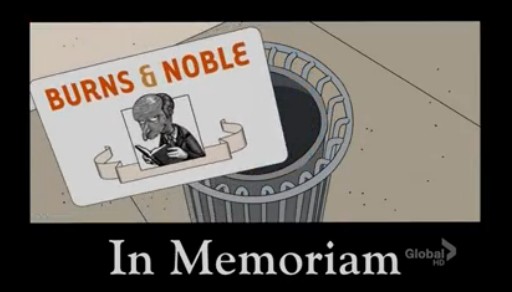
    Another Unexpected Literary Reference spotting, this one from Season 9, Episode 4 (“Stan Time”) of the amazing series American Dad. the screenshots below don’t translate the humor very well, so if you can find a full version of the episode online. Basically, Stan has been trying to read The Hunt for Red October for years, but is never able to get past the first paragraph. In this sequence, he still doesn’t make it.

  • The Conan O’Brien Always Has Obscure Show Titles

    (part of my ongoing Unexpected Literary References series)

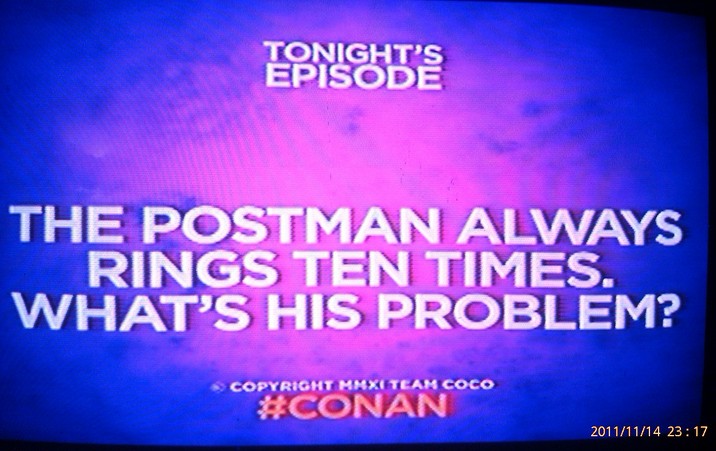
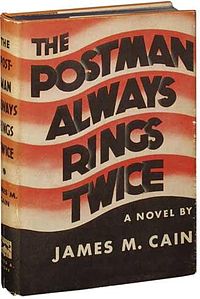
    The title of the November 14th episode of Conan is adapted from the James M. Cain novel The Postman Always Rings Twice. This is a bit of a ballsy move, as reading does not seem to be a primary cultural referent these days (even though The Postman is one of the more famous novels out there).Then again, I may give TV too much credit here; the Conan title references are notoriously obscure.

    I’m quite sad; I was hoping to keep this ol’ blog honest and almost 100% cartoons. But I suppose Conan O’Brien is a bit of a cartoon.