This is a guest post by Nadia Jones who blogs at accredited online colleges about education, college, student, teacher, money saving, movie related topics. You can reach her at nadia.jones5 @ gmail.com.
I consider myself an indiscriminant and voracious consumer of fiction. While I mostly read novels, occasionally I find myself balking at the prospect of beginning yet another huge work of fiction, too exhausted by a previous book to dive into the new world of the next one. In these moments of reader fatigue, I take great solace in the numerous gifted short fiction authors writing today. I could go on about the classics (Carver, O’Conner, Hemingway, etc.) but I think current short fiction authors are much more fascinating reads, partly because their work is so immersed in the present.
Jennifer Egan
Jennifer Egan is a writer currently working out of Brooklyn, most recently recognized for her Pulitzer-Prize winning novel A Visit from the Goon Squad, released in 2010. The novel is called a novel but it reads more like a short story collection, with thirteen chapters cataloging the lives of interconnected characters across several decades. The characters deal with disappointment in their careers (mostly centered on the music industry) and in love, with the unrelenting passage of time driving the theme of every story. Seemingly insignificant characters in one story will reappear as the main character in a story several hundred pages later with new dimension and nuanced development. A character who you first encountered in high school will end up a completely different person by the last time you see them. Each story also follows a slightly different narrative structure; one story is even written in Power Point! I highly recommend any story in Egan’s “novel,” as they can all be enjoyed independently of each other.
Sherman Alexie
Sherman Alexie is a Native American author who writes about being a Native American in America, but the themes in his stories are relatable on a universal level. His short story collection The Toughest Indian in the World, published in 2000, is probably the best example of Alexie’s outstanding talent as a short fiction writer. Among his best stories in the collection is “Dear John Wayne,” an elderly Native American woman’s recollection to a professor about an affair she had with John Wayne over 100 years ago. More than just about being a Native American, the focus of Alexie’s stories can be distilled into the broader theme of identity. Who are you, what does it mean to be who everyone says you are, and how is that different from what you see in the mirror every day? His stories are often funny, and sometimes harsh and bleak in their subject matter, but they always ring true.
Haruki Murakami
Haruki Murakami became a superstar writer with his surrealist novels blending everyday life in Japan with unexplainable, even psychedelic events that make his characters question the nature of reality. But for all his mind-bending fiction, Murakami has also cultivated a strong collection of simple but powerful short stories. His collection After the Quake, published in 2000, features stories roughly associated with events following the 1995 earthquakes in Kobe, Japan. The stories reflect upon the unexpected events that can completely reshape ordinary life. The stories may initially read as breezy portraits of idiosyncratic characters, but look closer and you’ll see a depth of meaning behind every passage. Even though the stories are translated from Murakami’s Japanese, they don’t seem to lose any narrative impact as they weave between the lives of Japanese people trying to cope with events beyond their control.

 Is my procrastination justified? No. This book was required reading in high school, yet I managed to coast by with barely even cracking the spine. Back then I was not into reading. I existed on a steady intellectual diet of video games and Family Guy. Even if the message of this book lacks any true modern day application, a classic is a classic for a reason, I suppose.
 Is my procrastination justified? Maybe. Part of me embraces the hipster implications of having never read a classic, especially a classic such as this one, heralded as a shining example of teenage angst in literature. I’m proud of never having read this book in the same way I am proud to have never seen any of the Star Wars movies.
 Is my procrastination justified? Yes. I’ve tried reading this tome more than a few times. I think my contemporary attention span prevents me from getting past the fifteenth hexa-syllablic Russian name. I’ll likely try again in the future. Otherwise, I suppose, it wouldn’t be on this list, right?
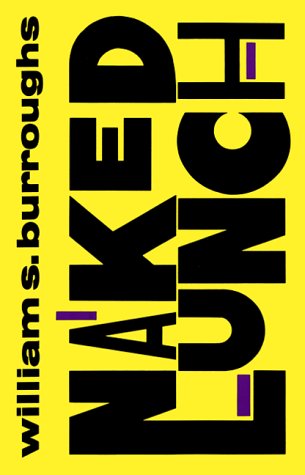 Is my procrastination justified? No. I’ve been told by many people whose opinion I respect that this book is amazing and should be a staple in any literatuer’s diet. However, I’ve been told by an equal number of people whose opinion I respect that the book is too self-indulgent, too non-linear, and all around too terrible for me to waste my time. Anything this divided deserves at least one attempt.
 Is my procrastination justified? No. Though Arc d’X isn’t considered by most Erickson fans as his best work, I picked it up at a bargain book sale simply because it is an Erickson work. I’ve read The Sea Came in at Midnight, Rubicon Beach, and Tours of the Black Clock (and I have Our Ecstatic Days on my to-read as well), so being the completest that I am, this book is bound to get read at some point. It’s been a while since I’ve read an Erickson book, which is why at least one of them finds its way to this list.
 Is my procrastination justified? No. I’ve only read short fiction by Tremblay, and judging from my experience with those shorter works it’s a travesty that I haven’t yet read The Little Sleep. Tremblay and I hang out a bit at the same
  Is my procrastination justified? Maybe. Author friends have told me that this book reads like a definitive manifesto on creativity. Sounds great. The problem is that I have an aversion, albeit an unwarranted one, to books that have self-help titles and pictures of hearts on the cover. Call the book Creativity Kicks So Much Ass and replace the heart with some titties or a fist and you’ve got me interested.
 Is my procrastination justified? Maybe. Much of what I said above about Dostoyevsky’s The Idiot can be said here as well. Crime and Punishment carries a bit more gravitas, thus placing it higher on my to-read stack on my nightstand. That is if impressing visitors were important to me. Though, the kind of visitor that would be within close proximity to my nightstand probably doesn’t need any more impressing. </ douchey ego trip>
 Is my procrastination justified? No. I met Jillian earlier this year at the AWP conference in Washington, DC. She’s a gem. She has presence, can crack a damn fine joke, and knows her way around a conversation. In fact, she’s such a great person that I feel bad not having read this book before even leaving the conference for the airport. I’m terrible.
 Is my procrastination justified? Maybe. I’ve never read a McCarthy book. I’ve heard so many mixed opinions both from strangers and from people who know my tastes well. What ultimately brought me to wanting to read this book is the way Jennifer Eagan goes on and on about it on the Sept 10, 2010 episode of the
 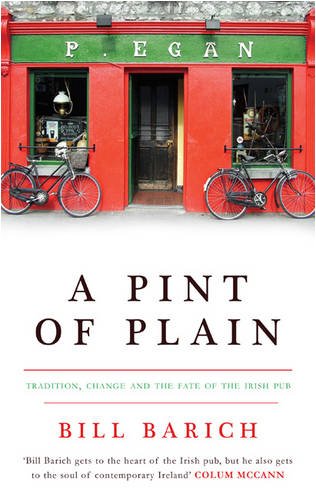 Is my procrastination justified? Probably. Every since visiting Ireland in 20…um…2007 I think, I’ve been quite interested in the pub life of the country. Hell, I’ve been interested in the pub life of every country since I first started drinking, but never before have I actually been to the native pubs (Ireland is the only trip abroad I’ve ever taken). Having a physical association with the content of this book makes me think it will be well worth my time and worth the inevitable Guinness flashbacks.
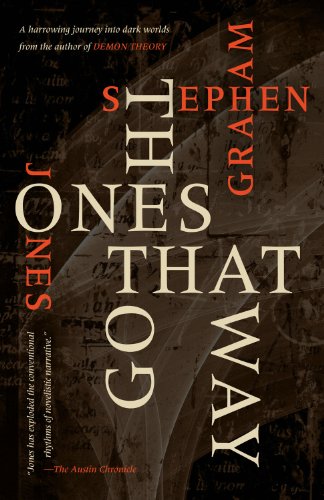 Is my procrastination justified? No. Stephen Graham Jones is one of those authors who can get away with writing any genre. He’s just so good. My favorite pieces of his, short fiction, are what make up this entire book. Couple those passed-thru filters with the fact that Stephen hangs out at The Velvet writing forums more than most non-super-amazing-authors, and there is just no reason for me not having read this book.
 Is my procrastination justified? Yes. I don’t know much about this book other than the author is dead and a lot of my reading friends rave about it. The reason I give this book a “yes” to the question above is simply because I know so little of it.
 Is my procrastination justified? No. I’ve known Mel on the interwebs for a while. He’s a fellow contributor over at Outsider Writers Collective, he’s written a handful of amazing short books, he’s beloved by all, and this book is apparently somewhat of a departure not just for him but for contemporary literature in general. It’s a Choose Your Own Adventure type of book, from what I hear. Amazing, right?