Over at Outsider Writers, Pat King, etiquette aficionado and all-around glorious specimen, is heading up an OW Chapbook Series, designed to paper and bind voices of the otherwise electronically chained OWC editors. So, what the hell does this have to do with me? How can I wring the appropriate ego from this post? Two ways:
I am an OWC editor, meaning that a fiction chapbook of my own waits in the pipeline. More on this in the future, you can be sure. For now, let this description suffice: Mitchell, a twenty-something Cougar Cub with a midlife girlfriend named Marsha, wakes each morning, slightly more machine, slightly less human. As his condition progresses he looses his capacity for human emotion, and potentially with it Marsha. “As a Machine and Parts” (working title) is a story of Mitchell’s struggle to find out which assembly line he belongs to.
Pat asked me to design and lay out the first chapbook, a request I immediately accepted. And, if I do say so myself, the final product is quite stunning (with help from art by Jeff Filipski, of course).
Now, I’ve never claimed to be a poet (and actually, have demonized poetry on occasion), but truly, I like this guy’s stuff. The forthcoming OWC chapbook, ANTISOCIAL is filled with examples that make poetry relevant. Forget the pseudo-intellectualizing verbosity so commonly associated with poetry. ANTISOCIAL is straightforward, digestible, yet not against encouraging a bit of self-reflection. Plus, it just might make you laugh.
Pre Orders are open now. The chap comes out in late Summer/early Fall, and as of today will be limited to 100 copies. “But Caleb, it probably costs too much.” Stop whining. $6.00 is all it takes to own this wonderful artifact. “But Caleb, I don’t know where to get it.” Click here. “But Caleb, I am out of excuses.” True, you have no excuses.
“Be warned; this collection will polarize audiences, splitting readers according to their willingness to trust in an untethered voice. Sheep and Wolves does not believe in beach reading or in hammocks and hot chocolate. It does not believe in love at first sight or in happy marriages. To be happy, Sheep and Wolves says, is to embrace the absurd. “Lies are cheaper than therapy” [pg. 69].
Welcome to the bizarro fiction movement, hail Jeremy C. Shipp.”
The following interview took place via email between 7 September 2008 and 21 September 2008. Why email? I’m afraid of the man.
Jeremy C. Shipp: "I don’t think I’ll be writing a Christian Romance novel anytime soon"
Your first authored book, a novel titled Vacation, was published in 2007 by Raw Dog Screaming Press. Sheep and Wolves, your follow up short story collection, is set for a December 2008 release by the same publisher. Aside from the forms themselves (short stories vs. novel) what is different with Sheep and Wolves, and how does that difference reflect you as an evolved writer?
In my skull, the two books are related, but not so much so that their children would be born with webbed toes and a tail. Not that there’s anything wrong with mutations. Mutations make the world go round, as the saying goes.
Anyway, Vacation is an exploration of twisted power dynamics on a global scale, while Sheep and Wolves examines the horrors of disrespect and abuse on a smaller scale. To me, this sort of intimacy makes Sheep and Wolves much darker than its distant cousin. Because now, the darkness isn’t just invading your planet. It’s invading your homes, your dreams, your lives.
That sort of intimacy is something I picked up on immediately, and with a great sense of satisfaction. But even though the stories are contained within a more personal environment, the collection still manages to explore large, perhaps universal, issues.
Many of your stories for example feel like a form of social commentary, or even a creative manifesto. “American Sheep” is one of the more straightforward of these story types, first addressing the manual laborer’s life of oppression, then offering the idea of acceptance as a possible cure for that oppression. Radical ideas to be sure. First, is it fair to look at this story as the opinion of the author? And if so, do you fear these ideas loosing relevance as you inevitably change as a person?
When I write a story, there are two aspects of this new reality I focus my attention on. The emotional/psychological reality of the characters, and the systemic forces that influence the world around them. And so, the horrors I write about tend to be both personal and systemic.
My basic political viewpoint: almost every aspect of civilization horrifies me. Therefore, my stories are based on very personal, emotional reactions—to things like racism/sexism/exploitation/oppression/etc. Writing about my disgust and dread (and finding some threads of hope in this world) is both therapeutic and empowering. Plus, I just love writing stories.
“American Sheep” is indeed a reaction to real-life societal horrors, although I wouldn’t say that I support the main character’s opinions on how to deal with oppression. I understand my character, psychologically. Some people resign themselves to abuse, because they’ve been taught to submit to authority their whole lives. For some people, submission is a (tragic and soul-shattering) defense mechanism.
So in the end, the ideas my characters present aren’t my ideas. With Sheep and Wolves, I wanted to create a collection filled with people who react to power and rationalize their actions in a myriad of ways. And as their stories are told, the real villains begin to show themselves. The true villains, to me, are systems and ideas.
In your interview with Jennifer Prado, you say that you like to “create layers of meanings, with complex interactions. That’s how [you] see the world, so that’s how [you] write.” This seems to suggest that your writing is a representation of reality rather than an attempt to understand it. Do you see any of your work as a search for answers rather than as a depiction of questions?
Vacation: "Nothing and memory don't belong in the same sentence" pg. 69
To me, the best way to find an answer is to thoroughly explore the question. For instance, I could ask the question: “Why do serial killers exist?” And there are some easy answers out there. “They’re aberrations,” or “they’re screwed up in the head.” But this isn’t really the kind of answer I’m looking for. Once I start exploring the question, then I realize that what I’m really asking is: “Why do serial killers exist? Why are there more serial killers in the US than anywhere else in the world? What societal ideas help form their perspectives? Where does the notion of dominance as power come from? Who benefits from this idea?” And so on.
Ultimately, I find that by creating representations of reality (even twisted funhouse mirror representations) that make sense to me, I can more clearly see the interactions between ideas and resources and rationalizations. In other words, I can see a bit of the truth.
Now, of course, I am waiting for a story addressing the converse of your example above: why are we not all serial killers?
I actually have a new novel in the works called Cursed, which delves deep into the serial killer phenomenon.
And maybe, in a sense, we are all serial killers. By participating in certain aspects of our civilized society, we indirectly murder all sorts of living beings. Humans included.
Anything more you can give us about Cursed?
Cursed is my first full-length novel since Vacation. The setting is modern day America, and it’s about a group of characters who band together and attempt to deal with very weird problems. The plot is strange, dark and interesting (to me, anyway), but it’s really the characters who make the book what it is. I’m very fond of these imaginary people, and I almost hate to finish the book, because then I’ll have to say goodbye (unless I write a sequel—but I don’t usually write sequels). Since I’m only a few chapters away from the end, the novel could potentially be published in 2009.
By creating this alternate representation of reality that you mention above, your stories often demand from your reader a strong reciprocal involvement. Is it important to you that your readers come to your work ready to work themselves?
I do depend on my readers to think about my work; to make connections; to open their minds and their spleens in new ways. Also, I consider myself a minimalist, and so I leave a lot of open space in my stories—space that my readers can fill in themselves. Ultimately, I’m looking to find readers who enjoy and appreciate my style of writing. If they’re not enjoying themselves, then they shouldn’t read my work.
And what’s even more important to me than what my readers do or don’t do, is what I do. I always make it a priority for me to write freely. I would never tone down or dumb down anything. I respect my readers (and myself) too much to do that.
A project of yours that I anticipate won’t require as much reciprocity, simply by nature of the visual medium, is EGG. Tell me a bit about that, if you can.
EGG is a short film I wrote, directed by Jayson Densman, which is currently in post production. I can’t say too much about the plot at this point, but I can share this link to the trailer and behind-the-scenes photos and articles: http://www.rawdogscreaming.com/egg.html
When writing the screenplay, I wanted to utilize the possibilities of visual storytelling, and so I focused much of my energies on the imagery of the film. There is dialogue and narration as well, but I wanted the visuals to play such a vital role that the short would be powerful even with the sound off.
With the visuals being so important to you, how do you handle handing your work over to a director? Are you involved behind the camera at all?
If the director didn’t understand my vision for the script, then I’m sure a collaboration would be
Sheep and Wolves: "Our swords meet, fall in love, divorce and hate each other's guts" pg. 58
frustrating for me. But I trusted Jayson with the script. He gets my work, and his ideas mesh well with my own. He’s done an awesome job with EGG. My only involvement behind the camera was indirect, as a creative advisor, which just means Jayson and I had many conversations about various elements of the film.
You say in your MySpace interview with JenniferCaress that you edit incessantly, and when you perceive a piece as finished, you edit more. Is it the fluidity of your ideas that encourages this editing fetish, or perhaps an obsession with story mechanics; grammar, sentence structure, etc.?
I believe this is a multi-layered form of useful insanity. First, there’s my obsession with rhythm. When I write, the rhythm has to sound “right” to me, whatever that means. If I can’t think of a word that sounds right, then I’ll just sit there and keep thinking until I find one that fits. Beyond the rhythm of the words, there’s also the fact that I see my stories as puzzles. I need every “piece” to fit together correctly, so that the overall “image” makes sense.
One story from Sheep and Wolves that I particularly like is “Sin Earth,” a morality tale that flips traditional modes of Demon vs. Angel to reveal the potential legitimacy of “Demonry” as a way of life. I suppose the fanboy in me just wants to know the story behind this story, if there is one.
I’m both fascinated and horrified by the use of demonization in our world. This is a social tool that cultivates hierarchical mindsets, and helps people to (unjustly) rationalize committing all sorts of atrocities. Civilized societies have a long history of demonizing tribal/pagan groups, which I, of course, have a big problem with. And so, Sin Earth was borne from my own horror.
Also, I think demons are cool.
You’ve listed Amy Hempel and Amiee Bender as two of your favorite authors; their influence on your work is obvious to anyone familiar with their minimalist and—in the case of Bender—magical realist styles. One author who struck me as an odd favorite, considering the style of your other listed picks, is Francesca Lia Block. I just recently got into her. What about her work grabs you?
Francesca Lia Block, to me, is a master of emotionally evocative imagery. She writes a lot about suffering, which is all well and good, but the icing on the cake for me is her talent in writing about love. The love that makes up the foundation of her books is neither cliché nor insulting. And, as a big fan of love, I appreciate that.
I want to touch on genre a bit. Sheep and Wolves is categorized as Literary/Horror. Much of you work has been lumped into the burgeoning Bizarro genre. With work as potentially polarizing as yours, I think genre can be a great thing. Do you write with genre in mind?
Not only am I fan of love, I’m an enormous fan of the Bizarro and Horror genres as well. Whenever my work is classified as either of these (or psychological fantasy, etc.), I’m honored, but when writing a book or a story, I don’t think in terms of genre. This isn’t to say that I’m not conscious about the conventions of various genres. It’s just that during the actual writing process, I try to give my imagination as much freedom as possible. There are certain boundaries I vigilantly maintain, however, such as those that support the psychological and emotional reality of my characters.
I’m interested in how an author’s work is influenced by personal life. Is your family, wife, brothers, sisters, anybody, involved at all in your writing process?
My wife, Lisa, is usually the first to read anything and everything that I write these days. Her encouragement is like getting a shot of B-12 and drinking a shot of wheatgrass at the same time. She’s very honest with me, so when she tells me she likes a particular sentence or story, I can take that to heart.
Lisa’s especially fond of my new novel, Cursed, and so when she says things like, “Do you have any more pages? I want to know what happens next,” I feel even more motivated to write.
My dad also reads quite a bit of my writing. And my brother, Joshy, is the only person who’s ever read everything I’ve ever written, since I started writing books at the age of 13. My other brother, Jake, is always there for me when I need to ramble on about a new story idea. Suffice it to say, I’m blessed to have so many supportive people in my life.
And they’re not just supportive, they’re interesting as well. Various family members have inspired me to create certain characters. And I’ve had countless philosophical conversations with my kinfolk over the years. All this, of course, affects my writing.
How does your immediate family react to your writing? I can imagine the visceral content of your stories being a tough sell.
I have a few fans. My wife, dad, brothers, some cousins. And then there are those who don’t particularly enjoy my work. My mom, for instance, doesn’t read much of what I write. She’s always been very supportive. She just doesn’t like dark fiction. And I’d never hold that against her.
At times, certain members of my familial tribe take it upon themselves to tell me what sort of books and stories I should be writing. And that’s always a bit funny. When this happens, I’ll smile and nod, but I don’t think I’ll be writing a Christian Romance novel anytime soon.
Jeremy C. Shipp is an author whose writer creations inhabit various magazines, anthologies, and drawers. These include over 40 publications, the likes of Cemetery Dance, ChiZine, and The Bizarro Starter Kit (blue). While preparing for the forthcoming collapse of civilization, Jeremy enjoys living in Southern California in a moderately haunted Victorian farmhouse with his wife, Lisa, and their legion of yard gnomes.
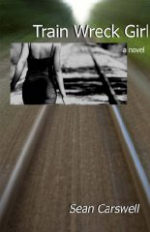
Before I go any further, know that Train Wreck Girl will easily be one of the best novels of 2008. At 20 pages in, the earth paused. I remained absolutely entranced through the final page. Novels like this don’t happen very often, so pay attention.
Train Wreck Girl poses as a fairly straightforward story of a man traveling cross-country to flee his past, returning years later, only to re-immerse in all that he tried to originally escape. He’s outgrown this childhood town of Cocoa Beach, FL, but only in width. The slug line describes the narrative beautifully: One man’s quest to figure out what to do with his life now that it is too late for him to die young.
Beyond the immediately arresting imaginative structural elements (the first chapter is told as a countdown to New Year’s, 1999; some following chapters are told as itineraries outlining the protagonist’s day life) is a narrative so beautifully balanced between plot and character that it wasn’t uncommon for me to breeze through 50 pages without realizing a single blink.
The protagonist, Dan, for example, is a poor, seemingly uneducated man, yet carries an impressive cultural awareness that artfully dodges the dirty savant trope so common with “hard life” literature:
She called me white trash. Which hurt. The “trash” part I can take. But I don’t know why she had to throw “white” in there. [pg. 18]
Or this observation, when introducing two of the narrator’s old friends:
Marigold wore a ring on her left ring finger. Christian didn’t. I took that to mean they were engaged. [pg. 45]
It is this uncanny ability to completely mine a character with initially apparent minutiae that allows Train Wreck Girl to avoid so many potential pitfalls into character-generic cliché. This could have easily been a simple crime novel, a straightforward road trip story, or even a terrible love story. But it isn’t. Perhaps it is this very ability to tease, while simultaneously comforting the reader that carries the novel.
Here’s the ultimate test of a successful novel: can the story humanize a scene involving people farting on a corpse? Train Wreck Girl can, and does.
I’ve been working on a novel for the past couple years inspired by the Tom Waits song, “Hoist That Rag.” This song is as close to religion as I get.
Strangely, or perhaps fittingly, I don’t know the literal meaning of the song. There’s a guy named Piggy, something about rat addresses, and of course, as with most religions, there are crying babies involved. What this means for my novel-in-progress is that everything is simply an interpretation. Again, very fitting with religion in general.
This past week I had the opportunity to experience this song live (Tulsa OK, USA, at the Brady Theater, 6.25.08). I had been looking forward to this show for months, but it wasn’t until I was standing in line at the venue that I began to have reservations about hearing “Hoist That Rag” live.
Until the performance my experience of the song had been entirely self-contained. But, how would my view change when surrounded by hundreds of individuals each with their own connections to the song? Would my interpretations be marred by theirs? Would the voices around me, some singing along, some rudely talking about unrelated domestic issues, become part of a revised vision of the song, and by extension, my novel-in-progress?
Thankfully, not completely. The world shut down during the song. Yes, I recorded the performance (see YouTube video below), but I intentionally kept from looking at the LCD monitor the entire time. I wanted the performance to enhance my vision of the song, not distort it.
I wonder then, how, if at all, my manuscript will change because of this new association. Understand that when dealing with an 80,000 word novel inspired by a 139 word song there is going to be a huge portion of “all me” there, but still, if the core impetus changes then will the entire novel change as well? Considering that I have not yet finished the novel, I guess I will never know. But it makes me wonder if perhaps I should have never gone to the show.
Wait…no it doesn’t. The show was one of the most amazing experiences of my life. Fuck the novel if it means loosing the show.
Until today I’ve thought to keep this page about my writing – the physical, textual, words and paper aspect of my writing. Today, however, I feel compelled to stray, if only slightly, into the meta aspects of my writing – the ambient noise and inspiration surrounding my work. Today’s theme, Tom Waits, the core inspiration for my current novel-in-progress, “Hoist That Rag” (I’ll look into the legal issues with such blatant inspiration once I secure a publisher).
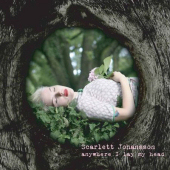
Scarlett Johansson, of film and my dreams fame, yesterday released Anywhere I Lay My Head, an album of Tom Waits covers, give the lone original “Song For Jo.” Before I rant, let me put my love of Tom Waits into context: I have more Tom Waits CDs, posters, and inspired literature than I have love notes to my wife (most of the love letters I write go to Tom Waits; sorry Jenn). Waits is the single greatest recording artist in history, without argument. Needless to say, when I first heard late in 2007 about Johansson’s then forthcoming album I cried a little. But then I heard her take on the famous “Summertime” (see link below) and cried a little, again, but this time with an optimistic grin. This song is phenomenal.
Today, I cry yet again. Anywhere I Lay My Head is astoundingly terrible. The music itself is unique enough to intrigue, but somewhere along the line producer David Andrew Sitek (of TV on the Radio and my nightmares fame) felt it hilarious to turn Johansson’s vocals into a deep throated, Madonna-drowing-in-a-well, reverb orgy. Excessive reverb can work for a record (D*R*I’s Smoke Rings, for example, one of my top albums of 2007), but the style has to mesh with the music. Anywhere I Lay My Head does not do this.
Shame on you David Andrew Sitek for stealing something beautiful.
***Before I go I do want to reserve the right to let this album grow on me. I’ve spun it three times so far, and though I don’t anticipate a change, I have been corrected in the past. Hell, the first time I heard Tom Waits I had to fake my head bob.
Like the subject matter in this, Harley Elliott’s twelfth book and first collection of non-fiction, there exists below the surface, universal binds and shared histories from which the impetus of progression can be said to reside.
The non-fiction moniker given to this collection belies the engaging, story-telling mode Elliott uses. Set against the backdrop of the Kansas prairie, Loading the Stone reads more like a story of a familial love of history used to explore the bonds threading father and son relationships than the listing of facts and dates that might be implied by the subject matter and genre. Perhaps, however, my assumptions of genre are just one example of the misunderstandings that Elliot explores. For example, the use of the word ‘Indian’:
The word had no relationship to the people [Christopher Columbus] encountered or the land they inhabited, or to the many generations preceding them, hunters of the big, antique bison and the mammoth. Nor did the word have any relationship to the generations to follow. It was a word that robbed identity, culture, and personality at once, too thin to cover the many varieties of humans it was assigned to describe. Walker grew up on the Hollywood version. [pg 18]
A strong theme running throughout this work is this idea of a misunderstood history, and Walker’s (our narrator) exploration of a truer history determined by the artifacts he uncovers during his walks among Kansas fields. Reflected in this understanding of history, is the bond being formed throughout the book by Walker and his father, and later Walker and his son. They commune over this enthusiasm; a relationship that suffers some turbulence about halfway through the book when our narrator first realizes that his son may not embrace flint the way he and his father have. It’s these moments of tension that beautifully keep Loading the Stone from being a tale of an isolated man connecting with the past; he is battling to connect for the sake of a future.
The book does delve heavily into flint and arrowhead terminology and process in a deeper way than most casual readers would appreciate. The entire center section of the book (61 out of the book’s 244 pages), for example, breaks from the promise of a fluid story supported by an academic skeleton to simply the skeleton. This “The Rocking Deer Journal” appears to be a literal journal complete with lists, sketches, and meandering observations, which if delivered in a much smaller dose could have effectively developed both the intellectual nature of the story and the father of our narrator (as it is his journal). However, it comes across as redundant and worthy of just a skim through.
Good writing can engage a reader in most any subject matter, however often is the case—and here—that the reader should come to the text with a genuine interest in the subject. I’ve done my best to judge this book objectively, as I am not, before or after reading this book, a fan of flint. I do, however, respect the writer’s craft. As Walker says in reference to an initially awkward arrowhead: “being an artist sometimes meant recognizing the spirit of material and letting it stand” [pg 170]. Likewise, being a fan of art means recognizing the spirit of the artist.
Rayo Casablanca’s debut novel, 6 Sick Hipsters is now officially out and available for order.
Rayo was nice enough to send me an ARC of his novel a few months back, which I reviewed for Dogmatika, here.
Casablanca is truly a great writer and all around great guy. He can probably dance, too, which makes me even more jealous. Get his novel.
From the review:
“6 Sick Hipsters carries the rogue camaraderie of Joey Goebel’s The Anomalies—punk attitude and hipster lifestyles included—along with a less passive social critique found in Coupland’s Generation X. Fans of slick conspiracies and vinyl records rejoice.”
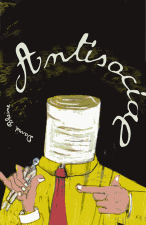 The first author, David Blaine, as been around the poetry interwebs for years. He has published two previous chapbooks, “A Fine Feathered Faith,” and “The View from Here” (about which David McLean of Epic Rites Press says “This is what they used to call poetry. You want this book, believe me, especially if, like me, you try to write poems, because this fucker shows us how to do it.”)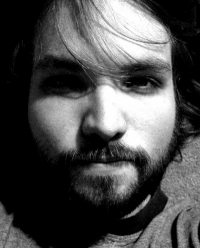





 writing – the ambient noise and inspiration surrounding my work. Today’s theme, Tom Waits, the core inspiration for my current novel-in-progress, “Hoist That Rag” (I’ll look into the legal issues with such blatant inspiration once I secure a publisher).


