Category: Study (the world/the craft)

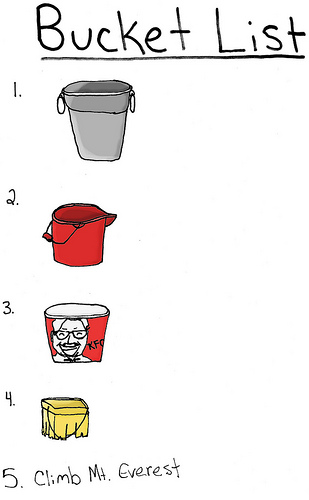
  • How can a happenstance bucket list lead to compelling characters?

    How can a happenstance bucket list lead to compelling characters?

    Bucket lists are generally grandiose compilations of big events with universal appear. So, you want to swim with the dolphins and go cave spelunking in Chile? Well, who the hell doesn’t want to do those things? Big events do not a compelling character make.

    I believe I’ve taken the bucket list concept to a much more satisfying place, one that celebrates happenstance and relative minutiae rather than expensive plane tickets and vacation photo fodder.

    For a long time, I’ve been paying attention to the unique moments of my life, ones that more often than not seem to materialize without any provocation, but that are nonetheless sources of pride. Here are a few examples of the accomplishments on my bucket list:

    What is the impact of these items in terms of character development?

    The way a character reacts to each of the events above says a great deal about the mental state and lifestyle of the character. Does a character routinely get free drinks on an airplane? If so, how? If not, how would this character react to such a unique gesture? Would a character witnessing a light bulb burn out assume he caused the light to burn out? Was there a big event happening when the light went out, such as a wedding, award ceremony, or something smaller like a criminal interrogation? Who is the day-stranger friend? How did this friend meet your story’s character? Perhaps the meeting was planned without one of the parties knowing. Who was in the car wreck? How was it that our character was in the right place at the right time to witness this car wreck? Why did the character call 911? Was it a prank call? And on and on and on…

    By contrast, a character connected to a big event from a traditional bucket list item (such as skydiving or swimming with dolphins) may simply be the product of a plot rather than a rounded character in his own right.

    Traits implied by a happenstance bucket list puts the focus on the character rather than on the plot. What are some items on your happenstance bucket list?

    Photo credit: http://www.flickr.com/photos/ratatatratsy/

  • A Taste of Philosophies to Come. Further Thoughts on Writing and Publishing.

    A Taste of Philosophies to Come. Further Thoughts on Writing and Publishing.

    Earlier this afternoon Pablo D’Stair, as he is apt to do, asked some questions that made me evaluate my writing in way that I haven’t before. Not deeper, necessarily. Just different.

    I won’t copy the questions and answers verbatim here—as I believe Pablo has something planned for the full discussion—but I don’t think he’ll mind if I mull over a few of the topics for a bit.

    Literary and Genre

    Do you think of what you do as “genre” writing and if so or if not, do you see a difference (and what is it) between writing termed genre and writing termed literary?

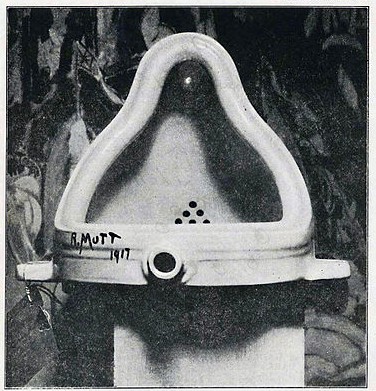
    In common use “genre” equates fiction created to entertain while “literary” refers to fiction created to enlighten. Here’s where the dispute originates, in that the differences are with intent rather than the end product. When something cannot be judged 100% objectively, there’s going to be disagreement. Hell, that’s why conceptual art, you know, Duchamp’s R. Mutt urinal and such, is so polarizing. Some people would call The Fountain trash. Others would call it art. The fact is, it’s both. Genre and literary are not mutually exclusive.

    Genre refers to tangible measures like content, setting, plot, etc. Literary refers to the way in which those tangibles are executed.  For example, a novel that people of the first distinction might call literary, Freedom by Jonathan Franzen, is most definitely literary. But, like everything, it has a genre as well: domestic fiction or environmental fiction (or any number of other categories). Following that logic, two books could share genre, but not necessarily both be literary. Stephen King’s It is horror and so is Mark Z. Danielwski’s House of Leaves, but only the latter could be called literary.

    Expression and Intention

    Are you a writer who seeks to express yourself, personally and primarily or a writer who seeks to kind of “set down something for other people” pulled from a personal place or not?

    I’m never one to simply express myself. Rather, I use writing to mull over my own philosophies, to textualize them so that I may have a physical referent for any future questions regarding those philosophies, an artifact of sorts to say, “This is what I believe about this subject.” Also, I love to hearing the way great word-combinations sound, especially when used to describe grotesque situations. So, it’s a mix of giving permanence to my own philosophies and seeing beautiful words. Oddly enough, though, I don’t care for poetry, which would logically seem to satisfy both of those goals.

    Legacy Publication and Self-Publication

    Considering the landscape of “writing” and “publishing” these days, and considering the micro-press level, do you see any specific reason for “publishers” to exist?

    The way I see it, there are three components of success—what most people would define as success—when it comes to being an author: readership, sales, and prolificacy. I think the lure of the publisher is the potential to grow all three areas with perceived ease. But what a new generation of writers is beginning to understand is that the writers themselves can, with equal ease (though not to imply that either way is truly easy) accomplish the readership and prolificacy aims without the aid of a publisher. Sales, too, but that one is still difficult, at least to the level that it takes to be a full-time author. I think it’s up to the publisher to adapt. A publisher needs to understand that authors can gain readership and can write plenty. A publisher needs to then reallocate resources away from these two areas and bring more attention to sales. Meaning, promotion, PR, events, etc.

    Ultimately, the tendency for an author to favor legacy publishers over self-publishing implies a certain degree of ego. Readers, for the most part, don’t care how a book gets published. In fact, most readers probably don’t know the publishers of even their favorite books. Among writers, for one to claim one of the Big Six legacy publishers as their own means that the writer had navigated a difficult series of desks and wallets to have the book published. The end physical product is the same as a self-published author, but the implied journey is much different. And I think the perception is valid. It’s about winning something more than readers.

    Getting a book published with a legacy publisher is more difficult than self-publishing or publishing with a small independent publisher. It’s that simple. But again, as far as the general reader is concerned, the publisher is irrelevant. Though, I would love to live in time when readers were passionate about publishers the way, say, music lovers tend to be about independent record labels.

    Did Crime Come to You or Did You Go to Crime?

    You write what could be considered crime fiction, noir fiction.  Do you approach it with crime fiction tropes in mind are you drawn to an extremely general idea?

    Drawn to a general idea, for sure. In fact, only recently did I sit down to consciously write a crime story (for a forthcoming collection of novellas). I think the allure of crime for me—whether as a defined genre, or as a mashup of thematically similar tropes—is its inherent proximity to morality, which in turn speaks to the importance of characters. For me, writing is all about exploring my own philosophies through the lens of grotesque characters and situations. Crime lets me do that without compromise.

    I’m not against trying to “force” myself into a genre, though. I like the artificial construct of hard genre. I like a challenge. Hell, that’s what my writing philosophy is built around; challenging myself to confront personal philosophies.

    Risks and Risk Aversion

    Do you feel that the authors you admire take risks, and if so what do you mean by “risks”? In my experience, crime/noir (and horror) writers tend to spend a lot of time going on about “getting in touch with their dark side” or “going to places where they are uncomfortable” but I never really get the feeling they do that.

    I don’t buy the risks thing. Or, said better, I don’t care if a writer is taking risks—whether consciously or sub-. To me, a risk is when a writer does something that could potentially cripple something they’ve, until the moment of the risk, spent their writing lives building. So, for Stephen King to write a bodice ripper would be risky. For Pynchon to do a reality TV show would be risky. Neither of these would impress me. I love that Stephen King writes horror (though, for the record, I’m not a fan). I love that Pynchon is a recluse. These traits are important to the general perception of these authors and their work. A risk would be compromising those things.

    I think authors themselves don’t generally see themselves as risk-takers. They write what interests them. However, talking about being a risk taker adds to the sexiness of being an author that readers want (in the way that any public persona tends to dramatize their role for the sake of success). Those writers who say they are “getting in touch with their dark side” or “going to places where they are uncomfortable” aren’t describing truth; they are describing fiction. And isn’t fiction what they do best? Or, perhaps, they are simply using grandiose terminology for the act of mulling over personal philosophies, as a familiar author once said (me, above).
  • What is Grotesque Noir?

    What is Grotesque Noir?

    Logically, grotesque noir can be defined by a mashup of the traits that define grotesque and noir separately, so perhaps we can best define the combined term by investigating the individual components.

    What is noir fiction?

    Noir fiction is not so much a genre as it is an overlay to existing genres. Most people probably think of early black and white detective films as representative of noir, and while those films may represent some of the overlay’s qualities, in truth film noir can generally be more accurately (more specifically) categorized as detective noir or mystery noir. So what exactly is this mysterious noir overlay? There are a few fantastic attempts at definition out there. A couple of the most important, I think, are:

    From Noir Fiction Is About Losers, Not Private Eyes by Otto Penzler:

    Noir is about losers. The characters in these existential, nihilistic tales are doomed. They may not die, but they probably should, as the life that awaits them is certain to be so ugly, so lost and lonely, that they’d be better off just curling up and getting it over with.

    [Regarding the traditional private eye story, by contrast]…this rather cynical figure–underpaid, disrespected, threatened, shot at, beaten up–has a code of ethics that guarantees he’ll do the best he can for his client, who’s probably lying to him anyway. A heroic figure stands at the center of the private eye novel; there are no heroic figures in noir fiction.

    From The French Word for Bleak by Ray Banks:

    Noir is about restraint. That might seem weird, considering the level of violence and depravity on display, but chances are, the violence is given time to simmer before it boils over and the depravity is confined within the protagonist’s head.

    The great noir writers cared about their protagonists…And because they cared, their readers cared. It’s impossible for a reader to get into a character’s head if the writer hasn’t been there first.

    Compassion. An empathetic connection. The reason we read fiction over non-fiction…So I really only have one rule for writing noir – write with compassion.

    So why does noir fiction get dragged into the crime and detective genres so much? Because crime and detective fiction, by their very nature, depend on morality to tell a story. At some point in any crime or detective story the protagonist is going to have to wrestle with his ethical and moral affirmations. Pair this inevitability with the depraved characters generally populating a crime or detective story and the attributes of noir fiction tend to organically congeal into the crime or detective result.

    What is grotesque fiction?

    Like noir, grotesque is an overlay commonly attributed, but never fully represented by, an existing genre. For noir that genre is crime or detective. For grotesque that genre is horror.

    So why does grotesque fiction get dragged into the horror genre so much? Because the term grotesque often conjurers images of the macrabe. While blood and guts can be grotesque, such images are not universally defined as such. Grotesque simple refers to something “skewed” or abnormal, though generally brings with it a visceral impact. Flannery O’Connor, for example, is often thought of as a writer of grotesque. Her story “Good Country People,” about a woman with a wooden leg and a thieving bible salesman is definitely grotesque, and there is no blood or monsters to speak of.

    So, what is grotesque noir fiction?

    Grotesque noir is fiction that takes the existential conflict of noir and applies the skewed or abnormal in order to further explore the already morally difficult path of its characters. Perhaps a few examples would help. The most successful contemporary grotesque noir novel that I can think of is Brian Evenson’s Last Days. Here we have a detective who must solve a murder by infiltrating an amputation fetish cult. The detective–mentally struggling with the idea of volunteer amputation, and how he must become a part of it (noir)–must ultimately dismember himself (grotesque) in order to solve his case.

    Okay, Last Days is an obvious choice. So, what about a less obvious novel like Fight Club by Chuck Palahniuk? After all, moral struggle is still struggle, even if as a symptom of a mental illness. And as for grotesque, the book (and movie) is stuffed full. Willing self-brutalization, making soap from human fat, a man with “bitch tits;” Fight Club is more grotesque than just about any horror novel.

    What do you think? Share your thoughts or examples in the comments below. Also, don’t forget to subscribe to this blog to receive new posts via email.

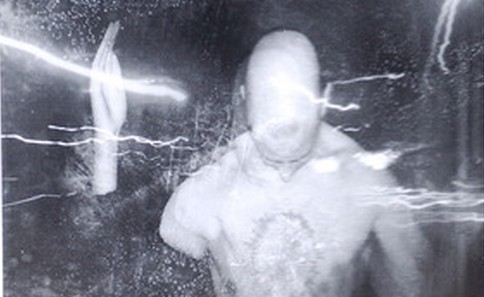
    photo credit: the above image is a partial scan of Brian Evenson’s novella, Brotherhood of Mutilation, which is a precursor to Last Days.

  • What is Domestic Grotesque Fiction and Why Do I Write It?

    What is Domestic Grotesque Fiction and Why Do I Write It?

    I’ve called myself a writer of grotesque family fiction, but what does that term really mean? I give a brief definition of grotesque domestic fiction, or grotesque family fiction, by way of example, in an earlier blog post:

    Take a family situation—usually some sort of broken family dynamic—mix in something grotesque—possibly morbid but not necessarily—and you’ve probably got domestic grotesque.

    But I don’t know if that fully captures it. Up front, I have to say that I’ve always been the type to back away from definitions that try too hard to avoid definition. You know the type; those writers who say, “No, I don’t write horror fiction, I write transgressive commentaries on modernist life where social norms are exposed as metaphorical fangs in the collective neck…” But in the world of marketing, it is important to simultaneously embrace and reject established genres. You know, ride coattails while sewing your own. So, I write literary fiction but I actually write domestic grotesque fiction.

    With that in mind, I coined the term “domestic grotesque” fiction, which Solarcide called a genre all my own (though, probably because I’ve been promoting the term as my own). In that Solarcide interview, I use a scene from Stranger Will to exemplify the term:

    I find something inherently interesting with taking the trope of father/son catch and twisting it just enough to be jarring (re: dead raccoon) but still remain entirely relatable. These subtle twists are where I get the descriptor for my work, domestic grotesque.

    So why do I write domestic grotesque fiction? Part aesthetics and part concept penetration. Domestic grotesque fiction isn’t only fun to write, it also allows me to very effectively zero in on an idea by pairing dissimilar concepts. Stranger Will = pregnancy and cleaning up dead bodies. I Didn’t Mean to be Kevin = lost parenthood and body parts. “Click-Clack” = newborn baby (implying potential) and mental retardation (no potential). It’s fun.


    Subscribe to be immediately notified when new posts go live:

    [subscribe2 hide=”unsubscribe”]

    Photo credit: http://www.flickr.com/photos/paulgrand/451080165/

  • Bookstores can get ebook readers into their stores. Here’s how:

    Bookstores can get ebook readers into their stores. Here’s how:

    The slow eBook adoption of many publishers, and especially of bookstores, is not surprising. For the publishers, monetizing an eBook, with the lack of overhead and reduced production costs, makes justifying print book sticker prices tough. For bookstores, well, it’s pretty obvious why they wouldn’t jump on the eBook wagon.

    But there has to be a way to keep bookstores alive, right? Bookstores aren’t like traditional commerce storefronts, in that they represent a mindset, a way of life, and the best ones promote a sense of community. People don’t just buy books there. People feel at home there. Which makes me believe that book shoppers haven’t stopped shopping in brick and mortar stores because eBooks are so much more convienent and so much cheaper. I think book shoppers have stopped simply because bookstores aren’t offering a “bookstore experience” for shoppers. If bookstores sold eBooks, I think readers who enjoy the bookstore experience would be willing to visit said bookstores to buy eBooks.

    But how to make it work? Introducing the Wireless Purchase Radius.

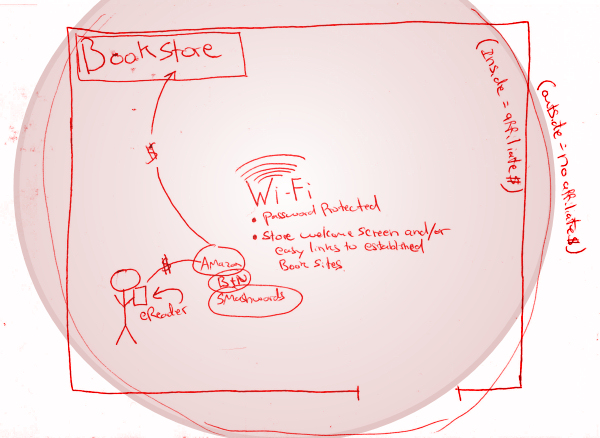
    Bookstores should set up a secured wireless network for their shoppers (most of them have these already). Now, instead of simply offering the wireless service as a convenience to coffee drinkers, use the service to entice readers to purchase eBooks at the bookstore.

    Here’s the methodology: a shopper enters the store, logs on to the wireless network, and begins shopping online for eBooks. The store can leverage this shopper’s intent to purchase in one of two ways:

    1. The store has set up it’s own eBook storefront, available only to people logged into their secure network (hotels do this all the time), which offers eBooks either at a discounted rate or with value-added specials. Perhaps, in keeping with the sense of community, a purchase through the store eBook site also offers free copies of local writer’s books. Or maybe every purchase comes with a ticket to some local event or coupons for store coffee.
    2. The other idea is that the bookstore sets up affiliate programs with established sites (Amazon.com, B&N.com, etc.). Affiliate links are already something that anyone can set up; the bookstore would not even have to establish new relationships with the book sites. In this method, the shopper would log onto the bookstore wi-fi network, and would be greeted with a store screen (just like in the above example) only this time there would be links to each of the major book seller sites. Once a user clicks on one of those sites any purchase the user makes would be part of the total affiliate buy, meaning the store would get a percentage of purchases from each of the items that the shopper buys (not even just books).

    This would work, right? Especially, if there is a way to set up affiliate code tagging on a mass level to anyone using the store’s wi-fi network (this would remove the need for a store screen when the shopper first logs on). Of course, I’m not sure if such a thing is possible.

    But the general idea, of using a wi-fi radius to encourage in-store sales is a good one.

    Someone do this now!


    Subscribe to be immediately notified when new posts go live:

    [subscribe2 hide=”unsubscribe”]
  • Why I Write What I Write When I Write it: The Cymbal Analogy

    Picture a drum cymbal, delicately balanced upon a point, say, a pencil tip. This represents my general mental stability. Without any external force, the cymbal remains unmoving. This is me in a vacuum, a sensory deprivation chamber of sorts, without anything to shift my head in any way.

    But of course, I don’t live in a vacuum.

    Instead, I live in a world constantly shifting and changing, and with those shifts, my head shifts. Writing is a way to help maintain equilibrium. Not in a padded room sort of way. Simply, in the way that other people may watch TV or exercise or read a book to maintain that equilibrium.

    But when I write something, despite the intentions to establish a stasis, the writing itself throws the cymbal off balance. Every word, every realized concept and idea, moves the cymbal. The more I write, the more the cymbal teeters further and further from stasis. This is the simple, unavoidable nature of creation. When other people read and comment on my writing, the cymbal moves more. Sometimes, if someone disagrees with what I’ve written (morally, aesthetically, whatever) the cymbal may continue to teeter. But when someone agrees with what I’ve written, finds a shared comfort in it (though, don’t confuse confront with blind dedication; intellectually stimulating topics, even those one may disagree with, can bring comfort) the cymbal may fall back toward equilibrium.

    But remember, the cymbal exists in three dimensions. So, even agreement may bring with it some disagreement, thus shifting the cymbal off balance on another axis entirely.

    You’re starting to see that establishing perfect equilibrium is impossible, right?

    So, when I decide to start a new project, I consider the weight of previous writings, and the wake they may have caused, in hopes for narrowing in on a project that might encourage balance.

    Example: I wrote Stranger Will, a novel about a man who does not want his child to be born. Cue nihilism. Cue concern from friends. Cue some agreement from readers. My cymbal, at this point, would resemble the tilted rings of Saturn, with the low end being weighed down by the general commentary about the book. All of the changes that happened to me, all of the emotions I felt, the attacks I fought against, everything that this book contributed to since its creation brought down the low end. So, I then wrote I Didn’t Mean to be Kevin, thinking that to write from an alternate, and almost opposite, viewpoint—that of a child wanting a parent—the equilibrium may return. Of course, this book, by the very act of its creation and publication, will put new thoughts into the world, which will alter the level of the cymbal in ways I can’t anticipate.

    And on and on and on.

    [subscribe2]
  • UpgradeToEbook.Amazon.com. Exchange Print for eBooks. It could work.

    UpgradeToEbook.Amazon.com. Exchange Print for eBooks. It could work.

    [blackbirdpie url=”http://twitter.com/calebjross/status/152575481391230976″]

    It could work.

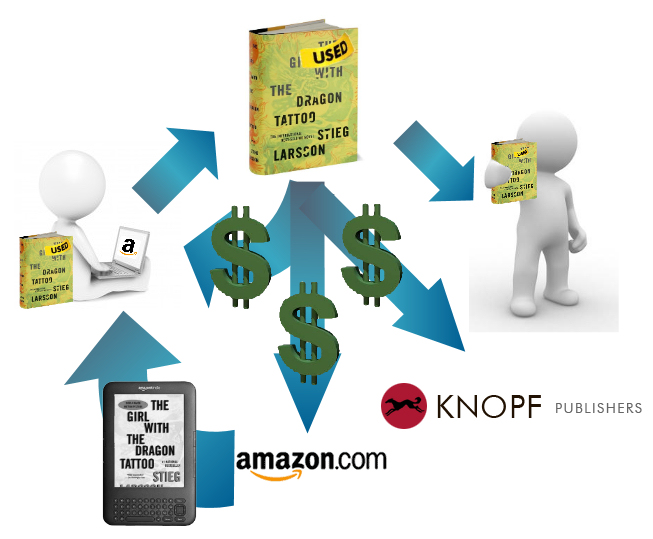
    An online used book selling site, that also manufactures an eReader device, such as Barnes and Noble or the Amazon Marketplace, partners with publishers to provide kickbacks on used book sales in exchange for distribution rights of eBooks. Let’s call it UpgradeToEbook.Amazon.com. It would work like this:

    Here’s an example:

    Let’s say Bookseller_675 has a print copy of Stieg Larsson’s The Girl With the Dragon Tattoo. But he’d like to read it on his Kindle. It’s not in this reader’s best interest to purchase the book again. The publisher gets no new money. The book sales site gets no new money. The reader gets no eBook.

    What do to do?

    Bookseller_675 decides to sell the book on the Amazon Marketplace using the UpgradeToEbook.Amazon.com platform for $6. Amazon takes its cut (15%; $0.90), but for this transaction the seller agreed to kick an extra 35% to Amazon in exchange for an eBook copy. Amazon then gives that $2.10 to the publisher and facilitates distribution of Bookseller_675’s Kindle copy of The Girl With the Dragon Tattoo.

    I know what you are thinking? Why would a publisher sell an eBook for $2.10 when they would normally net around $7.00 (70% of a $10 cover price, as an example)? Consider this: a person selling the print book has already bought a copy of the book. So the publisher, under the current model, makes no money off of Bookseller_675 for the $6 resale. Under the UpgradeToEbook.Amazon.com model, the publisher has the potential of making money multiple times.

    There, a print book is essentially traded for an eBook.

    What’s to keep the buyer of the book from reselling the book the same way? Nothing. The publisher gets money from each transaction, so the publisher, and the book site, would actually encourage resale.

    Where are the holes? What’s to keep this from working?