Author: Caleb J. Ross

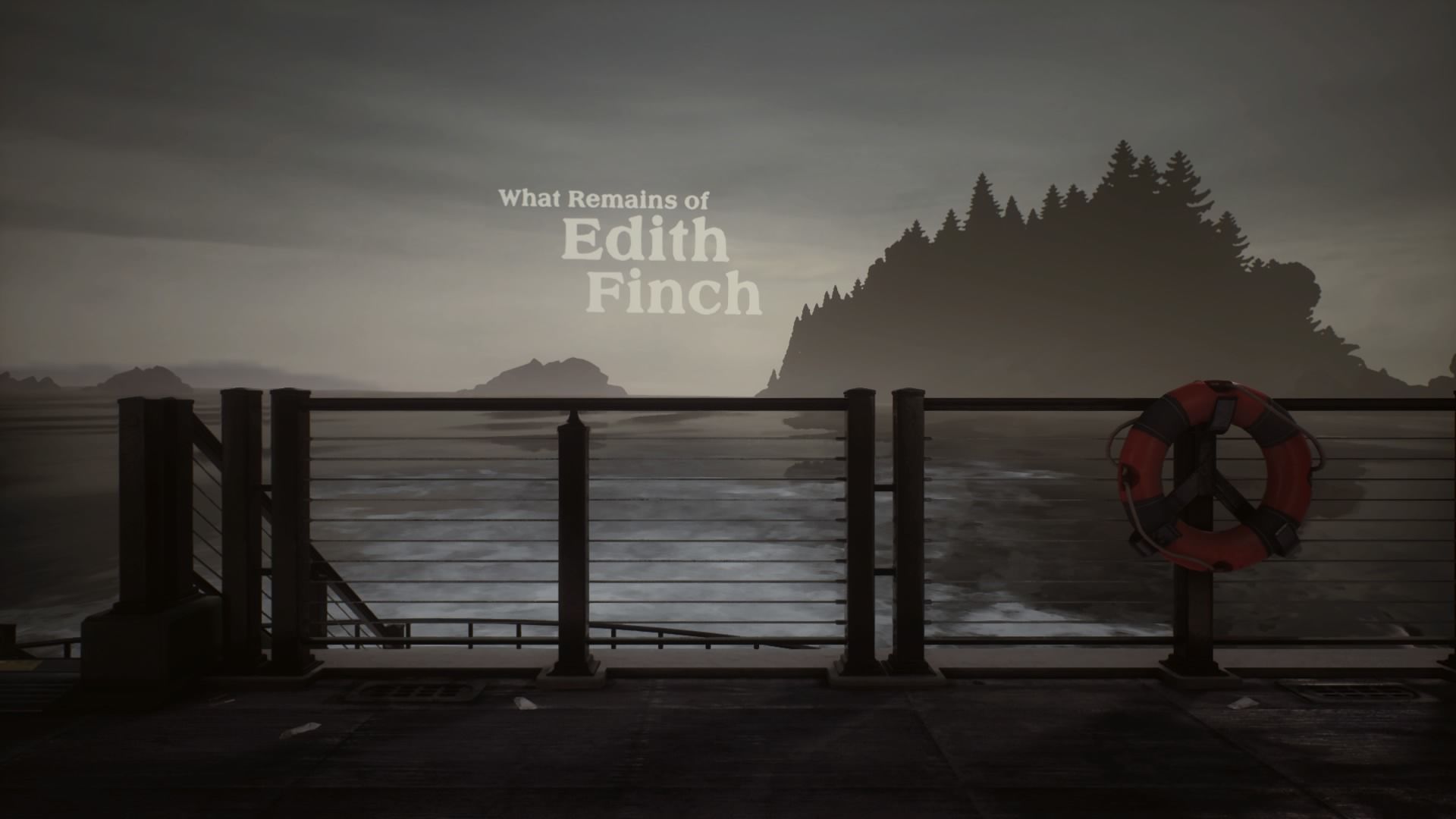
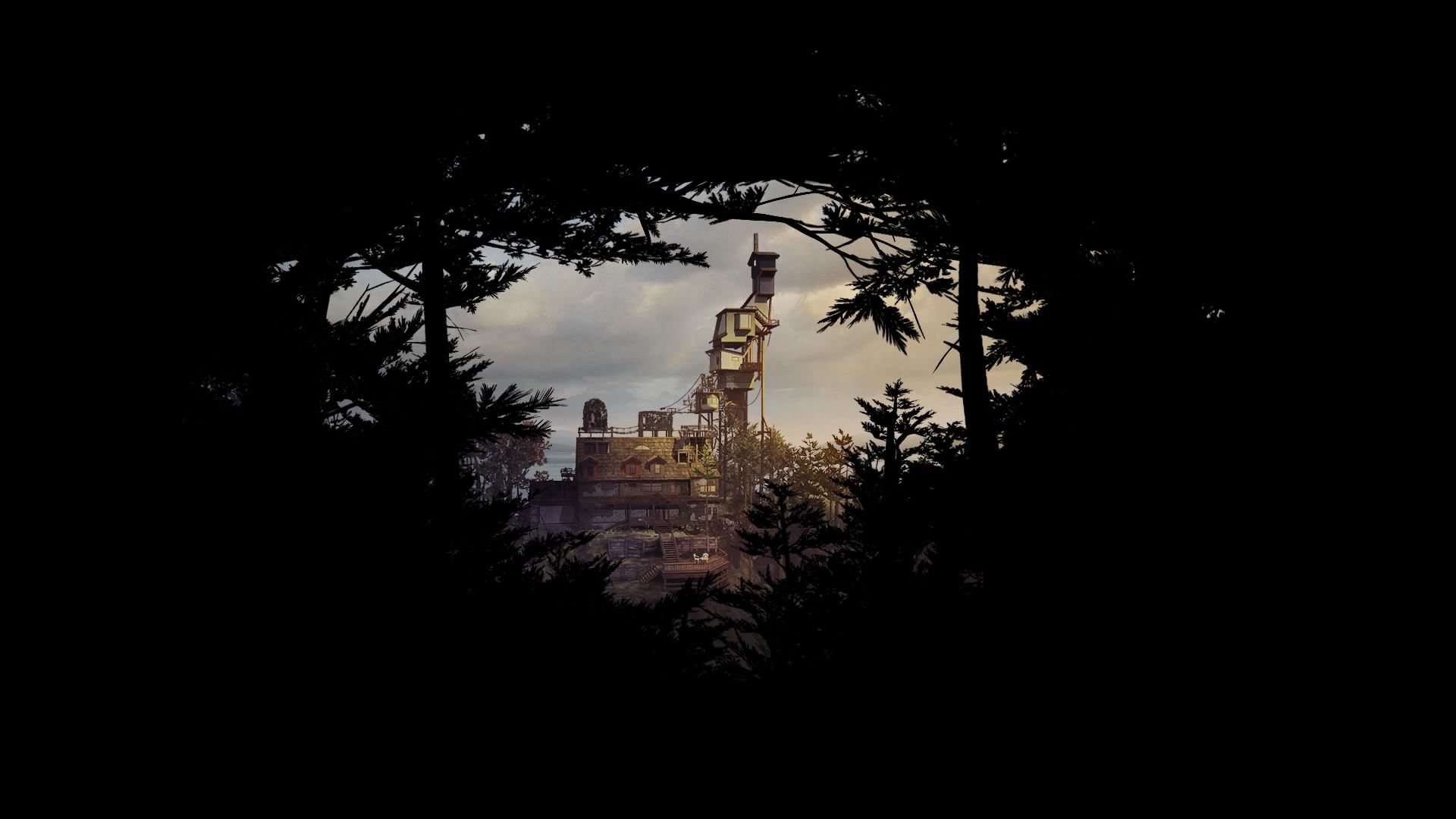
  • What Remains of Edith Finch is Sublime.

    What Remains of Edith Finch is Sublime.

    With so much “top of the food chain” justification for humanity’s many environmental exploits it’s impressive that we experience feelings of insignificance [1]Damn right it’s impressive. Everything we do is impressive. We are at the top of the food chain after all. But we do.

    These momentary lapses in bravado are testament to the strange ways of the human brain. Our ability to recognize our insignificance is matched by our ability to rationalize our significance. That’s a legitimate Catch-22 for you.

    For some people the moment happens when staring into the night sky, contemplating the stars, and suddenly truly grasping, even if only fleetingly, that the starry glow we see comes from a star that’s long dead before we even have the chance to waste paper romanticizing the reflected light with terrible poetry.

    For some that moment happens at the birth of a first child[2]subsequent children need to try harder to impress me. Here’s this tiny being, totally dependent upon us, and unlike a dog or a cat, we go to jail if we let this thing die.

    For me that moment happened the first time I walked the line at an open casket funeral. I don’t remember the name of the deceased or whether or not I had any relation to him or her[3]It? outside the temporary proximity forced upon me by my mother’s parental leash[4]Not a real leash. A metaphorical one woven with a series of phrases like “Yes, you are going” and “do you want to be grounded from video games?”. I do vividly remember the stillness of the body. Even a human being holding his breath moves, almost imperceptibly, but like a telekinetic acknowledgment between like-beings, I know that human is alive. But not at this funeral. That thing in the casket was no longer a like-being.

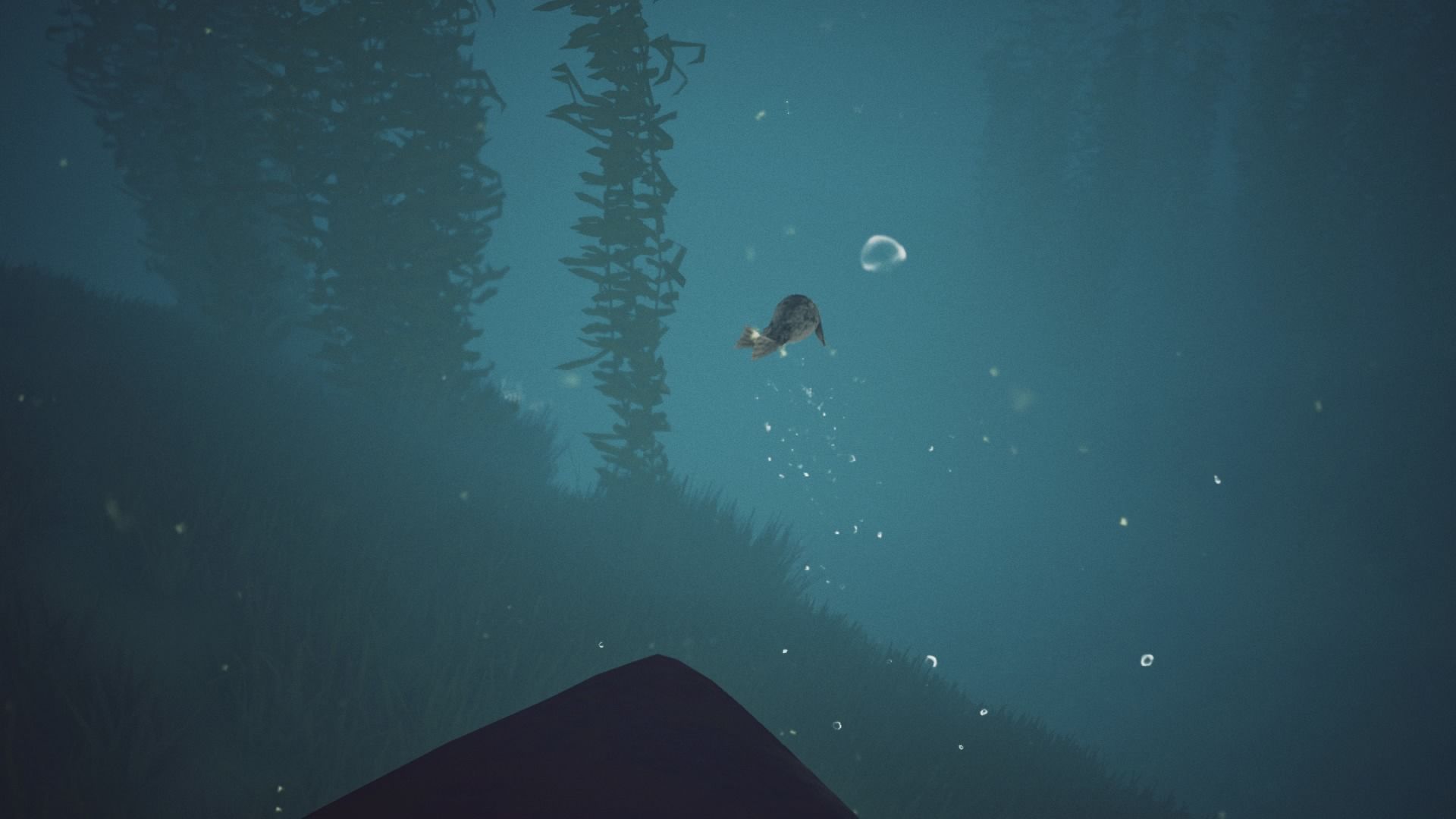
    For Ian Dallas, Creative Director of What Remains of Edith Finch, that moment of insignificance occurred while scuba diving. Dallas wanted his game to evoke a sense of the sublime. Speaking to gamesindustry.biz in a 2017 interview he says, “For me the clearest memory of that was Scuba diving as a kid, and seeing the bottom of the ocean slope away into a seemingly infinite darkness.”

    He calls this moment of insignificance “a sense of the sublime.” He was simultaneously in awe of nature and reduced by it.

    But me, I’m not opening my eyes in an ocean. Ignorance of the world underwater is the only thing that keeps me confident about my place in the food chain. I’ll keep my open coffin, thank you very much.

    Footnotes

    Footnotes
    1 Damn right it’s impressive. Everything we do is impressive. We are at the top of the food chain after all
    2 subsequent children need to try harder to impress me
    3 It?
    4 Not a real leash. A metaphorical one woven with a series of phrases like “Yes, you are going” and “do you want to be grounded from video games?”
  • What Remains of Edith Finch is a Game.

    What Remains of Edith Finch is a Game.

    My cat is gray.

    But she was born black, the only dark coat in a mound of grays. Like a hole.

    She was the runt. Though she was born competent, like the rest, early losses during feeding times set her back. A few missed meals early on meant she never developed the strength to fight for a nipple. The disparity between her and her siblings logically widened. The strong got stronger. The weak got weaker. Within 3 weeks her siblings were walking and playing. But she was only just opening her eyes.

    I don’t know how kittens think. But I wonder if, in a survival of the fittest way, an odd-looking baby doesn’t fit and therefore shouldn’t survive. The gray kittens who fought her and the mother who refused to help were simply doing what nature instructed. Maybe.

    But how mysterious survival can be. The black cat, now my cat, I named her Burrito, was the only kitten in the litter to survive a full month. Her mother was hit by a car. The strong kittens found their way to her roadside body, and having no knowledge of death they suckled the corpse like they had suckled the living. Before they could register the empty teats a second car killed the rest of them.

    The next day I noticed a few gray hairs on Burrito. Within a week her entire coat matched her dead siblings.

    My cat is gray.

    ___

    An objective fact that you didn’t care about has become a fact you do care about. That’s how good narrative works. That’s how What Remains of Edith Finch works.

    Early in the game you learn that Molly, the protagonist’s grandaunt, died at the age of ten.

    So what?

    She was eaten by a tentacle monster.

    Now you care.

    Maybe it takes a few lies to care about a fact. But if I tell myself those lies enough times, and I tell you those lies, and you spread them, then eventually the lies become lore. But the fact remains. Molly died. My cat is grey.

    But this power isn’t always used so innocuously. This power has been used to build religions, to oppress peoples, and to dodge prosecution. Storytelling is a power weapon.

    What Remains of Edith Finch is a game.

    So what?

    It’s a game about a family cursed to endure premature and strange deaths.

    Now you care.

  • What Remains of Edith Finch Might Just Penetrate Culture.

    What Remains of Edith Finch Might Just Penetrate Culture.

    What Remains of Edith Finch explores the power of narrative in a way I’ve never personally encountered. I’ve read plenty of Gabriel García Márquez, whose work explores the way narrative impacts the lives of people.

    I’ve read plenty of Jorge Luis Borges who explores narrative in a literal way by ruminating upon the power of books both as a form and in their function. Borges is the cheeky one of the two.

    I’ve read a few Mark Z. Danielewski books which tackle this exploration even more literally that Borges by manipulating the physical layout of the pages to invite the reader into the spatial world of the text.

    But What Remains of Edith Finch pushes all these tactics further. What Remains of Edith Finch shows us that narrative can define and manipulate simultaneously, that story isn’t a matter of fact but rather a matter of understanding. And while facts may help us understand, facts alone are weak. Their power comes from how they are presented.

    This is why we have lawyers, afterall. This is why we have news anchors. This is why we have documentaries. Facts alone are weak. Facts change nothing. Facts need narrative.

    This realization hit me hard recently when listening to an interview on NPR. The subject, Daniel J. Jones, who was the lead investigator for the Senate Intelligence Committee’s report on the CIA’s enhanced interrogation program, said the following in defense of a movie called “The Report” with dramatizes the report and its investigation of US government sanctioned torture:

    Mary Louise Kelly: What I’m hearing from you sounds like there’s still some unfinished business from where you sit.
    Daniel J. Jones: Well, of course it was gratifying to get a portion of this [report] released publicly in December of 2014. And we were front page of newspapers around the world for 24 to 48 hours. But given the news cycle and then it’s gone, and what you really need is narrative and storytelling to penetrate culture. And I hope that this film is a piece of that.

    “What you really need is narrative and storytelling to penetrate culture.”


    This view, used to justify the existence of this single film, instead justifies every “based on true events,” “based on a real story,” biopic style movie ever created.

    While What Remains of Edith Finch might not aim to penetrate culture, its precision is enough to infect and to get me thinking, which who knows, may one day fester enough to spread.

    Gross.

  • The Outer Worlds is More Fun than a Sprat with a Bat (Game’s Over Video Game Review)

    The Outer Worlds is More Fun than a Sprat with a Bat (Game’s Over Video Game Review)

    Subscribe on YouTube
    Yes, yes, it’s Fallout in Space. But just how much Fallout is it, and does it contain the parts of Fallout that made Fallout Fallout?

  • What Remains of Edith Finch is Art.

    What Remains of Edith Finch is Art.

    Let’s get the pretentiousness of this post started off right: Is What Remains of Edith Finch art? Now, let me ratchet up the insufferability by immediately answering the question with a non-committal, pseudo-turn into armchair psychology: Maybe.

    I’ve been an “art guy” all my life (see also: guy who says he likes art, but more often than liking it, he likes to talk about it in ways that involve the word “pseudo” while diminishing its highly skilled observers and critics as people who apply themselves as long as it doesn’t disrupt chair sitty time(( That was a really long joke. I apologize for leading you down a path that ultimately didn’t arrive anywhere worthwhile. ))). I was the guy who could kinda draw famous cartoon characters in grade school. In high school those creations turned toward the angsty and introspective—”no, that’s not Bugs Bunny. That’s a mechanical representation of, and therefore Capitalism commentary on, Bugs Bunny…as a girl.” In College I fell into writing, and with my years of socially informed cartoon art, the words came backed with intentional thought, and so throughout I maintained the art guy reputation.

    But for all this time of studying, defending, and creating art, nothing froze my synapses more than trying to define what I was doing. Had my title ever appended “professional”, I might have been more confident. Or at least as a “professional art guy” I could have avoided arguing a definition entirely by leaning into the money-making side. “I get paid to write scripts,” or “I get paid to curate museums,” sounds better than “I get paid to art.”

    But then someone, though I can’t remember who, revealed to me a definition that perfectly suffocates all of the pesky nuances:

    Art is anything that is framed and presented for contemplation.

    “Framed,” meaning, articulated for visibility. See also: staged (theatre), projected (movies), maybe bouqueted (flowers), maybe shellacked (collages). Maybe shellacked, again (dead body parts on a wall).

    “Presented,” meaning, put on display. Meaning, purposely given an audience. Meaning, audience is important.

    “For contemplation,” meaning, a responsible party (either the creator or the curator) intends for others to consider the thing, to think about it, to, well, contemplate it.

    No Frame or no audience or no intent = no art.

    Let’s challenge this.

    That commercially produced poster hanging on the wall in the restaurant? Well, given that it’s been produced with intent, that satisfies the “framed” requirement. Hanging it on the wall in a place meant for viewers satisfies the “presented” requirement. The restaurant owner may or may not have wanted viewers to contemplate it, but here we’ll assume this restaurant owner is your childless aunt who points out the poster to every single new customer and asks “isn’t that funny,” so yes, it’s art. Commercially produced art, but art nonetheless.

    What about when that poster gets ripped from the wall and tossed in the trash can? Is it still art? No. It’s no longer intended for an audience.

    If someone lifts that poster from the trash and staples it to a bathroom wall. Yep. Art.

    This simplicity is probably offensive, I understand. It’s scary to think of something so important to so many as something attainable by any crazy person on the street corner holding a megaphone and a bag of dog poop. But to those offended, I suggest you get over yourself. Don’t worry. Your precious art is still worthy of high-falutin snootery. Though we’ve broadened the defition of art to include your spastic nephew’s found gum wrapper diarama, we can still argue about the quality of the art. Yay for cultural gatekeeping!

    A great piece of art reveals the audience’s ignorance.

    A great piece of art shows you, the audience, things you didn’t know you didn’t know. Importantly, though, it asks and gives some guidance, but it never answers.

    Is What Remains of Edith Finch art? Yes. It’s framed (that’s essentially the Art Director’s job; therefore, the existence of an Art Director = framed). It’s presented (it’s made for a game console or PC). It’s meant for contemplation (you’re damn right it is).

    Is What Remains of Edith Finch good art? Yes. This game taught me more about the power of narrative than four years spent seeking an English Degree in college. Though that degree, and the experiences surrounding it, continue to be incredibly strong anchors for my approach to reading, writing, and thought, it wasn’t until playing What Remains of Edith Finch that I was encouraged to question what story is so important to human survival.

    Truly. Survival. I’m not exaggerating.

    Humans use story to justify their actions. Without justification other humans cannot anticipate action and therefore cannot form coherent societies and strong bonds within those societies. What Remains of Edith Finch narrows this concept all the way down to the family unit. This game explores how narrative can be used with good intent to form such bonds, but also how narrative can fracture trust by challenging facts.

    What Remains of Edith Finch is art. It’s good art.

  • Since when did impossible mean impossible? (a review of Yooka-Laylee and the Impossible Lair)

    Since when did impossible mean impossible? (a review of Yooka-Laylee and the Impossible Lair)

    Subscribe on YouTube
    I love a side-scrolling platformer video game. I love the first Yooka-Laylee game. I love Yooka-Laylee and the Impossible Lair…or, at least all but the last 10 minutes I played of it.

  • The Runniest Sideways Banana You Ever Saw! The Video Game Game Show

    The Runniest Sideways Banana You Ever Saw! The Video Game Game Show

    [powerpress]

    I like trivia…well, correction, I like knowing answers to trivia questions. Anyone who likes trivia but hates knowing the answers is a straight-up idiot. But that’s not what this post is about. This post is about a cool think that I thought would be cool and in fact turned out to be cool. I asked Trav over at the Polykill Podcast and @TravPlaysGames to join me in a podcast pilot episode of sorts. It’s a podcast about trivia (see, that who intro about trivia does make sense).

    The premise is simple: it’s a triva game show about video games mixed with a bit of improve goodness.

    If you enjoy it and would like more, validate us! Let us know at:

    (more…)