Author: Caleb J. Ross

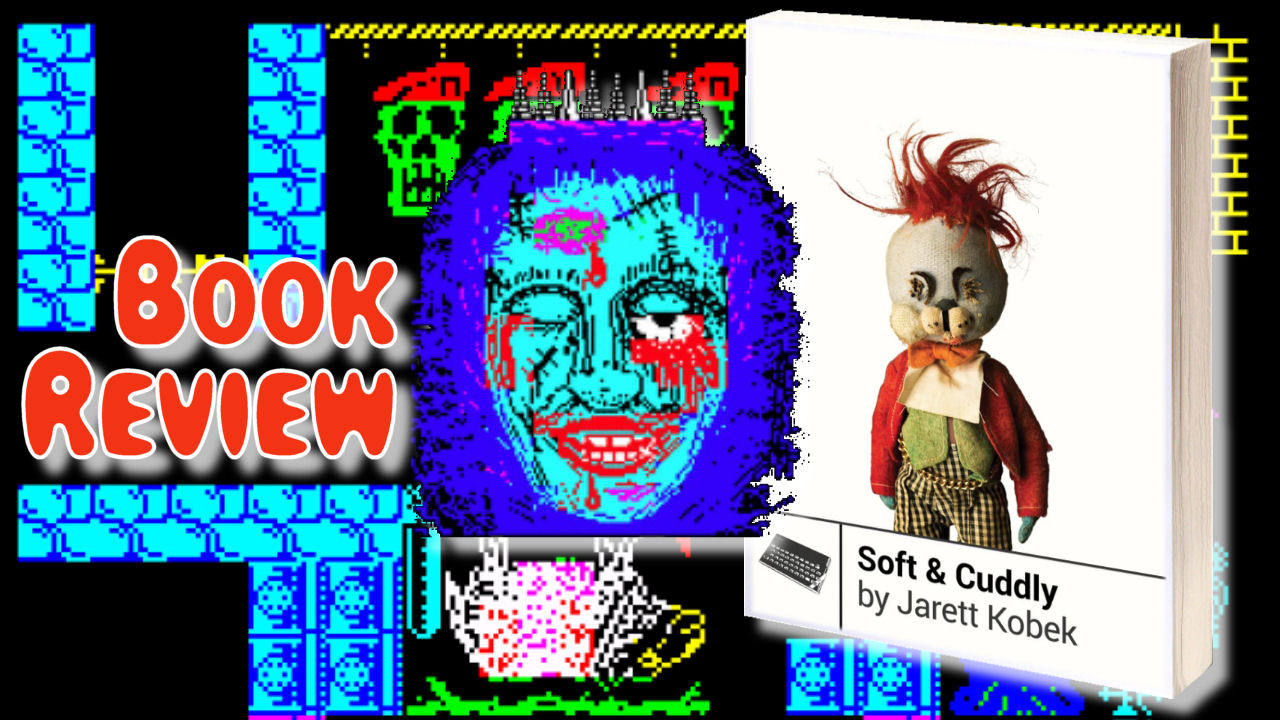
  • Soft & Cuddly by Jarett Kobek | Boss Fight Books review

    Soft & Cuddly by Jarett Kobek | Boss Fight Books review

    Subscribe on YouTube

    I’m reviewing all of the Boss Fight Books releases, so subscribe to this channel and click the bell notification icon to be sure you don’t miss future reviews.

    I just finished reading Soft & Cuddly by Jarett Kobek, the 15th book in the Boss Fight Books series, and I’ve got some thoughts. (more…)

  • What Remains of Edith Finch is Pregnant.

    What Remains of Edith Finch is Pregnant.

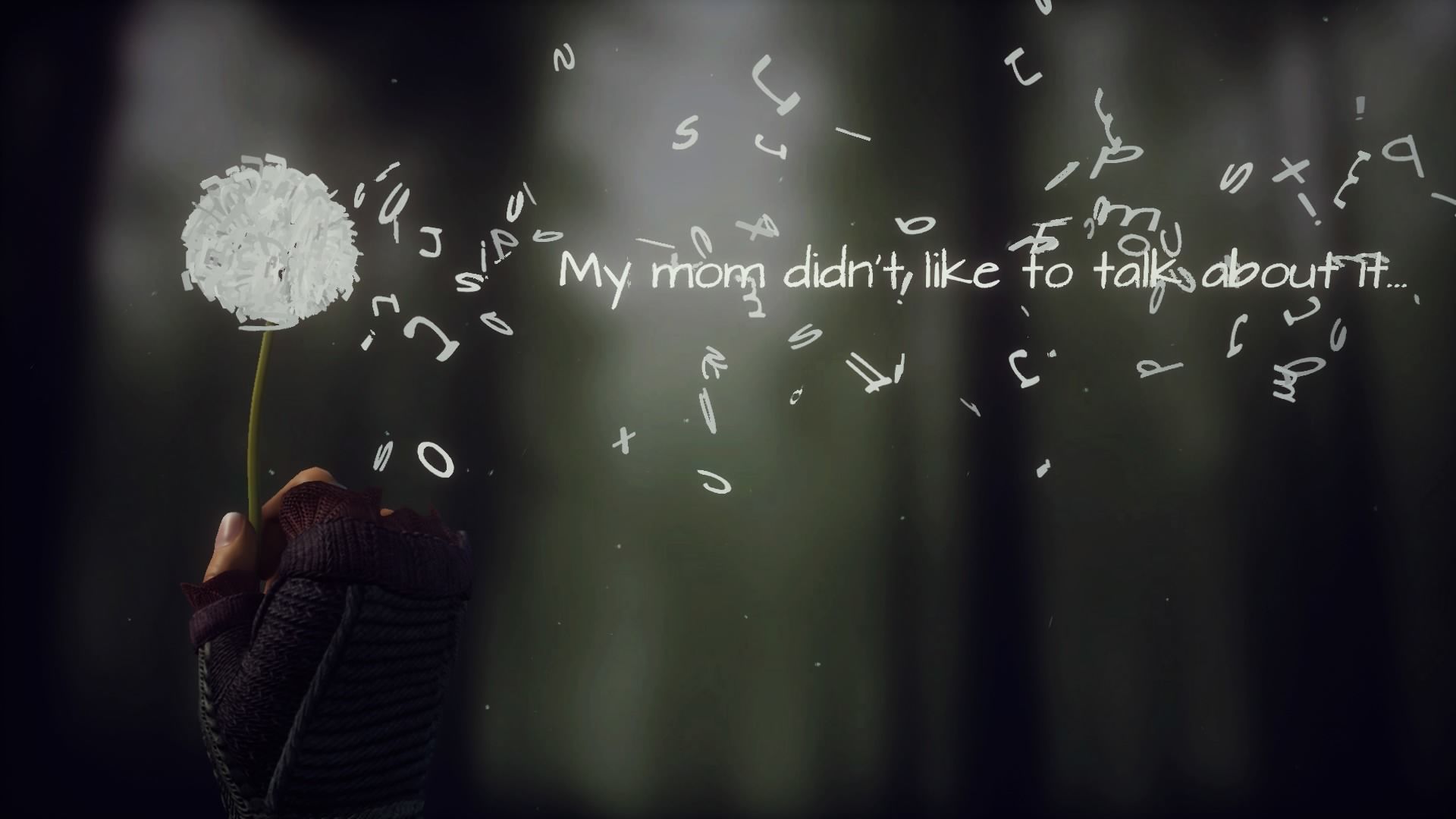
    Pregnancy in media is godhood with responsibilities. Pregnancy binds people. Pregnancy arrests potential. Pregnancy promises potential. Pregnancy can both incite a life-changing journey and can stifle an in-progress journey. Pregnancy is magic. And pregnancy, much like a gun, is cheating.

    A gun is an unearned power shift. A story should survive by its characters, but a gun puts too much power into the hands of an undeserving character. When I read a story with a gun I’m primed to look for the narrative weaknesses that made the gun necessary. In the episode titled “Email Surveillance” of the sitcom The Office, Michael Scott ruins an improv class by pantomiming a gun at every possible opportunity. Not surprisingly, none of his classmates want to be in scenes with him.

    Use of a gun in a story must be handled with grace. It must be earned. Of course certain genres such as action movies and war dramas demand forgiveness. When everything is a gun, the gun is nothing. But outside those exceptions, a gun must be respected.

    The same is true with a pregnancy. Imagine two characters who hate each other. One pulls a gun on the other. Suddenly, the entire story is about the gun. Imagine these same two characters, but one reveals her pregnancy. Suddenly, the entire story is about the pregnancy. These two characters could be sitting atop a melting glacier, minutes from being swallowed by a shark and suddenly their own imminent death is less important than the potential of a future generation. Atop the shrinking block of ice these characters no longer fear their own death, they fear their inability to care for the unborn child. A last minute rescue spawns a shared smile, one that silently commits to the health of the child over the second chance they’ve been given to extend their own lives.

    Edith’s pregnancy, which results in her son Christopher, is earned. It’s subtle. It exists before the start of the game, and therefore is part of the player character rather than a simple addendum. Most importantly, Edith’s pregnancy represents an escape route from a family imprisoned by a curse. Christopher is the only surviving member of the Finch family and can commit to ending the family lineage.

  • Celeste Believes in Me…But I’ll Never Play it Again (Game’s Over Review of Celeste)

    Celeste Believes in Me…But I’ll Never Play it Again (Game’s Over Review of Celeste)

    Subscribe on YouTube

    I beat Celeste. Barely. I almost quit. But the game wouldn’t give up on me. For that, I am thankful.

  • Gris is Slick (a Game’s Over Review of Gris on the Nintendo Switch)

    Gris is Slick (a Game’s Over Review of Gris on the Nintendo Switch)

    Subscribe on YouTube

    Gris is a game I’ve been wanting to play for a while. I held off, because it felt like a game that was inevitably going to be released in a physical format (I like stuff on shelves). The game was worth the wait. Gris is beautiful to look at, only mildly frustrating to play at times, and only about 3 hours long.

    I played the Special Revserve version on the Nintendo Switch.

  • Death Stranding is the best single player multiplayer video game!

    Death Stranding is the best single player multiplayer video game!

    Subscribe on YouTube

    I went into Death Stranding with some hesitation. Would it be a game I’d actually appreciate, considering I haven’t played a Hideo Kojima game since the first hour of Metal Gear Solid 2? Would I be aware enough of Kojima’s crazy style to really understand Death Stranding? Well, no, I don’t think I’ll ever understand Death Stranding, but I did love playing the game.

    And who would have thought I’d ever play a multiplayer game (if this can truly be called a multiplayer game).

  • What Remains of Edith Finch is Ambiguous.

    What Remains of Edith Finch is Ambiguous.

    Any interview with Creative Director Ian Dallas will include three things: 1) the interviewer’s pronouncement of her favorite character in What Remains of Edith Finch, 2) the interviewer’s demand for closure regarding that favorite character’s death, and 3) Dallas’s refusal to comply with the question.

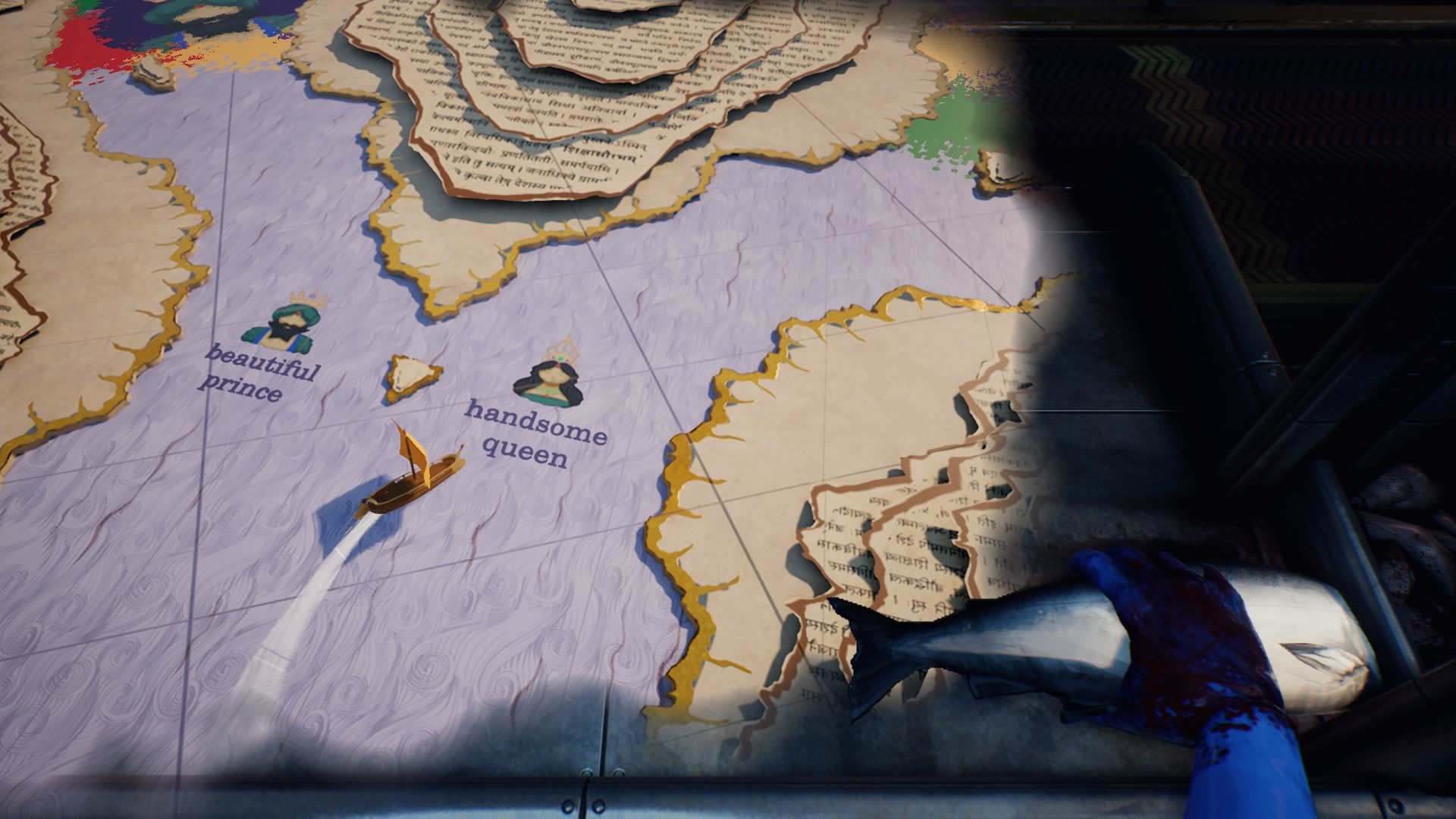
    It’s quite amazing how consistently present these elements are. It turns out, ambiguity makes people uncomfortable. And Ian Dallas doesn’t like people[1]okay, this part probably isn’t true. See, What Remains of Edith Finch is a video game about openness and interpretation and building a mythos. A concrete What Remains of Edith Finch is not What Remains of Edith Finch. But this reality doesn’t stop fans of the game from begging Dallas for resolution.

    Dallas himself will claim that his reason for holding back on absolutes is because even he doesn’t know for sure how the characters die in the game. Generally, when I hear creators distance themselves from answers in this way, I assume laziness. Shouldn’t a creator be responsible for his creations? Sure, art, and therefore the artist, isn’t required to provide answers, but I do feel that when pressed the artist should be obligated to defend the art.

    But with What Remains of Edith Finch ambiguity—and therefore discomfort—is the very point [2]okay, so maybe Dallas does hate people. This game  is the rare case where a work’s purpose is to expose ambiguity and does so by trafficking in the ambiguous [3]how very meta. But why am I okay with a dodgy artist here but not okay in other settings, like when my response to a question at an author reading floats among variations of “it’s up to you”, padded out with several words ending in -ism that aren’t so much meant to answer the question but to shroud the answer as a reaction to pressure[4]Yes, I’ve endured many of these. Author readings are usually painful to sit through. Likely my own readings included.

    I think I approve of Dallas’s dodges because What Remains of Edith Finch is crafted toward the ambiguous rather than being ambiguous as a point of existence. The world and the characters are defined (unambiguous) so that the narrative ambiguity can resonate. By comparison, with the bloated, masturbatory works of our aforementioned author-ism friend, the audience’s inherent questions are “…question(s) without a path toward an answer” and are “…abstract, non-objective, and simply exploratory.”[5]Yep, I just quoted myself. That’s probably just as bad as being an author-ism

    I won’t deny that the line dividing interesting ambiguity and masturbatory ambiguity can be temptingly dotted at times. It’s easy, especially for amateur creators, to plead philosophical depth in the face of concrete questions Thankfully, we have professionals like Ian Dallas and Edgar Allan Poe to show us the way.

    I won’t get into the details of Poe’s short story writings here. Just know that his stories are often described as strange, hallucinatory, weird, and mysterious. Poe leverages ambiguity for a specific effect. In the article “Ambiguity as Aesthetic Strategy: Edgar Allan Poe’s Ambitions for the American Short Story” Wanlin Li says:

    …ambiguity actually works for Poe’s purpose, since it strengthens authorial control by way of forcing the reader to grapple more with parallel interpretive possibilities. In other words, in cases of ambiguity, Poe seeks the unity of effect not at the level of stable meaning, but at the level of making the reader aware of instability.[6]JNT: Journal of Narrative Theory 48.2 (Summer 2018): 165.

    Poe, just as Dallas would do, doesn’t actually want the audience to determine which of the parallel interpretive possibilities are “correct,” but rather he wants the audience to accept that parallel interpretive possibilities are possible.

    So when Dallas deflects questions about the true causes of his character’s deaths, he’s perhaps not dodging. He’s moving out of the way so you can see the rest of the possibilities.[7]Though, I do believe Dallas has a version of absolute resolution locked away in his brain. He just knows that to expose it would mean toppling the delicate intent of the game. He’s created … Continue reading

    Footnotes

    Footnotes
    1 okay, this part probably isn’t true
    2 okay, so maybe Dallas does hate people
    3 how very meta
    4 Yes, I’ve endured many of these. Author readings are usually painful to sit through. Likely my own readings included
    5 Yep, I just quoted myself. That’s probably just as bad as being an author-ism
    6 JNT: Journal of Narrative Theory 48.2 (Summer 2018): 165.
    7 Though, I do believe Dallas has a version of absolute resolution locked away in his brain. He just knows that to expose it would mean toppling the delicate intent of the game. He’s created something that drives people crazy, and he has the ability to put those people at ease, but if he does this, his creation dies. Not an enviable position. (see, even I’m not immune to demanding resolution)
  • What Remains of Edith Finch is Questions.

    What Remains of Edith Finch is Questions.

    It wasn’t until a few months after first playing What Remains of Edith Finch that I understood the source of my infatuation. I assumed my love related most strongly to the game’s narrative focus, and perhaps that’s still true, but then the question becomes “why is the narrative focus so alluring?” Because I’m a writer? Maybe. Because I’m a human and narrative is central to my sense of belonging? Maybe. But it’s a video game. Why is narrative so important? Why don’t I care instead about the game’s mechanics? Or the game’s sense of progression? Or the sense of accomplishment that a player is meant to feel when playing a video game?

    That few-months-post-play epiphany hit me hard. The source of my love lies with the game’s ability to ask interesting questions (see the seven questions above).

    Any form of narrative entertainment (examples: novel, story, movie) should aim to interest a reader by posing questions alongside the promise of answering them. A question without a path toward an answer is abstract, non-objective, and simply exploratory…in a word: dull. The questions don’t need to be answered by the product, but the audience must be properly motivated to search for an answer.

    True, some audiences will be more willing to search for an answer and will be less dependent on the author to provide direct guidance. This is the balance authors must maintain. Do I give too many answers and risk insulting the reader’s intelligence? Or do I hold back answers and risk being inaccessible? Do I write a Goosebumps book or do I write “Infinite Jest?”

    Video games, given their traditional reluctant embrace of narrative, haven’t often been forced to prioritize such interesting questions. Rather, the questions video games have been charged with posing are superficial questions of curiosity and puzzle solving more than narrative fulfillment. What happens when I push this button? How do I defeat that boss? Can I walk off this cliff? What happens when I move to the left when the game wants me to move to the right? It’s no wonder then that John Carmack once dismissed story in video games: “Story in a game is like a story in a porn movie. It’s expected to be there, but it’s not that important.”

    To be fair, games have come a long way since John Carmack’s famous dismissal, and he himself has even walked back a bit on his statement: “This old quote still pops up, but I caveat it today — there are undeniably lots of games where the story is the entire point, and they can be done well.  I do still hold that the most important games have been all about the play, not the story.”

    And is caveat is reasonable. It’s probably true that when we examine the history of video games, the evolutionary landmarks of importance most certainly reference mechanics more than narrative. Mario was originally called Jumpman, not Can Only Afford One Set of Overalls Because of Alimony Payments from a Messy Divorce Man.

    What I think has happened is that game developers have learned that strong narrative provides a strong motivation for players. Games do not need narrative. But they are often better off with it. As games get longer and demand more time from players, a developer can lean heavily on mechanics or aesthetics or simple curiosity to keep a player interested, or a developer can lean heavy on narrative to keep a player interested, or a developer can mix these elements to keep the player interested. No matter the concoction, the developer’s job is to keep a player interested.

    What’s important, I think, is that often players don’t explicitly verbalize the questions they have. I’ll step back into a novel example (heh) first, as novels are objectively narrative focused.

    The first line of Chapter 1 of Moby Dick is simply:


    “Call me Ishmael” [1]I know this isn’t the first line of the book. The book begins with two introductory sections that could easily be ignored, and I think most people do

    Three words and three times as many questions:

    1. Why should we call you that name? Did you change your name? If so, why did you change or name?
    2. Why is it so important that you announce your name immediately? Are you famous for something? Are you trying to be famous for something?
    3. Who is Ishmael talking to? The reader? Am I being set up for an oration of a grand adventure?

    These questions will seed a good narrative as long as the narrative delivers on the promise of answers. This balance of posing questions then teasing the reader with an answer then posing more questions, then more teases is what creates a narrative, and as long as this cycle is handled by a skilled writer, the reader will exhaust the entire novel and leave satisfied.

    A question is a byproduct of interest and so becomes the impetus to investment. Humans love solving problems. Therefore, a question posed is an invitation to adventure.

    So, back to What Remains of Edith Finch (finally, I know). From the very beginning of the game, I’m asking questions as a result of my interest. One of the first examples of this question > tease > question cycle is when you (as Edith) look to the ground to see a missing person’s poster. From the distance, you cannot read the words or make our the portrait, but you recognize the ubiquity of the poster design.

    Who is missing? Why are they missing? Why is the poster on the ground?

    So you step close enough to read the words.

    This person has been missing for years (answer to: “Why is the poster on the ground?” It’s old). Is this person related to me? Was he ever found?

    Then Edith’s spoken commentary notes that the person is her brother. So you venture further and quickly learn that a lot the Finch family is gone (dead). As the player, you are encouraged that you may learn the circumstances of Milton’s disappearance, so you continue.

    This cycle happens over and over throughout the game. And the biggest question of all, is there a Finch family curse, never fully gets answered, but the player is satisfied because this tension is exactly the point of the game.

    Damn, What Remains of Edith Finch is good.
    Footnotes

    Footnotes
    1 I know this isn’t the first line of the book. The book begins with two introductory sections that could easily be ignored, and I think most people do