Author: Caleb J. Ross

  • Colored Chalk, the zine: Issue Two

    Colored Chalk, the zine: Issue Two

    This issue’s theme spawns from the great mind of Kurt Vonnegut, via your issue two editor, Jason Heim.

    Vonnegut wrote:

    “Give your readers as much information as possible as soon as possible. To heck with suspense. Readers should have such complete understanding of what is going on, where and why, that they could finish the story themselves, should cockroaches eat the last few pages.”

    And that’s just what we aimed to do with this issue of Colored Chalk.Colored Chalk Issue 2

    I have a piece in this issue, “Exhibit One: A Letter From Alex Fumar,” which I hesitate to mention simply because it’s impact is so reliant on context. Read outside the Colored Chalk zine my piece would make absolutely no sense, and could possibly put first time readers off of my work for good. My logic is that if I called attention to “Exhibit One,” then I might as well call attention to other printed pieces which would make no sense out of context. For instance, my letter to the editor in the June 2007 issue of Spirit, the Southwest Airlines magazine (yes, THE Southwest Airlines magazine).

    But, I’m a whore, so go on and read: “Exhibit One: A Letter From Alex Fumar.

    And while your at it, here’s Spirit Magazine’s Letter of the Month from June 2007.

    Don’t forget, the Colored Chalk zine can be printed and distributed, hassle-free (and all other kinds of free) if you’re in the mood to spread the word. Just click here, print, staple, and force upon strangers.

    And if you are in the mood to not spread the word, pick up a copy at Kansas City’s own Prospero Books on 39th Street.

  • Book marketing in a market uninterested in books

    Marketing a book in an increasingly visually driven society is a tough role. Not to mention the ever decreasing number of people who actually read (books that is, not this stupid blog). According to statistics from sources that sound legit* 80% of U.S. families did not buy or read a book last year [2002]. I’m hoping this figure can be taken literally to mean that these families did not physically purchase the book as a single group, with each member holding an edge of the book and simultaneously placing it on the bookstore counter. I would have never thought any family to do such a thing, so really the 20% of families who do is pretty eye opening. Unfortunately, the literal interpretation is a ridiculous dream. The truth is, most people simply do not read books.

    But don’t fret my fellow 20%-ers. Veronis, Suhler & Associates investment banker** says that each day in the U.S., people spend 4 hours watching TV, 3 hours listening to the radio and 14 minutes reading magazines. Why is this good? Because more and more authors are turning to just such TVs (or computer monitors; they’re both square and full of pixels) in order to push their wares.

    Here are a couple of my favorites:

    Douglas Coupland’s 3 spot campaign for his novel, Gum Thief (a YouTube page)

    Dennis Cass’s spot for his memoir, Head Case:

    [media url=”http://www.youtube.com/watch?v=yxschLOAr-s”]

    Oddly enough however, I don’t own either of the two advertised novels. The ads worked well for me aesthetically, but considering my current stack of 53 too-read books I’m just not in the market for more quite yet. So consider this post simple word-of-screen advertising.

    * Jenkins Group, inc; they have the word “group” in their name. Nothing more is needed to connote reputability.
    ** Why is an investment banker devoting time to these sort of statistics? I don’t care; they are associates! See above asterisk for the power of organizational tags.
    Here’s the for real page from which these statistics were pulled

  • Scarlett Jo’s no no

    Scarlett Jo’s no no

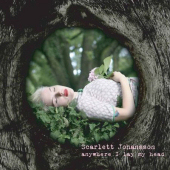
    Until today I’ve thought to keep this page about my writing – the physical, textual, words and paper aspect of my writing. Today, however, I feel compelled to stray, if only slightly, into the meta aspects of myAnywhere I Lay My Head by Scarlett Johansson writing – the ambient noise and inspiration surrounding my work. Today’s theme, Tom Waits, the core inspiration for my current novel-in-progress, “Hoist That Rag” (I’ll look into the legal issues with such blatant inspiration once I secure a publisher).

    Scarlett Johansson, of film and my dreams fame, yesterday released Anywhere I Lay My Head, an album of Tom Waits covers, give the lone original “Song For Jo.” Before I rant, let me put my love of Tom Waits into context: I have more Tom Waits CDs, posters, and inspired literature than I have love notes to my wife (most of the love letters I write go to Tom Waits; sorry Jenn). Waits is the single greatest recording artist in history, without argument. Needless to say, when I first heard late in 2007 about Johansson’s then forthcoming album I cried a little. But then I heard her take on the famous “Summertime” (see link below) and cried a little, again, but this time with an optimistic grin. This song is phenomenal.

    Today, I cry yet again. Anywhere I Lay My Head is astoundingly terrible. The music itself is unique enough to intrigue, but somewhere along the line producer David Andrew Sitek (of TV on the Radio and my nightmares fame) felt it hilarious to turn Johansson’s vocals into a deep throated, Madonna-drowing-in-a-well, reverb orgy. Excessive reverb can work for a record (D*R*I’s Smoke Rings, for example, one of my top albums of 2007), but the style has to mesh with the music. Anywhere I Lay My Head does not do this.

    Shame on you David Andrew Sitek for stealing something beautiful.

    ***Before I go I do want to reserve the right to let this album grow on me. I’ve spun it three times so far, and though I don’t anticipate a change, I have been corrected in the past. Hell, the first time I heard Tom Waits I had to fake my head bob.

    Anywhere I Lay My Head by Scarlett Johansson


  • Loading the Stone by Harley Elliott

    Loading the Stone by Harley ElliottLike the subject matter in this, Harley Elliott’s twelfth book and first collection of non-fiction, there exists below the surface, universal binds and shared histories from which the impetus of progression can be said to reside.

    The non-fiction moniker given to this collection belies the engaging, story-telling mode Elliott uses. Set against the backdrop of the Kansas prairie, Loading the Stone reads more like a story of a familial love of history used to explore the bonds threading father and son relationships than the listing of facts and dates that might be implied by the subject matter and genre. Perhaps, however, my assumptions of genre are just one example of the misunderstandings that Elliot explores. For example, the use of the word ‘Indian’:

    The word had no relationship to the people [Christopher Columbus] encountered or the land they inhabited, or to the many generations preceding them, hunters of the big, antique bison and the mammoth. Nor did the word have any relationship to the generations to follow. It was a word that robbed identity, culture, and personality at once, too thin to cover the many varieties of humans it was assigned to describe. Walker grew up on the Hollywood version. [pg 18]

    A strong theme running throughout this work is this idea of a misunderstood history, and Walker’s (our narrator) exploration of a truer history determined by the artifacts he uncovers during his walks among Kansas fields. Reflected in this understanding of history, is the bond being formed throughout the book by Walker and his father, and later Walker and his son. They commune over this enthusiasm; a relationship that suffers some turbulence about halfway through the book when our narrator first realizes that his son may not embrace flint the way he and his father have. It’s these moments of tension that beautifully keep Loading the Stone from being a tale of an isolated man connecting with the past; he is battling to connect for the sake of a future.

    The book does delve heavily into flint and arrowhead terminology and process in a deeper way than most casual readers would appreciate. The entire center section of the book (61 out of the book’s 244 pages), for example, breaks from the promise of a fluid story supported by an academic skeleton to simply the skeleton. This “The Rocking Deer Journal” appears to be a literal journal complete with lists, sketches, and meandering observations, which if delivered in a much smaller dose could have effectively developed both the intellectual nature of the story and the father of our narrator (as it is his journal). However, it comes across as redundant and worthy of just a skim through.

    Good writing can engage a reader in most any subject matter, however often is the case—and here—that the reader should come to the text with a genuine interest in the subject. I’ve done my best to judge this book objectively, as I am not, before or after reading this book, a fan of flint. I do, however, respect the writer’s craft. As Walker says in reference to an initially awkward arrowhead: “being an artist sometimes meant recognizing the spirit of material and letting it stand” [pg 170]. Likewise, being a fan of art means recognizing the spirit of the artist.
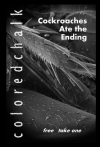

  • Colored Chalk, the zine: Issue One

    Issue OneI’ve been a member of an online writing critique group for a few years, out of which I’ve not only gained a growing understand of craft, but perhaps more importantly, I’ve developed close associations with some fantastic writers. Each year around November we return for another year of ego-brutalizing kinship, which leaves us deflated and disoriented, but not without a mutual understanding that every single moment spent suffering is a moment we’re allowed to nurture precious scar tissue.

    But even with the necessary humility we gain, there comes a time when a writer wants to experience the role of an editor. Who are those eyes able to tell the reading public what constitutes publishable fiction? Why them? Out of this curiosity came the Colored Chalk zine.

    For each bi-monthly(ish) issue a single editor will nurture the zine from theme to content selection to layout and design. This approach promises to produce material both diverse and representative of the overall sensibilities of the close-knit writing group as a whole.

    And who had the honor of editing the very first issue? Some jerk named Caleb Ross.

    Click over to www.coloredchalk.com to read the online version of the zine. The Colored Chalk website has been around for a while (much longer than the print zine), so take some time to explore its many offerings.

    The Colored Chalk zine, Issue One can be picked up for free in the Kansas City area at Nighthawks coffe
    and Prospero’s books. Both of these shops are KC favorites of mine, Prospero’s being a KC independent bookstore staple, and Nighthawks quickly becoming one. Click on the photos to be taken to the respective homepages
    Nighthawks’ CoffeeProspero’s Books
    Colored Chalk Colored Chalk the website is an online collaboration community for writers, poets, artists, animators, musicians, composers, and vocalists. You can also find a printable version of this issue, perfect for distributing amongst your local ruffianariams.

  • 6 Sick Hipsters out now

    6 Sick HipstersRayo Casablanca’s debut novel, 6 Sick Hipsters is now officially out and available for order.

    Rayo was nice enough to send me an ARC of his novel a few months back, which I reviewed for Dogmatika, here.

    Casablanca is truly a great writer and all around great guy. He can probably dance, too, which makes me even more jealous. Get his novel.

    From the review:

    “6 Sick Hipsters carries the rogue camaraderie of Joey Goebel’s The Anomalies—punk attitude and hipster lifestyles included—along with a less passive social critique found in Coupland’s Generation X. Fans of slick conspiracies and vinyl records rejoice.”


  • Nefarious Muse 2008 Fiction Comp

    UPDATE: The contest has ended.

    My short story, “A Trench is No Place for God,” is now live at Nefarious Muse. And not just live, but live as part of the 2008 Nefarious Muse Short Fiction Competition. Please, go to their great fiction site, read the entries, and vote for the best. Of course, I am hoping your vote goes to my story. In case you vote otherwise, realize that I know where you live; thank you IP Address and Google maps.

    Nefarious Muse Fiction Competition Click on the icon to the left to go straight to the comp homepage. Voting is open until March 14th, so don’t miss out on this once in a lifetime opportunity to help me win a prize.